
Most food and beverage companies expected CSRD to mean better internal sustainability reporting: cleaner energy data, more precise emissions tracking, improved packaging metrics. However, what many discovered later is that CSRD food traceability reaches significantly deeper than internal operations. The data requirements extend into the supply chain, and in many cases, all the way to the farm.
For F&B companies with substantial agricultural supply chains, the question is no longer whether CSRD food traceability is required. Instead, the question is whether the data infrastructure to support compliance exists, and whether it can be made audit-ready before reporting deadlines arrive.
Most cannot answer yes to both parts of that question yet.
What CSRD Food Traceability Actually Requires From F&B Companies
CSRD operates on the principle of double materiality. Specifically, companies must disclose not only how environmental risks affect their business, but also how their business affects the environment. For food companies, both directions of that analysis run directly through agricultural supply chains.
The most significant requirement for F&B companies is Scope 3 emissions disclosure. According to widely cited industry analysis, agricultural supply chains typically represent 70 to 80% of a food company’s total carbon footprint. Reporting on Scope 3 emissions from farming requires field-level data. Specifically, that data covers land use, water consumption, fertilizer and pesticide application, soil management, and deforestation exposure. However, that data does not exist at the corporate level. Rather, it exists at the farm level, and it needs to be collected systematically to be reportable.
Additionally, CSRD reporting must hold up to audit. Supplier self-reporting, which most F&B companies relied on for sustainability data in the past, no longer meets the audit standard. Instead, auditors will look for evidence that the data flows through a systematic, documented process. Questionnaire answers alone no longer suffice.
Where the Supply Chain Data Gap Sits
Importantly, the gap is rarely in the willingness of suppliers to provide data. Most agricultural suppliers understand that transparency is now a commercial requirement, rather than a goodwill gesture. The actual gap sits in the infrastructure to collect, standardize, and report that data at scale.
Consider a berry supplier managing 800 hectares across twelve farms. Such a supplier may keep pesticide application records in field notebooks. Scouting reports often live in WhatsApp messages and paper logs. Water usage figures sit in an Excel file that updates every few weeks. Cost data lives in an accounting system that does not map to field-level activities. All of that information technically exists. However, none of it sits in a format ready for a CSRD auditor. Furthermore, corporate sustainability teams cannot fold it into a disclosure without significant manual work.
Furthermore, multiply that situation across 200 suppliers, and the scale of the infrastructure gap becomes clear. The challenge is not persuading suppliers to be transparent. Rather, it is giving them a system that folds data collection into their normal workflow. Consequently, it stops feeling like an additional compliance burden.
What CSRD Food Traceability Auditors Will Ask For
Based on the CSRD technical standards and the Double Materiality Assessment frameworks already in active use, food supply chain auditors are looking for several specific categories of farm-level evidence.
First, field-level pesticide application records. These include product names, application dates, quantities per hectare, and crop growth stage at the time of application. Importantly, auditors are not asking for farm-level totals across a year. Specifically, they want field-level records by application event.
Additionally, water usage data by farm and by season, with documentation of source where relevant. Irrigated specialty crop operations in water-stressed geographies will face the most scrutiny here.
Furthermore, soil management practices, including evidence of soil health monitoring and documentation of practices that affect soil carbon and erosion risk.
Moreover, deforestation-free verification for commodities covered by both CSRD and the EU Deforestation Regulation, supported by geo-referenced field coordinates. Notably, this requirement applies to coffee, cocoa, soy, palm oil, cattle, and timber, among others.
Finally, evidence that farmers in the supply chain have access to relevant guidance on sustainable agricultural practices. This is a softer requirement, but auditors increasingly look for it. Notably, it signals a managed supply chain, rather than a passively monitored one.
The Compliance Timeline F&B Companies Face
The CSRD reporting timeline creates more urgency than many supply chain teams have planned for. Following the EU Omnibus simplification effort, the rollout phases have shifted, but the underlying data requirements remain consistent across all in-scope companies.
For the largest companies, sustainability reporting is already operational. Mid-size companies and smaller listed entities follow in subsequent waves, with reporting periods staggered across the years ahead.
Importantly, the practical takeaway is the same regardless of which wave a company falls into. Supply chain data collection takes 12 to 18 months to close properly. That assumes starting from a baseline of paper records and informal supplier communication. Therefore, companies that begin under deadline pressure tend to produce weaker, less audit-ready disclosures. By contrast, those that start early build cleaner systems and stronger supplier relationships in the process.
What Prepared Companies Are Doing About CSRD Food Traceability
The food companies that are best positioned for CSRD food traceability are doing four things differently from those that are not.
First, they are building digital data collection into the supplier relationship, rather than adding it as a separate audit exercise. Specifically, digital agriculture platforms like AGRIVI’s farm management and traceability tools anchor this approach. Farmers already use them for day-to-day operations. Consequently, field-level records emerge as a byproduct of normal farm work and flow into corporate ESG reporting without a parallel data process.
Second, they are running supply chain readiness assessments now, rather than later. Specifically, this readiness view tells procurement teams which suppliers have digital infrastructure and which do not. As a result, they can plan supplier development, phased transitions, or alternative sourcing before any of those decisions become urgent.
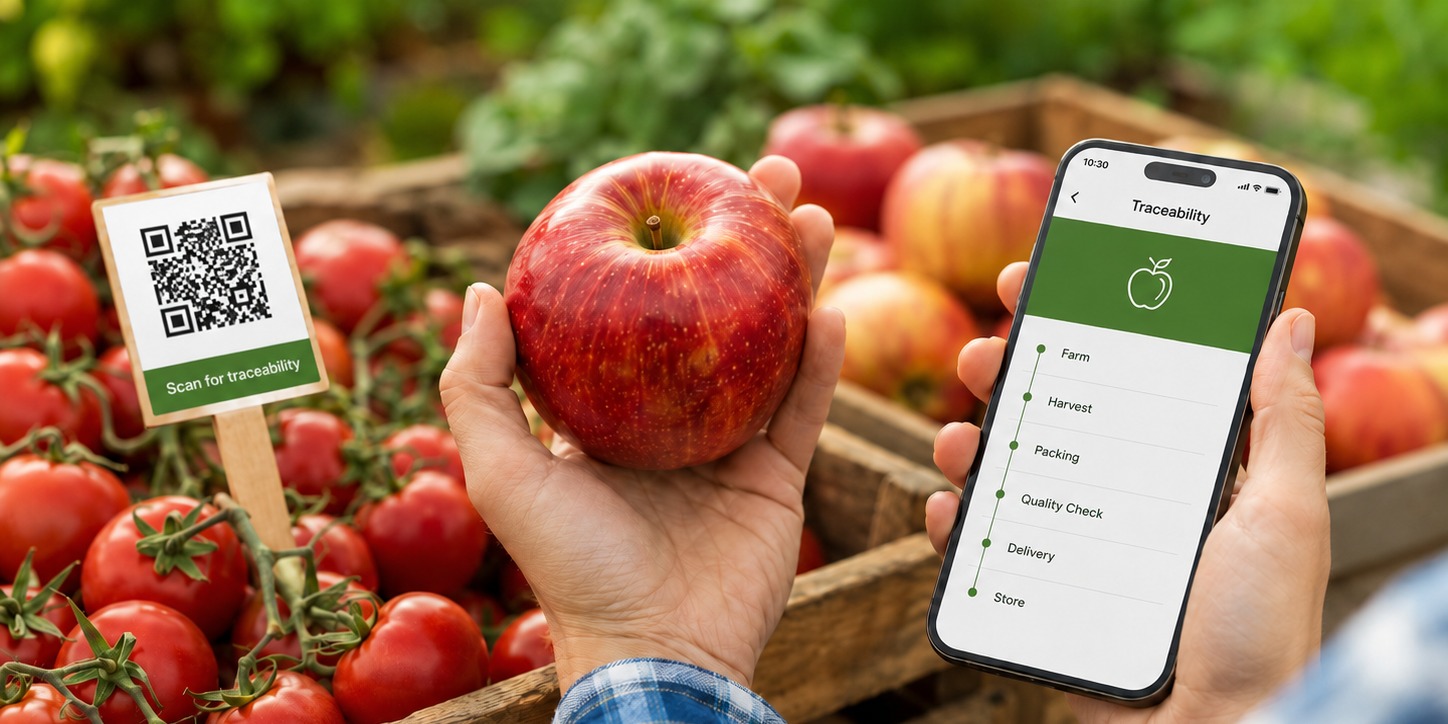
Third, they are treating CSRD compliance and commercial traceability as the same infrastructure project, rather than two parallel ones. The data that supports consumer-facing QR code transparency, buyer qualification, and CSRD disclosure overlaps significantly. As a result, companies that build one system to serve all three purposes lower their data collection cost and avoid duplicating supplier engagement.
Finally, they are using traceability to create competitive advantage, instead of treating it as a compliance cost. Retailers are increasingly using supply chain data capability as a supplier qualification criterion. Consequently, the brands with verified, field-level supply chain data are winning preferred supplier status ahead of those without it.
Download the AGRIVI CSRD Handbook for F&B Companies
A practical guide to what CSRD requires from food supply chains, the specific data points auditors look for, and the technology infrastructure that makes farm-level reporting possible at scale.
Frequently Asked Questions
What does CSRD require from food and beverage companies regarding agricultural supply chains?
CSRD requires F&B companies to disclose environmental and social impacts across their full value chain. This includes Scope 3 emissions from agricultural suppliers. In practice, it means verifiable farm-level data on pesticide use, water consumption, land management, and deforestation risk. Importantly, the requirement applies to every significant agricultural supplier in the chain.
How is CSRD different from existing certifications like GlobalGAP or Rainforest Alliance?
Third-party certifications verify that farms meet specific standards at a defined point in time. By contrast, CSRD requires continuous, auditable data disclosed at the company level on an annual basis. Certifications provide supporting evidence. However, they do not replace the requirement for systematic ongoing farm-level data collection and corporate-level disclosure.
How do food companies collect farm-level data for CSRD food traceability reporting?
Digital supply chain platforms such as AGRIVI Traceability allow food companies to collect field-level environmental data from farmer suppliers through mobile apps. Specifically, these platforms connect that data to supply chain records. Then they export audit-ready reports aligned with CSRD disclosure standards, without manual consolidation.
When do food companies need to be ready for CSRD food traceability reporting?
The CSRD rollout proceeds in waves. Larger companies are already filing, and others phase in over subsequent reporting periods. Given that supply chain data collection typically takes 12 to 18 months to operationalize, most F&B companies need to begin readiness work well ahead of their first applicable reporting period.