In most agri-input markets, field sales teams directly cover 20 to 30% of farms by volume, while the remaining 70 to 80% is reached through distributor networks, indirect programme communications, or not actively reached at all. That is not a failure of the sales team. It is a structural feature of a go-to-market model designed when the cost of direct farm contact at scale made anything else economically impossible. AI advisory for agri-input distributor reach changes that economic structure.
The structural constraint is real, but the assumption that it cannot be changed is not. AI advisory for agri-input distributor reach extends commercial presence to farms outside the direct sales call cycle at a cost structure that was not previously available. It does not replace the field team. It covers the geography that the field team cannot.
The Distributor Network Reach Problem in Detail
Distributors are essential to the agri-input go-to-market model at scale. They provide last-mile logistics, local relationships, credit facilities, and market knowledge that would be prohibitively expensive for input companies to replicate directly. As the OECD framework on responsible agricultural supply chains highlights, this multi-tier structure shapes how value, information, and risk move between input brands and the farm.
A distributor carries between four and twelve competing input brands in most markets. Active advocacy for any one brand is voluntary, variable, and influenced by margin, promotional support, and the distributor’s own commercial interests in a given season. Consequently, the input brand that invests the most in distributor support in January may not be the distributor’s priority recommendation in March.
For the farms within a distributor’s network, the relationship with the input brand itself is often minimal. The farmer knows the distributor. They may not know, or care, which brand recommended the product the distributor sold them. This creates an attribution gap that makes brand-level loyalty difficult to build and even more difficult to measure in distributor-heavy markets.
The commercial risk crystallizes when distributor relationships change. When a distributor switches allegiance, acquires a competing brand, or exits a market, the input brand’s relationship with every farm in that distributor’s network is at risk. In a distributor-dependent model, that can mean losing access to the majority of a regional market.
How AI Advisory Extends Reach Into Distributor Networks
The AGRIVI AI Engage model for distributor networks works by creating a direct advisory relationship between the input brand and the farmer, running in parallel with the distributor commercial relationship rather than competing with it.
The input company deploys a branded AI advisor, accessible through WhatsApp, Viber, or the digital channels the farmer already uses. The advisor provides verified agronomic guidance, product information, and seasonal advice in the brand’s voice and grounded in the brand’s agronomist-curated knowledge base.
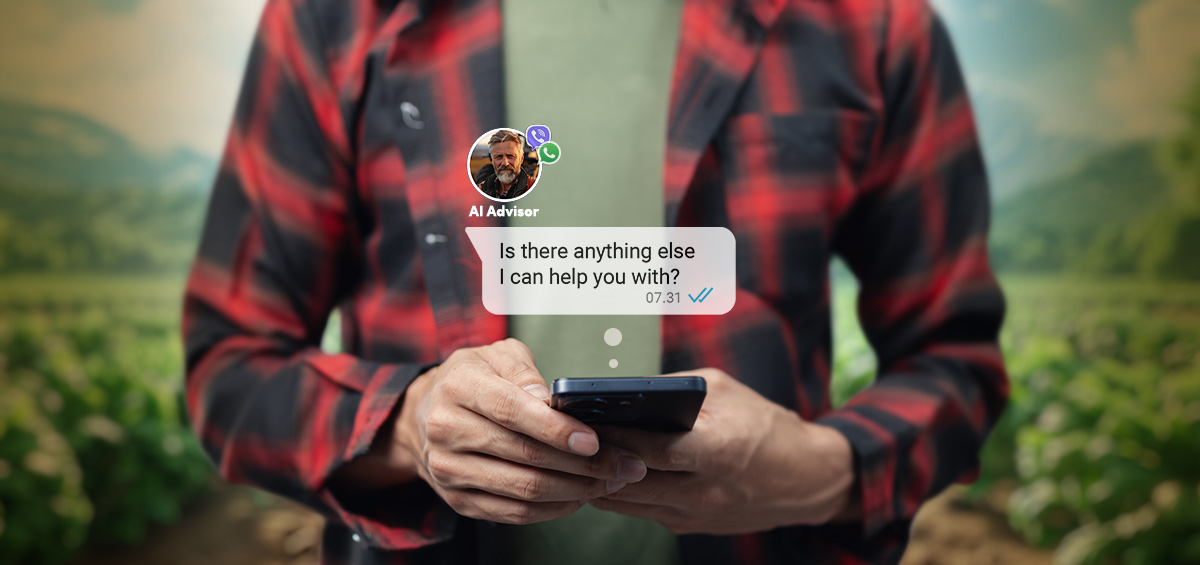
Distributor partners share the AI advisor with their farmer contacts as a value-added service, framed as the input company providing their network with direct access to agronomic expertise. This framing works commercially because it is accurate. The distributor is giving their farmers something genuinely useful, and the input brand is building a direct advisory relationship with the farm without displacing the distributor’s commercial role.
The farmer’s experience is that they can get a question answered at 10 pm on a Tuesday without waiting for the rep’s next visit or the distributor’s next call. That experience creates a brand association that is independent of the distributor relationship, and it persists even when the distributor’s product mix changes.
What Agri-Input Distributor Reach Looks Like in Enterprise Deployments
Across AGRIVI AI Engage deployments that have actively used distributor networks as an engagement channel, the reach numbers are consistently different from those achieved through direct sales outreach alone.
Enterprise deployments have recorded three times the number of new farm touchpoints compared to the same company’s direct outreach in the same geography, with the majority of the incremental reach coming through distributor network activation. Farms that had no prior direct contact with the brand began receiving and engaging with advisory content within weeks of distributor partners sharing the AI advisor access.
Engagement with existing distributor-served customers increases significantly as well. Farmers who previously had one or two seasonal touchpoints with the brand, driven by the distributor’s sales cycle, begin to have eight, twelve, or more advisory interactions per season. The relationship density changes from transactional to advisory, and the commercial retention data reflects that change in subsequent seasons.
The Qualification Handoff Between AI Advisory and the Sales Team
The main benefit of AI advisory for distributor networks is the most visible outcome. The less visible but commercially critical outcome is the qualification data it generates for the field team.
When a rep calls a farm that has had twelve advisory interactions through the AI channel over the preceding three months, they arrive knowing what crops the farmer is managing, which disease pressures they have been dealing with, which products they have been asking about, and how responsive they have been to advice in previous seasons. The rep enters the conversation with context that a cold call never provides.
This context shortens the qualification conversation considerably and increases conversion rates on follow-up calls. It also allows reps to prioritize their limited call time based on advisory engagement patterns, focusing on farms where the AI data indicates a high-probability commercial opportunity rather than working a territory call list sequentially.
Distributor partners see this integration as a positive one. The AI advisor is not replacing the distributor’s rep with the farmer. It is making the distributor’s rep and the input brand’s rep more effective when they do make contact. The distributor benefits from a stronger farmer relationship and a more prepared sales team when it matters commercially.
Building an AI Advisory Programme for Distributor Networks: The Five-Step Model
The programmes that achieve the strongest distributor reach results share a common design process that can be adapted across markets, crop types, and distributor network structures.
The first step is defining the advisory geography and priority crop segments for the initial deployment. Starting broad and covering everything is the most common design mistake. Starting with the crop segments where the knowledge base can be strongest, and the distributor network is most active, produces faster results and a better foundation for expansion.
The second step is building and validating the agronomic knowledge base for those crop segments, a process that requires input from the company’s own agronomists and from local market experts who understand the specific conditions, regulatory environment, and seasonal patterns in the target geography.
The third step is activating distributor partners as advisory distribution channels. This is more straightforward than most input companies expect when it is framed as a value-added tool for the distributor’s farmer network rather than as a brand programme the distributor is being asked to promote.
The fourth step is connecting the AI advisory interactions to the commercial team’s workflow. Therefore, the team defines which engagement signals indicate high-probability follow-up opportunities and builds the process for routing that information to the relevant rep or area manager.
The fifth step is measuring reach, engagement, and commercial attribution by distributor network, by region, and by crop segment, and using that data to refine the knowledge base and the distributor activation approach in season two.
Explore AI Engage for Distributor Network Reach
See how a branded AI advisor extends commercial presence to farms your direct sales cycle cannot cover. Visit the AGRIVI AI Engage product page to see how the model works for your distributor network.
Frequently Asked Questions
How Does AI Advisory Help Agri-Input Companies Reach More Farms?
AI advisory programmes deployed through messaging channels farmers already use extend consistent brand presence to farms that fall outside regular sales call cycles, including those served through distributor networks. This creates direct advisory relationships without requiring additional headcount.
What Is the Agri-Input Distributor Reach Problem in Agribusiness?
Most agri-input companies depend on distributor networks to reach the majority of farms in a market. Distributors carry multiple brands, limiting any single brand’s ability to build direct advisory relationships or maintain a consistent presence with the farms in those networks.
How Do Input Companies Use AI Advisory to Support Distributor Partners?
Input companies can equip distributor networks with a branded AI advisor that distributors share with their farmer contacts. This delivers verified agronomic guidance in the brand’s voice, building direct trust without displacing the distributor’s own commercial farmer relationship.
What Results Do Agri-Input Companies See From AI Advisory Programmes Targeting Distributor Networks?
Enterprise deployments have recorded three times the new farm touchpoints compared to traditional sales outreach, over 50% increases in engagement with existing distributor-served customers, and a significant qualified pipeline attributed to advisory interactions across multiple crop seasons.