The conversation at EIC Summit 2026 in Brussels delivered a sharper message than many expected about scaling innovation globally. European innovators do not lack ambition. Furthermore, they do not lack technology. What many lack is the operational discipline to convert funding and breakthrough ideas into international commercial outcomes. Indeed, going global requires more than capital, more than a strong product, and far more than a translated website.
Scaling Innovation Globally Is an Execution Problem, Not Just a Funding One
For years, the European innovation conversation centered on the funding gap. How do European startups secure enough capital to compete with American and Asian counterparts? Furthermore, how can policy close that investment divide? These remain valid questions. However, the EIC Summit 2026 panel “Going Global: Turning Market Access into Scalable Growth” reframed the discussion entirely.
Capital matters. Yet capital alone does not create scale. Many well-funded European innovations remain stuck in their home markets while less-resourced competitors capture international demand. Moreover, the reason rarely involves money. Instead, the gap shows up in execution: the ability to adapt products, build local credibility, and convert ambition into commercial agreements that actually close.
This shift in framing matters because it changes what European innovators should prioritize. The next round of funding will not solve a market-entry problem. Similarly, the next press release will not create commercial traction in Lagos or Dubai. Only the disciplined work of testing, adapting, and partnering on the ground delivers that outcome.
Why Product-Market Fit Must Be Tested Market by Market
One of the most consistent themes across the panel involved a deceptively simple insight: product-market fit does not travel automatically. A solution that succeeds in Paris may struggle in Sao Paulo for reasons that have nothing to do with product quality.
For instance, adoption drivers differ. A European farmer adopts digital agriculture tools because of cost optimization and compliance pressure. Meanwhile, a farmer in West Africa may adopt the same tools for entirely different reasons: yield improvement, access to agronomic knowledge, or smallholder aggregation. Moreover, buying processes diverge significantly. The European procurement cycle bears little resemblance to budget approvals in a public-sector tender in North Africa.
Regulation adds another dimension. Data residency requirements, certification standards, and operational compliance vary by region. Successful scaleups therefore treat each market as a separate go-to-market problem rather than a translation exercise. From AGRIVI’s experience operating across 50+ countries over 13 years, the companies that struggle most are typically those that assume their European playbook will work everywhere. By contrast, the companies that succeed treat product-market fit as something to earn in every new market, not export from headquarters.
Go Global, Act Local Demands Real Market Presence
The phrase “go global, act local” has become a cliche in international expansion conversations. Yet the EIC Summit panel pushed back on the slogan’s superficial use. Acting local is not about regional marketing campaigns or local-language brochures. Rather, it requires real market presence, real local understanding, and the discipline to adapt go-to-market strategy without losing what makes the core product valuable.
This balance is harder than it sounds. Many European innovators either over-globalize and lose local relevance, or over-localize and lose the platform advantages that justified going abroad in the first place. Consequently, the right balance involves knowing what must stay consistent and what must change. The core technology, the value proposition, and the quality standards remain constant. Meanwhile, the pricing, the partnership structures, the implementation approach, and the local engagement model all require adaptation.
AGRIVI’s expansion across the Middle East and Africa illustrates this principle in practice. The platform stays the same, but the way it reaches farmers through AI-powered agronomy advisors, the partners who deliver it, and the commercial models that work in each market all differ significantly. Therefore, what looks like one company operating globally is actually multiple market-specific approaches sharing common technology.
Partners Determine Whether Scaling Innovation Globally Stays Theoretical
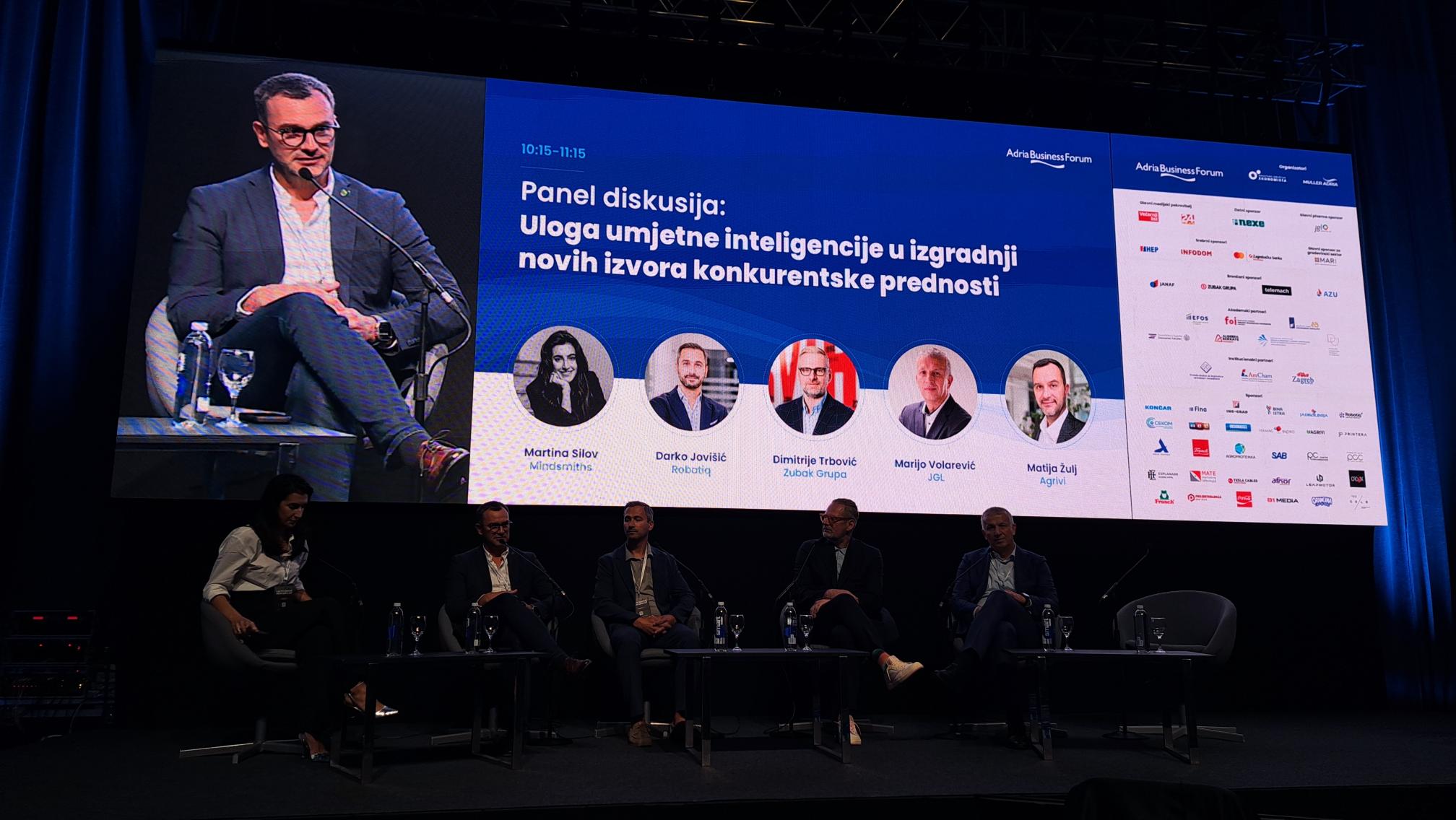
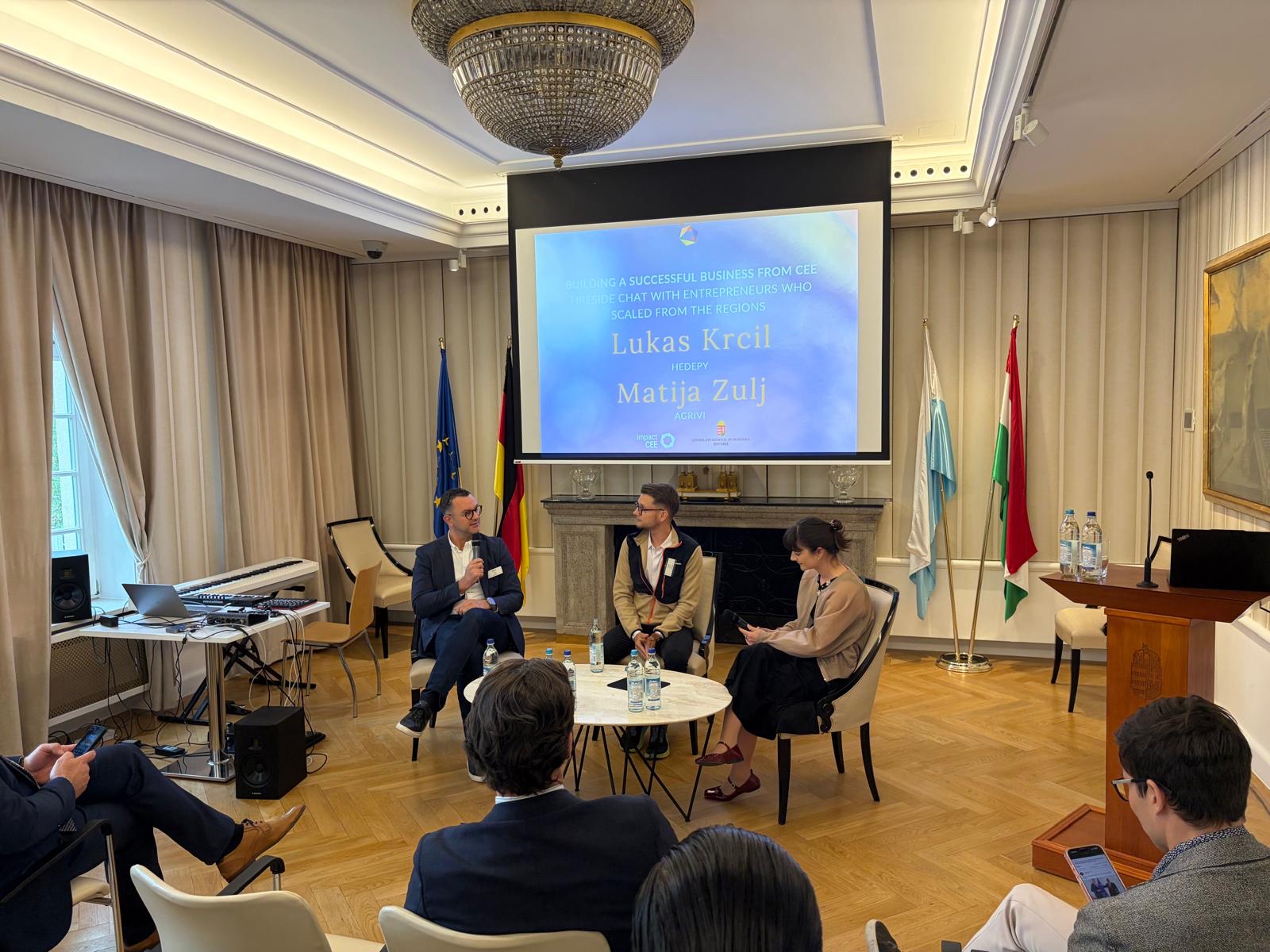
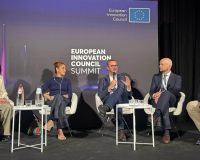
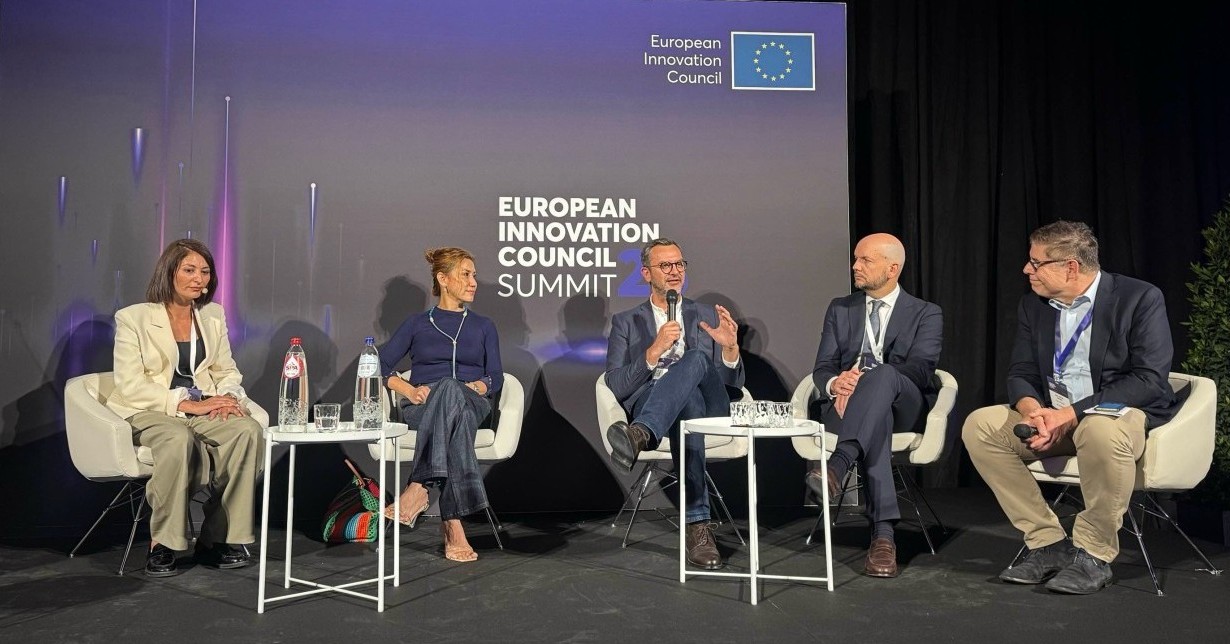
Panelists Nassima Ferahtia (EIC), Trixie Loh Mirmand (Dubai World Trade Centre), Matija Žulj (AGRIVI), Adnan Šerić (UNIDO), and Jean-Michel Deligny (EIC Scaling Club) discussed “Going Global: Turning Market Access into Scalable Growth” at EIC Summit 2026, Brussels.
Perhaps the most underappreciated insight from the panel involved partnerships. Local relationships, trust, and market credibility often determine whether international expansion stays theoretical or becomes commercial.
This observation runs counter to the assumption that strong technology speaks for itself. In practice, the best technology in the world struggles to enter a market without local partners who already command trust. In emerging markets especially, business runs on relationships built over years, regulatory knowledge accumulated through experience, and credibility that no company can purchase on LinkedIn.
For European scaleups, this means the partner strategy is not a side initiative. Rather, it sits at the center of any serious international expansion plan. Selecting the right partners, structuring agreements that align incentives, and investing in those relationships consistently over time separate companies that announce global ambition from companies that actually achieve it.
Why Ecosystem Support Matters Beyond Capital
Initiatives like the European Innovation Council represent something different than traditional funding mechanisms. Beyond capital, EIC-supported companies gain access, exposure, networks, and practical go-to-market support that money alone cannot buy.
Specifically, programs like EIC Business Acceleration Services connect companies with high-growth markets, strategic events, and global networks at the moment they need this support most. For example, the opportunity to participate in flagship events like GITEX Global in Dubai or GITEX Africa in Morocco translates into concrete commercial outcomes when companies arrive prepared. For AGRIVI, these EIC-supported activities have produced customer agreements and partner relationships that would have taken years to build independently.
This is the kind of ecosystem effect that funding alone cannot replicate. Importantly, it positions Europe to compete not just on capital availability but on the practical infrastructure that helps innovations actually reach global markets.
Strategic Hubs and Sustainable Development Goals as Scaling Accelerators
The EIC Summit panel also explored two often-overlooked accelerators for global scaling: strategic hub markets and alignment with Sustainable Development Goals.
Cities like Dubai have positioned themselves as gateways to broader regions. For European innovators targeting the MENA region, Africa, or parts of Asia, Dubai functions as both a launchpad and a credibility marker. Trade infrastructure, matchmaking programs, and sector-specific clusters all reduce the friction of entering new markets. Notably, agritech is one of the sectors actively prioritized in such hubs, alongside AI, fintech, and smart cities.
Alignment with the UN Sustainable Development Goals provides another scaling lever. Companies whose solutions advance SDGs related to food security, climate adaptation, or rural development unlock partnership opportunities with development organizations, governments, and multilateral institutions. This alignment is not greenwashing. Rather, it reflects the reality that many of the largest international opportunities now sit at the intersection of commercial scale and measurable impact.
What Europe Needs Next for Scaling Innovation Globally
The launch of the Scaleup Europe Fund at EIC Summit 2026 marks a meaningful step forward. Europe needs more innovation, but more importantly, Europe needs more innovations that can actually scale globally. The continent has no shortage of breakthrough technologies. What has often been missing is the connective tissue between research excellence, commercial readiness, and international execution.
If the next phase of European innovation policy delivers on this connective tissue, the implications go beyond individual scaleups. They reshape Europe’s position in global markets. Furthermore, industries from agritech to clean energy to health tech could move from being European success stories to globally dominant categories led by European companies.
The pieces are coming together. Funding mechanisms are evolving. Ecosystem support is becoming more sophisticated. Consequently, the remaining work involves making execution as easy as possible for the companies trying to take European innovation into the world.
From Conversation to Concrete Outcomes
What makes the EIC Summit 2026 worth attention is not the prestige of the venue or the seniority of the speakers. Instead, it is the focus on practical execution rather than theoretical ambition. Going global is no longer a matter of why. Rather, it is a question of how. The companies that answer that question well will define the next decade of European innovation.
For agritech specifically, the opportunity has never been larger. Climate pressure, food security imperatives, and the digital transformation of agriculture across emerging markets create a structural growth opportunity that European agritech is uniquely positioned to address. Therefore, scaling innovation globally is no longer optional for the sector. It is the work itself.
Explore AGRIVI Digital Agriculture Solutions
Learn how AGRIVI helps European agritech, agri-food companies, and agriculture input companies build the operational foundation for scaling innovation globally.
Frequently Asked Questions
What does scaling innovation globally mean?
Scaling innovation globally means moving a technology, product, or business model beyond its home market into commercially successful operations in multiple countries. It involves more than translation. It requires adapting product-market fit, building local presence, securing local partners, and operating with the discipline to deliver consistent outcomes across diverse markets.
Why is scaling innovation globally an execution challenge?
Scaling innovation globally is an execution challenge because funding alone does not solve market entry problems. Companies need to test product-market fit market by market, adapt their go-to-market strategy, build credibility with local partners, and navigate regulatory and cultural differences. These are operational disciplines that cannot be solved by capital alone.
How does the European Innovation Council support global scaling?
The European Innovation Council supports global scaling through funding, but also through Business Acceleration Services that provide access, exposure, networks, and practical go-to-market support. EIC-supported companies gain participation in flagship international events, matchmaking programs, and structured pathways to high-growth markets.
Why does product-market fit need to be tested market by market?
Product-market fit needs to be tested market by market because adoption drivers, buying processes, regulation, and customer expectations differ significantly across regions. A solution that solves the same global problem may be adopted for different reasons in different markets, which changes the go-to-market approach required for commercial success.
What is the Scaleup Europe Fund?
The Scaleup Europe Fund, launched at EIC Summit 2026, is a European initiative designed to support the scaling of European innovations into global markets. It signals a policy commitment to closing the gap between research excellence, commercial readiness, and international execution for European scaleups.