Key Takeaways – Shared Operating Record Farm Management FMS
- A shared operating record farm management platform holds field, agronomy, and cost data in one record, with a dedicated view for agronomy, one for operations, and one for finance.
- Each pillar sees the same data the moment it changes. When agronomy logs an activity, operations sees the labor impact and finance sees the cost impact from that same update.
- Three failure modes disappear once the three views share one record: conversation cost, decision lag, and trust erosion.
- The weekly meeting becomes a decision exercise once agronomy, operations, and finance stop arguing about whose number is correct.
- Enterprise specialty crop operations that move to a shared operating record report input savings around 23% and revenue increase around 10% through better in-season allocation discipline.
Shared operating record farm management refers to a farm data architecture where one record holds field, agronomy, and cost data. Three pillars- agronomy, operations, and finance- each work from a filtered view of that record, instead of from a separate system. The shared record is not a dashboard. It is the source data layer beneath the views. When any pillar updates the record, the other two see the change immediately.
Inside most enterprise farm groups, agronomy works from one tool, operations from another, and finance from a third.
The data in each tool is correct as of when it was last updated. The problem is that each tool updates at a different frequency, in a different format, and by different people who do not see each other’s changes until the next meeting. That mismatch creates a reconciliation cycle that runs continuously in the background of every operational decision.
Before the operations manager can decide whether to redeploy a crew from Block 3 to Block 7, they need the cost position of both blocks. That information sits in the finance tool, while the agronomy position of both blocks sits in the agronomy tool. The decision requires data from two places that are not connected.
Where Agronomy, Operations, and Finance Actually Diverge
Agronomy thinks in growth stages and pest windows. Operations thinks in labor hours and equipment schedules. Finance thinks in cost per hectare and budget variance. Each pillar is right about its own numbers. The divergence starts the moment one pillar needs a fact that lives in another pillar’s system.
That divergence is not a communication problem between people. It is an architecture problem between systems. According to FAO’s Digital Agriculture and AI Innovation programme, data fragmentation across disconnected systems and teams is a persistent barrier to operational efficiency on enterprise farms. The shared operating record approach removes that fragmentation. It does not add a translation layer on top of three systems. It gives agronomy, operations, and finance the same underlying record to begin with.
What a Shared Operating Record Farm Management Platform Actually Means
A shared operating record farm management platform holds field activity, agronomy decisions, and cost allocation in one record. Every pillar works from that record. No synthesis layer sits between the pillars and the data.
The distinction between a shared operating record and a reporting dashboard is fundamental. A dashboard aggregates data from multiple source systems and displays a synthesised view. The shared record is the source itself. When the agronomy team logs a field activity, the cost view updates immediately. When the finance team opens that view, they see the agronomy team’s entry from that same morning.
Understanding how budget versus actual farm management changes when it runs on a shared operating record rather than a reporting cycle is the clearest illustration of the difference. Budget versus actual on a shared record is a live view. Budget versus actual on a reporting cycle is a retrospective explanation.
What Agronomy Gains From a Shared Operating Record Farm
On a shared operating record, agronomy gains an audience for every entry the moment it is logged. A scouting note or a field activity is not only a record for agronomy’s own file. It becomes the operations team’s labor signal and the finance team’s cost signal at the same time.
Agronomy already does the work of observing the field: logging pest pressure, growth stage, and completed activities. On a shared record, that work does double duty. The entry that documents what happened in Block 7 this morning is what operations uses to judge whether a crew should move there this afternoon, and what finance uses to update the cost position for that block. Agronomy is not asked to do anything differently. The record simply stops keeping that information to itself.
Without a shared record, agronomy’s observations sit inside the agronomy tool until someone manually pulls them into a meeting or a spreadsheet. The insight already existed. It just was not visible to the pillars that needed it.
What Changes for Operations When the Record Is Shared
Operations makes resourcing calls, crew moves, equipment scheduling, and task sequencing that depend on knowing both the agronomy position and the cost position of a block at the same time. A shared record puts both in front of operations without a request to another department.
Redeploying a crew from Block 3 to Block 7 is a call that needs two signals. One is the agronomy signal: which block has the more urgent pest or growth-stage window. The other is the cost signal: which move is more defensible against this season’s budget. On separate systems, getting both means asking two other teams and waiting for an answer. On a shared record, both signals are already in the operations view, because they were logged once and did not need to be re-entered or re-requested.
That difference sounds small until it is measured across a season. So every redeployment decision that waits for a data request is a decision made later than it needed to be, on a field that does not wait.
Where Economics Fits Into a Shared Operating Record Farm
Economics, the finance function on a shared operating record, stops being the pillar that reconstructs what happened after the fact. It becomes the pillar that sees the cost position change in real time as agronomy and operations log activity.
On separate systems, finance’s version of the season is built from exports, from monthly closes, from a reconciliation process that turns field-level activity into a cost line weeks after the activity happened. On a shared record, the cost view updates the moment an input is applied or a labor hour is logged. Financial controllers see the current cost position of every block without asking the field team to stop and report it.
This is what makes budget versus actual a live number instead of a monthly surprise. The economics pillar gets the same real-time footing that agronomy and operations already have, because it draws from the same record rather than a separate financial system trying to catch up to the field.
Why Dashboard Layering Gives Three Delays, Not Three Views
Adding a dashboard on top of three separate systems does not give agronomy, operations, and finance a shared view. It gives each pillar the same delay it already had, wrapped in a nicer display.
The dashboard layering pattern is familiar. An agronomy tool holds field records. A separate system holds costs. A dashboard tool connects the two and presents a consolidated view, promising to be the single source of truth. The team uses it for several months. Then a discrepancy appears between what the dashboard shows and what the agronomy team’s own records show. The investigation reveals that one system updated on a schedule the dashboard did not account for. The dashboard was showing last week’s cost data next to this week’s agronomy data.
Every synthesis layer introduces this risk, no matter how well the dashboard is designed. The shared operating record removes it by removing the synthesis step. When the agronomy tool and the cost record are not separate systems being connected, but filtered views of the same record, there is no synchronisation failure mode to have in the first place.
The Reconciliation Cost of Running Three Separate Systems
Reconciliation cost is the invisible overhead of managing enterprise farm data across three disconnected pillars. It includes the time the operations manager spends extracting data from the agronomy tool to share with finance before the weekly meeting. The financial controller’s own share is the time spent building the consolidated cost view operations needs for allocation decisions. And the meeting itself carries a cost: time spent agreeing on whose numbers are correct before any operational decision gets made.
That overhead recurs every week, every season, every year. On a large enterprise farm, it adds up to a significant, recurring share of management time spent on data logistics rather than operational decisions. A shared operating record removes that overhead at the architecture level, not by making reconciliation faster, but by making it unnecessary.
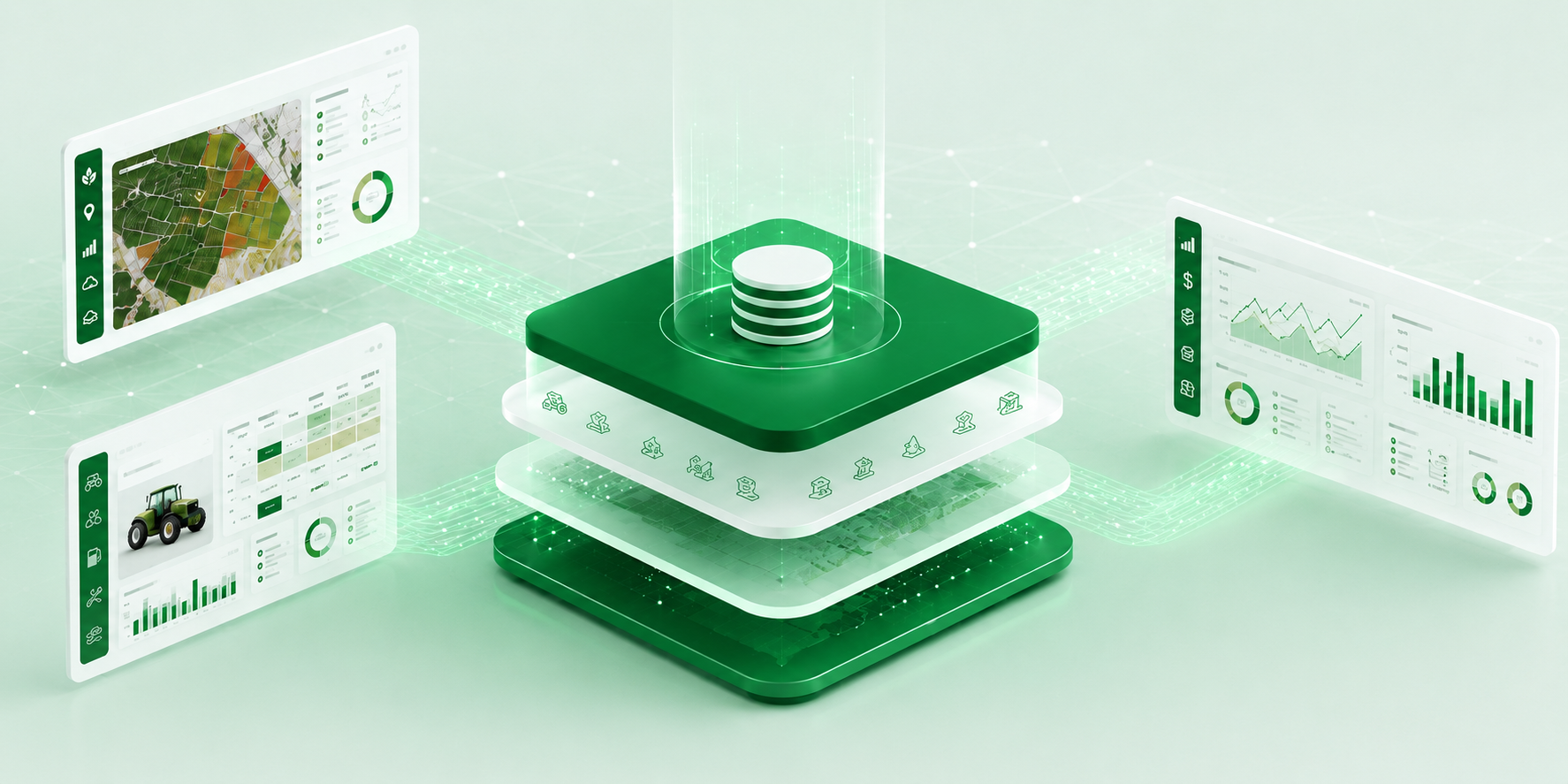
What a Shared Operating Record Farm Looks Like in Practice
In practice, a shared operating record farm system means agronomy, operations, and finance open the same platform on Monday morning. All three see the same data from the previous week. Because nothing needs reconciling, the discussion goes straight to the decision, not to whose numbers are right.
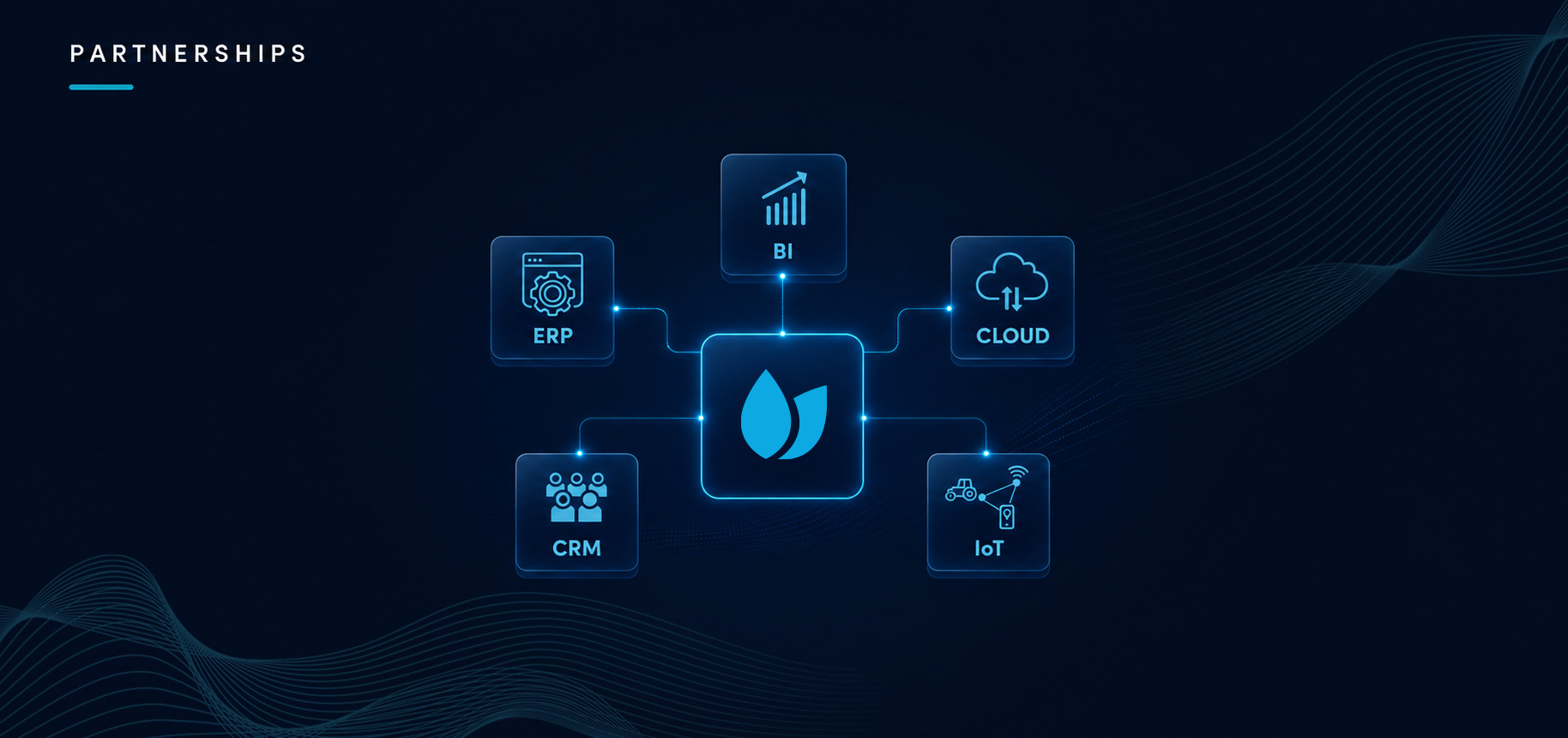
AGRIVI 360 FMS acts as the shared operating record: one record holds field activity, agronomy decisions, and cost allocation, and separate filtered views serve agronomy, operations, and finance.
Three Failure Modes When the Three Views Aren’t Actually One Record
Three failure modes recur consistently on enterprise farms without a shared operating record: conversation cost, decision lag, and trust erosion.
Conversation cost is the first. Most operational meetings on farms running three separate systems spend the first half resolving a data discrepancy between what agronomy shows and what finance shows. By the time the pillars agree on the right number, the meeting is past its midpoint and the decisions that need to be made get rushed.
Decision lag is the second. When the data an operational decision needs is not available until after the meeting, because it has to be extracted, shared, and reconciled first, decisions get deferred. The field does not defer with them. By the time the decision is made, the optimal moment has often passed.
Trust erosion is the third. When finance’s numbers and operations’ numbers produce different answers to the same question in different rooms, the leadership team stops trusting either set. They make decisions on instinct rather than data, regardless of how sophisticated the underlying tools are. Understanding specialty crop farm management at block level requires exactly the kind of trust in shared data that the reconciliation cycle erodes.
The Meeting Where Agronomy, Operations, and Finance Stop Reconciling
The meeting that changes most visibly when an enterprise farm moves to a shared operating record is the weekly operations meeting. The agenda shifts from reconciling whose numbers are correct to deciding what to do with the numbers.
The shift is immediate and measurable. In the first weekly meeting after moving to a shared operating record, the first agenda item changes. Instead of “finance shows X, agronomy shows Y, let’s reconcile,” the first agenda item is “the shared record shows X, here is what we recommend doing.” The data is not in dispute. The decision is on the table.
That shift in meeting structure is not cosmetic. It is a direct consequence of the architecture change. When agronomy, operations, and finance work from one record, they recover the first half of every meeting. That recovered time is where operational decisions get made with the attention they require.
Starting With a Shared Operating Record Farm: The Recommended Sequence
Step 1: Map which pillars are working from separate data sources today. Identify agronomy, operations, and finance as the three typical sources. Count how many different systems each pillar uses and how often they reconcile.
Step 2: Identify the decisions that suffer most from reconciliation lag. For most enterprise specialty crop farms, these are spray timing, labor reallocation, and input ordering. These are the decisions the shared record has to support on a weekly cadence.
Step 3: Configure one shared record with three filtered views. Set up AGRIVI 360 FMS as the source for agronomy, operations, and finance. Configure field activity, agronomy, and cost allocation views filtered from the same record.
Step 4: Replace the reconciliation meeting with the decision meeting. Move the weekly operations meeting agenda from number reconciliation to decision-making. The shared record has already done the reconciliation.
Frequently Asked Questions About Shared Operating Record Farm Management
What Is a Shared Operating Record Farm Management Platform?
A shared operating record farm management platform holds all operational data, field activity, agronomy decisions, and cost allocation in one record, with filtered views for agronomy, operations, and finance. All three pillars work from the same source data. There is no synthesis layer, no reconciliation step, and no synchronisation failure mode between them.
How Does a Shared Operating Record Farm Differ From a Reporting Dashboard?
A reporting dashboard aggregates data from multiple source systems and synthesises it into a display layer. A shared operating record is the source itself. Dashboards can drift out of sync when the underlying sources update on different schedules. The shared record cannot drift because there is only one source. When any pillar updates the record, the other two see the change at the same time.
What Are the Three Failure Modes a Shared Operating Record Farm Eliminates?
The three failure modes are conversation cost, decision lag, and trust erosion. Conversation cost means meetings spent reconciling whose numbers are correct rather than making decisions. Decision lag means operational decisions deferred while pillars wait for data agreement. Trust erosion means leadership deciding on instinct rather than data, because different rooms produce different answers from different systems.
How Quickly Does the Shift to a Shared Operating Record Farm Change Operational Meetings?
The shift is visible in the first weekly meeting. The agenda changes immediately. The team recovers the first half of the meeting from number reconciliation and redirects it to operational decisions. Agronomy, operations, and finance arrive having already seen the same data in their individual views, so the meeting starts from an agreed baseline.
What Results Have Enterprise Farms Seen From Moving to a Shared Operating Record?
Enterprise specialty crop operations that have shifted to a shared operating record report input savings around 23% and revenue increase around 10% through better in-season allocation discipline. These outcomes come from catching variance as it appears, making spray, labor, and input decisions from a current shared baseline, and removing the management overhead of the reconciliation cycle.
Check the Shared Operating Record in an Enterprise Specialty Crop Context – Book a 30-minute session with an AGRIVI enterprise team member to see how agronomy, operations, and finance work from one shared operating record, for your operation size and crop mix.