
From Farm Records to Enterprise Intelligence
Digital agriculture is moving beyond record-keeping. After 13 years of development, AGRIVI is entering its next phase by connecting trusted agricultural data, Farm Management Software, and AI Workforce into one enterprise foundation.
AGRIVI, Barbara Busic
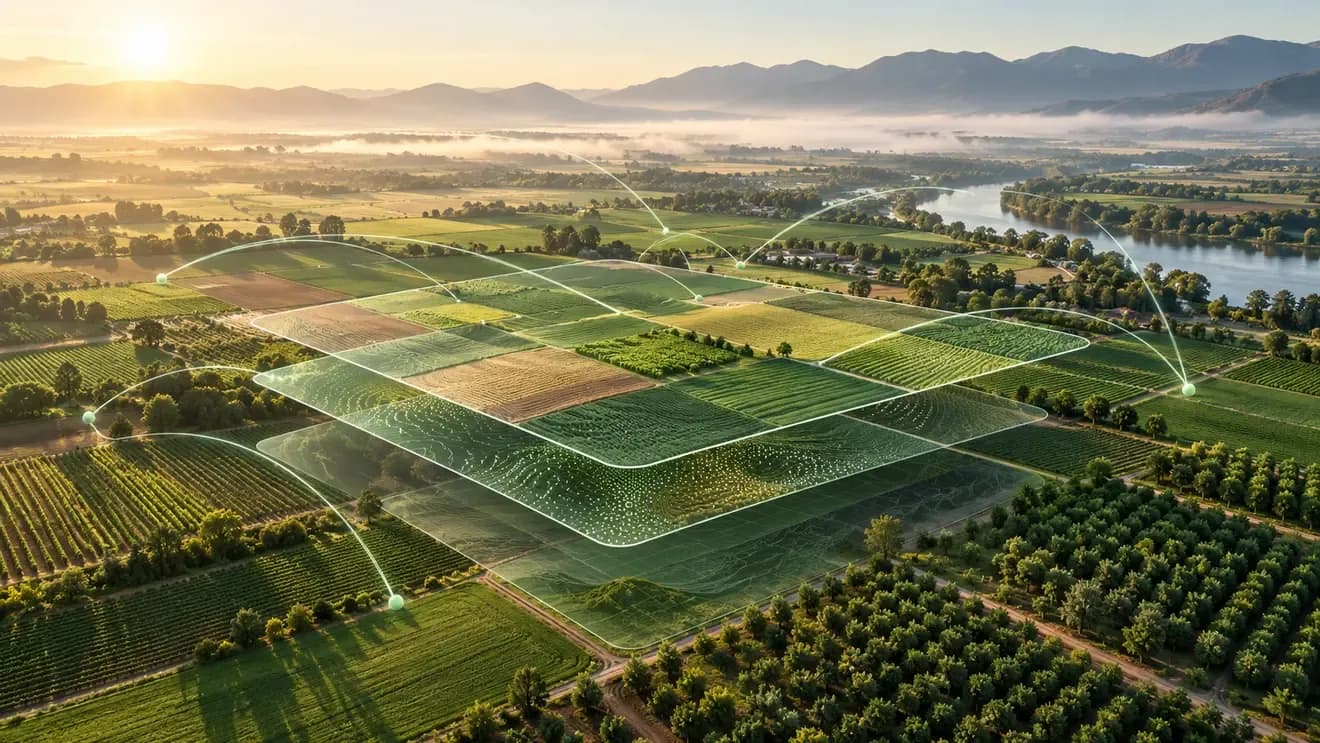
As digital agriculture enters its next phase, AGRIVI is bringing trusted farm data, connected operations and AI capacity into one enterprise foundation.
Key Points
• Agriculture is operating under greater climate, geopolitical, and economic volatility, increasing the value of reliable data and faster decision-making.
• The first phase of digital agriculture focused on replacing paper and creating structured farm records.
• The next phase must connect agronomy, operations, economics, compliance, and AI in a shared business context.
• After 13 years of development, AGRIVI now brings together Farm Management Software and AI Workforce, supported by a trusted agricultural data foundation.
• The new AGRIVI website is the clearest public expression of this evolution and the beginning of AGRIVI's next chapter.
Agriculture Is Operating in a Different World
Agriculture has always managed uncertainty. Today, however, the number of connected pressures has increased.
Climate volatility affects planting, crop development, yields, and the predictability of supply. The World Meteorological Organization's State of the Global Climate 2025 confirmed that 2015 to 2025 were the hottest 11 years on record, while extreme weather events continued to disrupt economies and communities.
At the same time, geopolitical tensions are reshaping trade, energy markets and supply chains. The World Trade Report 2026 describes how global crises have turned economic interdependence into a growing security concern. The World Bank's Global Economic Prospects also highlights the effects of sharp energy-price increases and broader economic uncertainty.
Agriculture does not sit outside these developments. Energy prices influence fertilizer, production, processing, transport and cold-chain costs. Trade disruption affects the availability and price of inputs. Food companies face growing pressure to understand where products originate, how they were produced and whether supply commitments can be met.
In this environment, knowing what happened on a farm is no longer enough. Enterprises need to understand what is happening now, what it means operationally and economically, and what should happen next.
The First Phase of Digital Agriculture Was About Records
The first major contribution of digital agriculture was essential: replacing fragmented paper records and spreadsheets with structured digital information.
Farm Management Software gave agricultural teams a better way to record fields, crops, activities, input applications, work, harvests, and costs. It created visibility where information had previously remained scattered across notebooks, files, and individual knowledge.
That foundation still matters. Artificial intelligence, analytics, and automation cannot compensate for missing, inconsistent, or unreliable agricultural data.
However, digital records alone do not create enterprise intelligence.
A company may have digital field records while its agronomy, production planning, finance, procurement, compliance and supply-chain teams still work with different versions of reality. Data may exist, but it may not reach the right person at the right moment. Reports may explain the past without helping teams determine the next action.
The challenge has therefore changed. Enterprises no longer need only a digital record of agriculture. They need a connected system for understanding and acting on it.
The Next Phase Is Enterprise Intelligence
Enterprise intelligence is not a new AGRIVI product category. It describes the business capability created when reliable data, operational context, economic visibility, and expert knowledge work together.
In agriculture, that capability requires several elements:
• trusted data from farms and fields
• connected agronomy, operations and economics
• visibility across owned farms and agricultural supply networks
• traceability and compliance records created during production
• information available to the people responsible for decisions
• AI operating within real agricultural roles and workflows
• human expertise retained where judgement, accountability and relationships matter
This is the point at which digital agriculture moves from recording activities to supporting coordinated action.
A farm manager can see whether work followed the plan. An agronomist can evaluate crop conditions in context. Finance can understand costs while the season can still be influenced. A food company can improve visibility across its grower network. An agri-input company can extend agronomic and commercial support to more farmers. A public institution can expand the reach of agricultural advisory programmes.
The value does not come from collecting more data for its own sake. It comes from connecting the right data to a decision, a workflow, and a measurable business outcome.
Thirteen Years of AGRIVI Evolution
AGRIVI was founded in 2013 around a clear problem: agricultural production generated critical information, but most organisations lacked the tools to structure it and use it effectively.
The early focus was farm management. As AGRIVI expanded across crops, countries and enterprise operating models, the scope of the challenge became wider.
Large agricultural organisations needed to connect agronomy with execution and economics. Food and beverage companies needed visibility across networks of growers. Retailers needed traceability supported by real production data. Agri-input companies needed new ways to support and engage large farmer networks. Public-sector programmes needed to make expert knowledge available at a scale that traditional advisory models could not always reach.
Over 13 years, and through deployments across more than 50 countries and over 200 crop types, AGRIVI developed from a farm-recording solution into an enterprise agriculture technology company.
Our experience shaped a simple conclusion: agriculture cannot be managed effectively through disconnected tools, isolated data, or artificial intelligence without a reliable operational foundation.
That conclusion now shapes the next phase of AGRIVI.
AGRIVI 5.0: A Clearer Response to a Changing Market
Internally, and in selected campaigns, we call this next chapter AGRIVI 5.0.
It is not a version number attached to one product. It represents a broader evolution of our company, product architecture, Brand DNA and market proposition.
At its centre are two distinct product categories.
AGRIVI 360 FMS is AGRIVI's enterprise Farm Management Software. It connects farm and field records, production planning and execution, agronomy, farm economics, compliance and traceability. It creates a common agricultural data and operational foundation across owned farms and grower networks.
AGRIVI AI Engage is AGRIVI's AI Workforce product. It provides agriculture-specific Digital Agents that expand team capacity across agri-input sales, grower coordination, and public advisory programmes.
These products solve different problems, but they share the same principle: technology creates value when it works with trusted data, clear processes, and real agricultural expertise.
AGRIVI 360 FMS structures agricultural operations and turns field activity into usable enterprise data. AGRIVI AI Engage extends specialised knowledge and capacity through the channels farmers already use. Together, they support a more connected model of enterprise agriculture transformation.
Agronomy. Operations. Economics. Connected.
Why the AGRIVI Website Evolved
A company's website reflects who the company is at a particular point in its development.
As AGRIVI grew, the website and the communication around it evolved as well. It helped companies across the world discover AGRIVI, understand the value of digital agriculture, and begin conversations that developed into long-term customer relationships.
That website represented an important phase of AGRIVI's development. The new website represents the phase we are entering now.
Over the past 13 years, AGRIVI has expanded its experience, products and understanding of the challenges faced by enterprise farms, food and beverage companies, retailers, agri-input companies and public-sector organisations. At the same time, the market has changed. Agricultural organisations now expect technology to connect farm data with operations, economics, supply-chain visibility, traceability and AI-supported capacity.
Our market communication therefore needed to mature alongside the company.
The new agrivi.com brings that evolution into one clearer and more connected story. It reflects AGRIVI's current product architecture, new Brand DNA and broader role across the agri-food value chain.
It also creates more relevant journeys for different industries and decision-makers. Visitors can explore AGRIVI 360 FMS, understand the role of AGRIVI AI Engage, review customer case studies and identify the path that best reflects their operating model and business priorities.
This is not a rejection of the AGRIVI story that came before it. It is the continuation of that story, shaped by experience, changes in the market, and a clearer understanding of where AGRIVI can create the greatest value.
The new website is not the transformation itself. It is the clearest public expression of the transformation happening behind it.
A Living Platform for AGRIVI's Next Chapter
The launch does not mean the website is finished.
Products will continue to evolve. New customer stories will provide stronger evidence. Market needs will change. Visitor behaviour will show us where the buyer's journey is clear and where it still creates friction.
We therefore see the new website as a living business platform, not a static campaign asset.
Its role is to help customers understand AGRIVI, find the right solution, and move from interest to a relevant business conversation. Its development will continue through content, product updates, market feedback and measurable user behaviour.
The website is new. The more important change is the one behind it.
AGRIVI is moving from a story centred primarily on farm records to a broader enterprise proposition built on trusted agricultural data, connected operations and AI capacity.
That is the next phase of AGRIVI. It is also where we believe digital agriculture is going.
Explore the new AGRIVI website or book a meeting with an AGRIVI expert to discuss what this evolution could mean for your organisation.
Frequently Asked Questions
What does enterprise intelligence mean in agriculture?
Enterprise intelligence in agriculture is the ability to connect reliable farm and field data with agronomy, operations, economics, compliance, and decision-making. It helps different teams work from a shared view of agricultural reality and take coordinated action.
Is enterprise intelligence a new AGRIVI product?
No. Enterprise intelligence is the outcome enabled by AGRIVI's product architecture. AGRIVI's two product categories remain Farm Management Software, delivered through AGRIVI 360 FMS, and AI Workforce, delivered through AGRIVI AI Engage.
What is AGRIVI 5.0?
AGRIVI 5.0 is the internal and campaign name for AGRIVI's next company phase. It connects the company's new Brand DNA, product architecture, and market proposition around trusted agricultural data, Farm Management Software, and AI Workforce.
Why did AGRIVI launch a new website?
AGRIVI's products, experience and market proposition have continued to evolve alongside the wider digital agriculture market. The new website reflects the company's current Brand DNA and product architecture, while creating clearer journeys for the industries, organisations and decision-makers AGRIVI serves.
Published by AGRIVI. Editorial responsibility: AGRIVI Marketing & Communications.
Ready to digitalize your farm?
See how AGRIVI can help you apply these insights in your own operations.
Book a Meeting