
How Agricultural AI Agents Extend Sales and Agronomy Team Capacity
AI agents help agri-input companies maintain grower engagement between visits while their sales and agronomy teams focus on expert decisions and commercial relationships.
AGRIVI
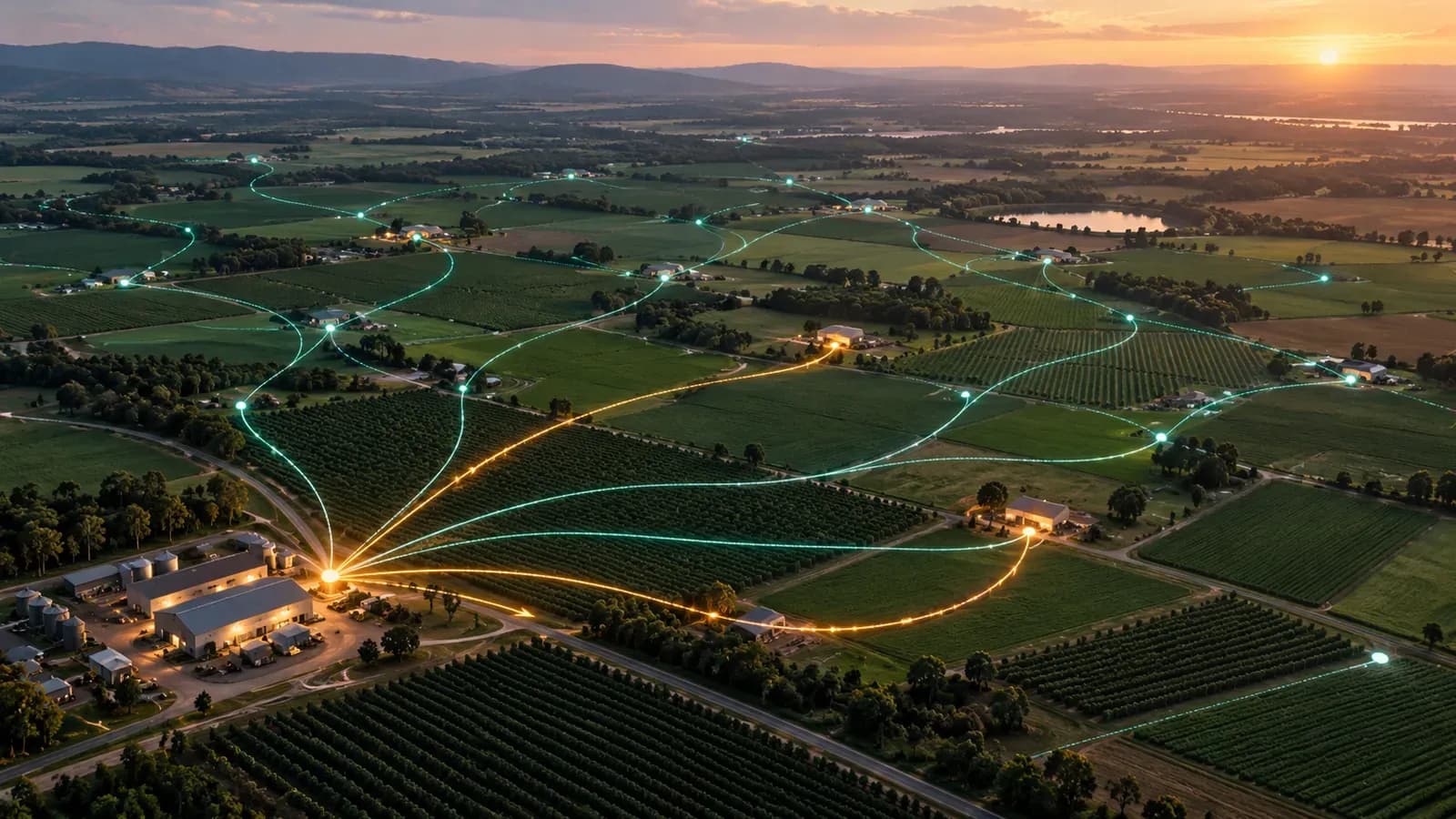
A sales representative can only visit so many growers in a season. Agronomists face the same limit when supporting large territories and distributor networks. Yet questions about products, crop conditions, and purchasing decisions rarely arrive on the day of a scheduled visit. The gap between visits is where many useful conversations are lost.
Agricultural AI agents can cover part of that gap by handling defined, repeatable interactions. They can provide information based on approved company knowledge, maintain contact, capture enquiries and refer complex cases to the right person. They do not take over field diagnosis, agronomic accountability, negotiations or the relationships that drive long-term business.
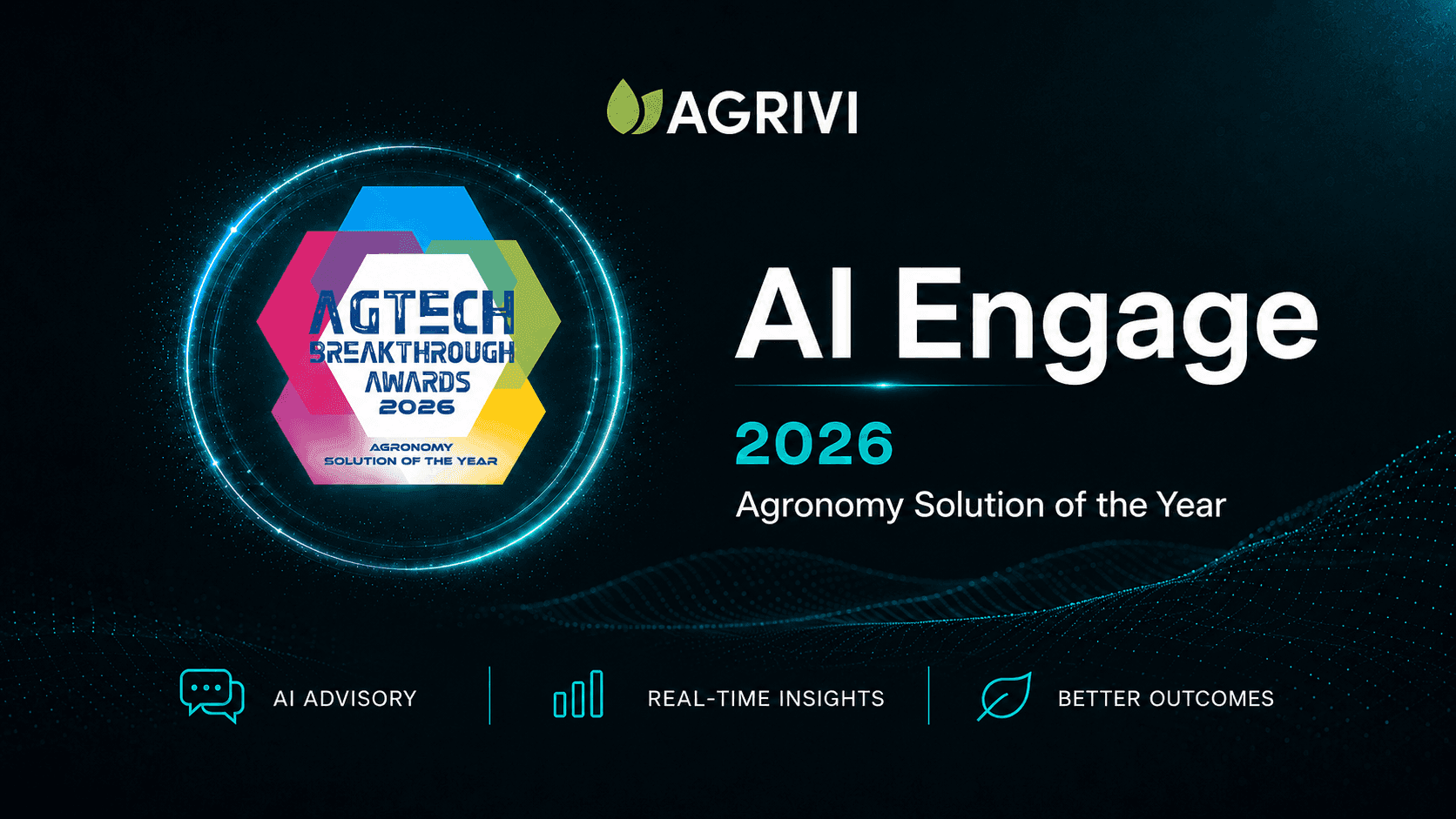
For agri-input manufacturers, the practical question is how to divide these responsibilities so that the existing team can reach more growers and spend its time where expertise matters most. This is the role of AI Workforce in AGRIVI’s product architecture, with AGRIVI AI Engage supporting farmer engagement and commercial follow-up.
Key Takeaways
- Extend reach, not replace people. AI agents can handle routine, between-visit contact, while agronomy and sales teams remain responsible for expert decisions and commercial relationships.
- Keep agronomic ownership with qualified teams. People set and update the approved protocols, review uncertain cases and carry out field assessments. The agent works within defined boundaries.
- Give commercial teams more useful context. An AI agent can capture product questions, maintain engagement and pass qualified interest to sales before the next scheduled visit.
- Measure what happens after the interaction. Coverage alone is not the outcome. Escalation quality, useful conversations, sales follow-up and qualified opportunities determine whether the model works.
- Use reported results with context. Selected AGRIVI AI Engage deployments have reported 3x farm reach, about 70% of new sales involving farmers first engaged through AI and a 20% upsell uplift. These results are not forecasts for every customer.
Why the coverage gap matters
A territory manager may know their priority accounts well, yet still have limited time for smaller farms, less active customers and growers served primarily through distributors. The problem is not a lack of expertise. It is the cost and time required to deliver that expertise individually at the moment it is needed.
Consider a farmer who has a product-use question shortly after a field visit. Waiting for the next visit may not be practical. A digital contact point can respond using approved information, capture the details of the enquiry and, when required, refer the case to the agronomy or sales team.
This also matters for distribution networks. AGRIVI has described the role of continuous advisory in reaching farms outside the regular sales call cycle, without removing the distributor or field representative from the commercial relationship.
A clear division of work between AI and the team
The starting point is not a list of AI features. It is a decision about which work can follow approved rules and which work needs professional judgement, field observation or commercial authority.
What the AI agent can handle
- Respond to routine agronomic and product questions using approved company knowledge and defined boundaries.
- Provide relevant product information and seasonal follow-up through channels such as WhatsApp and Viber.
- Capture farm, crop and enquiry context so repeated questions do not restart the relationship from zero.
- Identify signs of buying interest and route qualified opportunities to the appropriate sales contact.
- Escalate ambiguous, sensitive or out-of-scope enquiries rather than improvising an answer.
What agronomy teams continue to own
- Define, approve and update agronomic protocols and product guidance.
- Review complex or uncertain cases, including those requiring physical field assessment.
- Maintain the quality and relevance of knowledge used by the agent across crops, products and markets.
- Decide when a recommendation needs specialist review or a change to the approved process.
What sales teams continue to own
- Build relationships with growers, distributors and strategic accounts.
- Negotiate pricing, commercial terms and multi-season agreements.
- Conduct field visits, product demonstrations and high-value follow-up.
- Take responsibility for account decisions and turn qualified interest into sales activity.
An effective AI Workforce model is therefore a division of responsibilities. Digital Agents support high-volume interactions. Agronomy and sales teams remain responsible for expertise, relationships and the decisions that require human approval.
What changes between two field visits
Imagine a representative who last visited a grower at the beginning of the season. During the following weeks, the grower asks about crop development, product compatibility and the timing of an upcoming application. A configured AI agent can provide approved information, gather relevant context and flag questions that need specialist attention.
When a purchasing need becomes clear, the conversation can move to the sales team with the grower’s questions and expressed interest already recorded. The representative can then focus on the opportunity instead of starting with basic qualification.
That continuity is valuable only when the knowledge is current and the handoff works. An agent that gives outdated advice or leaves qualified requests without an owner creates more work, not less. Knowledge maintenance, escalation rules and sales follow-up need to be part of the deployment from the beginning.
What selected AGRIVI AI Engage deployments have shown
AGRIVI reports three commercial indicators from selected AI Engage deployments with agri-input companies:
- 3x farm reach: A higher number of farms reached compared with traditional field coverage channels.
- About 70% of new sales: New sales involving farmers who were first engaged through the AI channel in the reported deployments.
- 20% upsell uplift: Improvement reported among engaged farmers. This is an uplift metric, not a claim that 20% of total upsell revenue came from AI-engaged farmers.
These figures are results from selected deployments, not a forecast for every organisation. Actual outcomes depend on farmer adoption, market coverage, the quality of approved knowledge, the activation model and how the commercial team acts on engagement signals.
For enterprise decision-makers, the more useful question is not whether an AI agent can answer a large number of questions. It is whether those interactions result in broader qualified coverage, faster follow-up, better use of agronomy capacity and measurable commercial outcomes.
How to introduce AI agents without disrupting the field organisation
- Map the gap. Identify the growers, territories and points in the season where questions or commercial opportunities are not being addressed consistently. Start with a defined audience rather than every market at once
- Set the boundaries. Agree what the agent may answer, what information it may use and which cases must go to an agronomist or sales representative. Assign human owners for escalations
- Connect engagement to sales. Define what counts as qualified interest, how it is routed and what information the receiving team needs. CRM integration can be useful, but the handoff process matters more than the label on the system.
- Review business outcomes. Measure active farmer reach, useful conversations, resolution quality, escalations, qualified opportunities and follow-up outcomes. Improve the knowledge base and workflow based on what the data shows.
AGRIVI also provides a six-step guide to launching an AI agent for companies planning their first deployment.
AI Workforce is a capacity model, not a headcount claim
Reducing workload and replacing employees are not interchangeable goals. An AI agent can absorb repetitive communication and provide a continuous point of contact, but that does not remove the need for accountable agronomists, experienced salespeople or clear commercial processes.
For agri-input enterprises, the stronger proposition is to extend the value of the team already in place. More growers can receive relevant attention between visits, while people concentrate on judgement, on-site work, strategic relationships and decisions that need their authority.
Frequently asked questions
Can an agricultural AI agent replace a field sales representative?
The AGRIVI AI Workforce approach is designed to extend field-team capacity. A Digital Agent can answer routine questions, maintain contact, identify buying intent and prepare a handoff. Negotiation, strategic account management and relationship decisions remain with people.
Who is responsible for agronomic recommendations?
The deploying company’s qualified experts define and approve the product information, agronomic knowledge and operating boundaries. The agent uses that approved information, while complex or out-of-scope cases should follow a defined human review path.
How should an agri-input company measure the value of AI engagement?
Start with reachable and engaged farms, the share of enquiries resolved within agreed rules, escalation quality, sales follow-up and qualified opportunities. Conversion and retention measures become more informative when attribution is tracked consistently over time.
See how AGRIVI AI Engage can extend your team’s reach
Explore how an AI Agri-Input Sales Representative can support routine engagement, agronomic and product questions, sales qualification and handoff across your grower network.
Published by AGRIVI. Editorial responsibility: AGRIVI Marketing & Communications.
Ready to digitalize your farm?
See how AGRIVI can help you apply these insights in your own operations.
Book a Meeting