
Agricultural Productivity: Factors, How to Measure It and How to Improve It
Agricultural productivity is the ratio of outputs to inputs. Learn what affects it, how to measure it with yield, cost and ROI, and how to improve it on large farms and cooperatives.
Tanja Folnovic
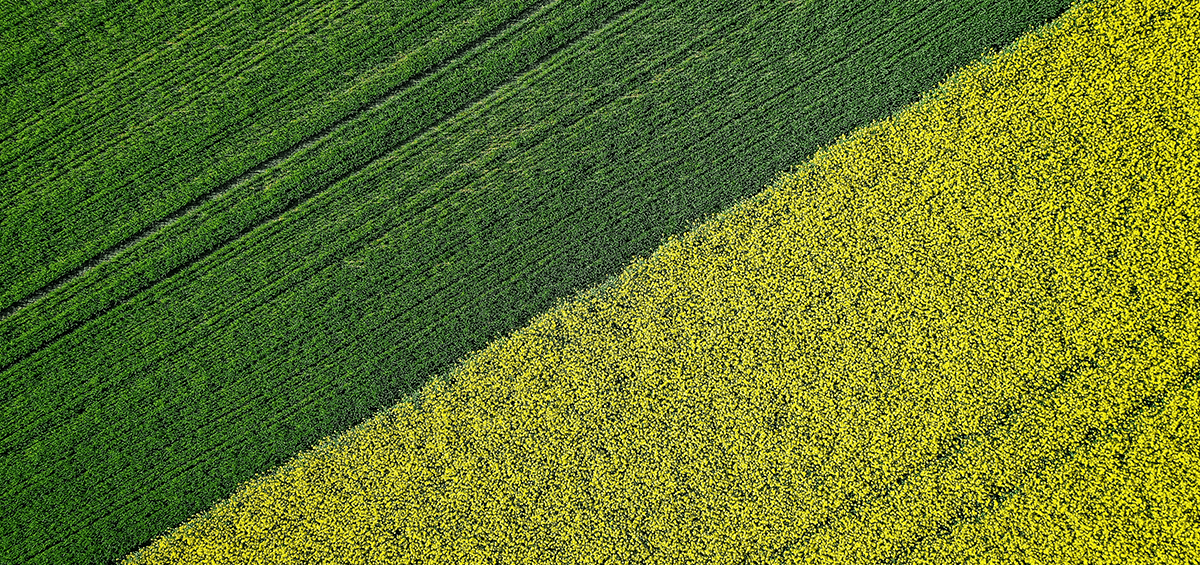
Agricultural productivity is the ratio of agricultural outputs to inputs: how much food, fibre or revenue you get for the land, labour, capital and materials you use. Improving it starts with measuring it on the farm, field by field, and acting on what the numbers show.
Productivity matters far beyond the farm gate. A productive agricultural sector means abundant, affordable food, economic growth and less pressure on land and water, at a time of growing populations and more extreme weather. But productivity is improved one farm and one field at a time, through better decisions and better technology. This guide explains what productivity is, the factors that affect it, how to measure it, and how to improve it, with a focus on large farms and cooperatives.
At a glance
- Definition: outputs divided by inputs, measured per field, farm, cooperative, region or country
- Main factors: climate and weather, soil, water, inputs and seed, technology, people and skills, farm size and management, markets and policy
- Main measures: total factor productivity, yield per hectare, technical efficiency, cost per hectare and return on investment
- Farm KPIs: production increase, production versus potential, yield per hectare, inputs per kilogram, cost efficiency per field, ROI per crop
- How to improve: precision practices, soil health, quality seed, the four R's of nutrient management, efficient irrigation, IPM, mechanization and data analytics
What is agricultural productivity?
At its simplest, agricultural productivity is the ratio of agricultural outputs to inputs. It can be measured for a single field, a farm, a multi-farm cooperative, a region or a whole country. At country level, productivity growth supports exports, competitiveness and stable food prices.
Productivity has been lifted by big steps in the past: irrigation in ancient Mesopotamia, the steel plough, and the Green Revolution of the 1960s and 70s, when synthetic fertilisers, crop protection and plant breeding raised yields sharply. Today the picture is mixed. Farmers in highly productive countries are already close to the limits of current practice, so growth is slow. In many developing regions, climate extremes are slowing gains. A 2021 Cornell University study found that climate change has removed about seven years of agricultural output growth over the last 60 years, and USDA analysis shows global productivity growth slowed between 2011 and 2019. New technology and better on-farm management are the main way to reverse that trend without using more land and inputs.
Factors that affect agricultural productivity
- Climate and weather. Temperature, rainfall, frost, heat and drought set the ceiling for what a crop can produce in a season.
- Soil. Fertility, structure, organic matter and water-holding capacity decide how well a crop can use inputs. See why successful farmers practice soil analysis.
- Water. Timely, efficient irrigation protects yield in dry spells and saves energy and cost. See our guide to irrigation methods.
- Inputs and seed. Quality seed, balanced nutrition and well-timed crop protection raise the return on every input.
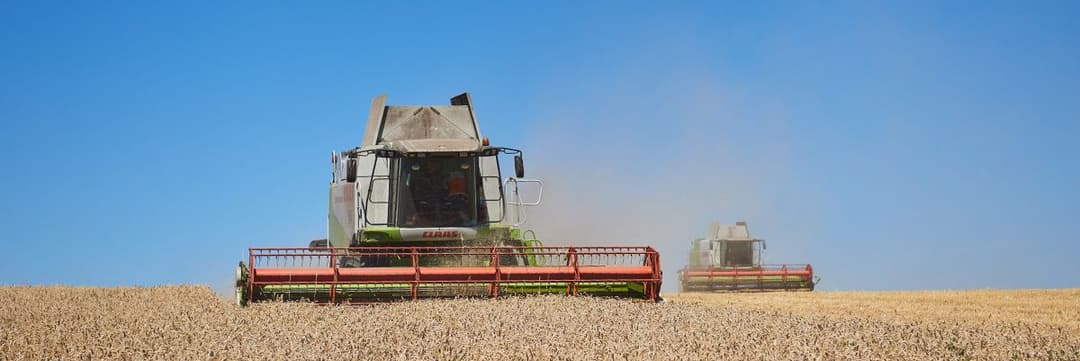
- Technology and mechanization. Machinery, precision tools and software reduce labour and waste and improve timing.
- People and skills. Training, clear work instructions and good supervision are often what separate the best and worst fields on the same farm.
- Farm size and management. Larger farms gain purchasing power and data, but face complexity and time pressure. How well operations are planned and recorded matters more than size alone.
- Markets and policy. Prices, input costs, access to buyers, credit and regulation determine whether higher output is also profitable.
How to measure agricultural productivity
Measuring productivity on a real farm is more complex than comparing yields. Most farms grow several crops with many inputs, and crops often support each other in rotation. Obtainable productivity also varies with climate and soil. And a crop that grows well but sells at a low price may not be profitable, so economics must be part of the picture.
Four measures are in common use:
- Total factor productivity (TFP). Total agricultural output compared with the combination of land, labour, capital and materials used to produce it. If output grows faster than inputs, TFP rises.
- Yield productivity. The yield of a crop or variety per hectare. Knowing which varieties perform best is key to choosing what to plant.
- Technical efficiency. Whether a farm produces the maximum output possible with the technology and inputs available to it. It reflects how well management practices use what the farm has.
- Production frontier. The maximum output a farm could reach under its own conditions with the best management practices. Rice yields in a dry region will not match those in a climate better suited to rice, so each farm should be compared with its own frontier, not with a different region.
Farm productivity KPIs you can track
Key performance indicators turn those concepts into numbers you can track every season. A good KPI is quantitative, practical, directional (it tells you whether you are getting better) and actionable. These are the productivity KPIs we recommend most farms start with.
1. Production increase
Compare this year's production with last year's: production increase = (this year − last year) ÷ last year. Measure it in quantity, and also in market value if prices changed.
2. Production versus potential
How far are you from what the plantation could produce? If an apple orchard's potential is 15 tonnes and you harvested 10, you have 5 tonnes left to gain. A season plan with expected yield makes this easy to track.
3. Yield per hectare, plant or tree
Yield per hectare (kilograms per hectare or bushels per acre) lets you compare with last year and with average results. In fruit, yield per plant for each variety is also important.
Look at yield on three levels. Start with crop and variety to see what performs best. Then go to the field level, where yield distribution shows which fields are productive and which are not. Finally, compare the activities, inputs and conditions of the best and weakest fields. That comparison reveals the real drivers of yield. See our guide to best farm practices for how to turn it into practice.
4. Inputs per output
How much fertiliser, crop protection, water and labour do you use to produce one kilogram of crop? Express labour in hours or days. Compare with last year to see which inputs drove changes, and with other farms or benchmarks to see whether you use more or less per unit.
5. Cost efficiency per field
Yield tells you how the revenue side is doing. Cost efficiency tells you how efficient you are on the cost side. For a reliable analysis, you need:
- cost per hour set for people and machinery
- expenses of the items used in production recorded
- invoices for services allocated to the crops they belong to
With those in place, every activity you record in the field feeds a cost analysis per crop, variety and field, and you can drill down into labour, machinery and inputs. This also makes next season's budget easier to build. See how to calculate cost per hectare, how to track farm costs and budget vs actual in farm management.
6. Return on investment per crop
Combine total expenses and total sales per crop to see whether you earned more than you invested or are still approaching break-even. ROI per crop shows which crops are worth growing, which is essential for a sustainable farm business. Running a farm without knowing these numbers is like driving blindfolded.
How to improve agricultural productivity
- Precision farming practices. Variable-rate seeding and fertilising apply the right amount in the right spot, based on soil type and other data. See our guide to precision agriculture.
- Soil health practices. Cover crops and other soil-building practices improve fertility and water-holding capacity.
- High-quality seed. Vigorous, climate-suited seed for your specific conditions.
- Mechanization and automation. Less labour, lower cost, better timing.
- The four R's of nutrient management. Right source, right rate, right time, right place.
- Efficient irrigation. Low-energy, water-efficient and labour-friendly systems lower cost and improve yield.
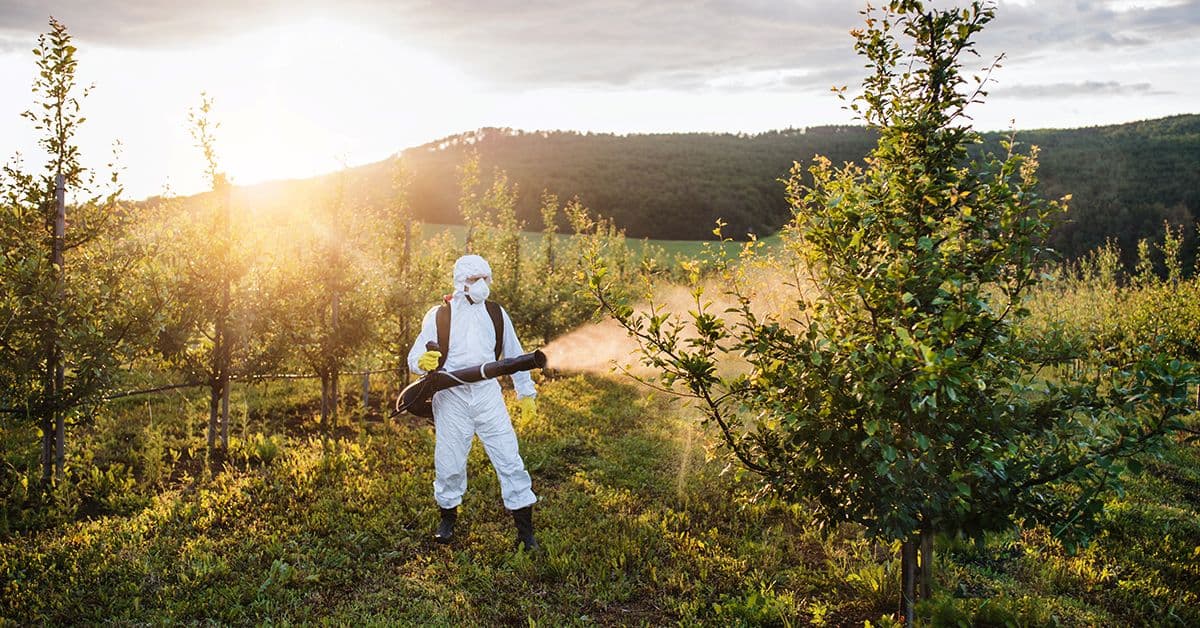
- Integrated pest management (IPM). Proactive monitoring and treatment of pests and diseases.
- Data analytics. Farm management software collects and analyzes data to inform in-season decisions, not only end-of-season review.
Productivity on large farms and cooperatives
The same principles apply at any size, but large farms and cooperatives have advantages and challenges of their own.
Advantages. Purchasing power to buy inputs in volume, easier access to capital for mechanization and technology, and the ability to aggregate data and spot efficiency gains across many fields.
Stumbling blocks. Time is the main constraint, because running a complex operation takes more and more of it. Uniform practices across all fields look efficient, but fields and farms differ, and each should be optimised toward its own production frontier. The sheer volume of data, inputs and people can overwhelm managers who rely on spreadsheets and notebooks.
Digital examples from developing regions
Digital tools are raising productivity beyond large farms:
- Purdue University worked with a digital map service to create updated digital soil maps of rural western Kenya, supporting better farm decisions.
- A smartphone app developed with Penn State University helps sweet potato farmers in Africa identify virus infections and gives diagnostic advice.
Organizations such as FAO, the UN and the World Bank track productivity growth and increasingly include digital agriculture in recommendations for food policy.
Improving productivity with farm management software
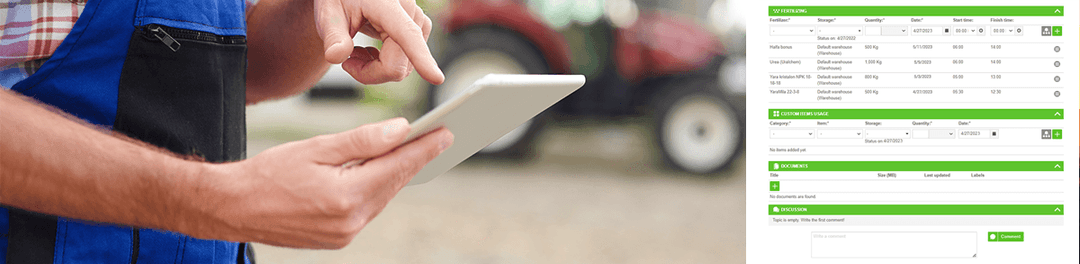
Productivity improves when you farm smarter, not harder. AGRIVI 360 FMS tracks activities at field level and collects data on inputs such as fertilisers, crop protection, work hours and machinery. That data combines with financial records to give analysis at field, farm and group level. Farm businesses can see which fields and practices perform, find weak points and decide where investment in new techniques will return the most. See the benefits and ROI of farm management software.
Frequently asked questions (FAQs)
What is agricultural productivity?
The ratio of agricultural outputs to inputs. It shows how much a farm, region or country produces for the land, labour, capital and materials it uses.
What factors affect agricultural productivity?
Climate and weather, soil, water, inputs and seed, technology and mechanization, people and skills, farm size and management, and markets and policy.
How do you measure farm productivity?
With total factor productivity, yield per hectare, technical efficiency and farm KPIs such as inputs per kilogram, cost efficiency per field and return on investment per crop.
What is total factor productivity (TFP)?
A measure that compares total agricultural output with the combined inputs of land, labour, capital and materials. If output grows faster than inputs, TFP is rising.
What are the key productivity KPIs for farms?
Production increase, production versus potential, yield per hectare or plant, inputs per kilogram of output, cost efficiency per field and ROI per crop.
How can farms improve productivity?
Use precision practices, protect soil health, plant quality seed, apply the four R's of nutrient management, irrigate efficiently, practise IPM, mechanize where it pays and use data from farm management software to decide in season.
What is the difference between productivity and yield?
Yield is output per unit of land. Productivity compares output with all the inputs used, so a farm can raise yield and still lose productivity if input costs rise faster.
Measure productivity on your farm
See how AGRIVI 360 FMS links activities, inputs, costs and yields by field, or book a demo.
Ready to digitalize your farm?
See how AGRIVI can help you apply these insights in your own operations.
Book a Meeting