Benefits of Farm Management Software: 7 Ways It Pays Back
Farm management software pays back through better agronomic decisions, lower input and labour costs, tighter finance and inventory control, and records you can prove. Here are the seven benefits and how to measure the return.
Tanja Folnovic
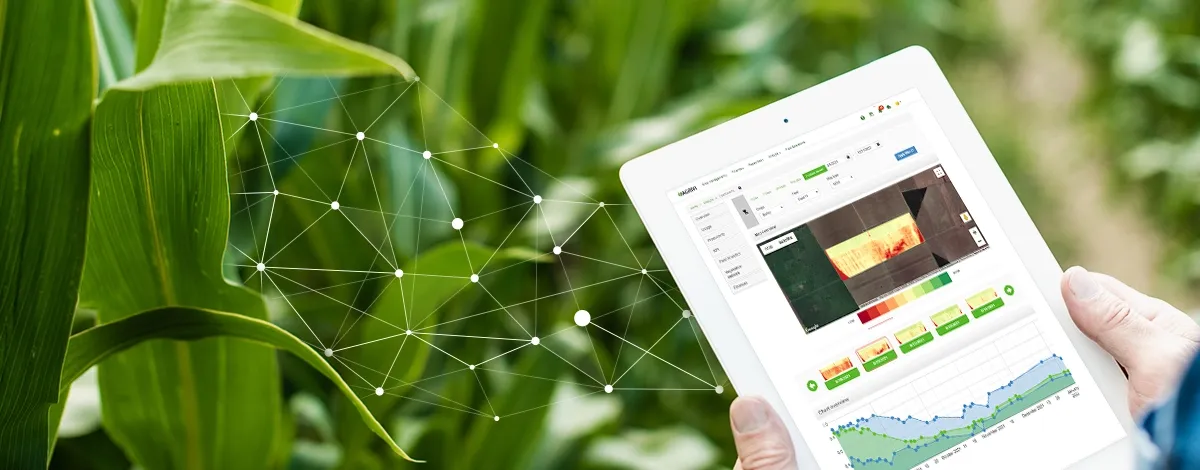
Farm management software (FMS) pays back in three places: better agronomic decisions, lower costs for inputs and labour, and records that open markets and cut admin. The return comes from running the farm on data instead of memory, notebooks and spreadsheets.
Farmers grew food for generations without it. What changed is the margin for error. Inputs cost more, weather is less predictable, buyers ask for proof, and a large farm makes hundreds of decisions a day across many fields and crews. This guide covers seven benefits, where the money comes from, how to measure the return on your own farm, and what AGRIVI customers report.
At a glance
- Decisions: weather, pest and crop-health insight at field level, so you act on time
- Inputs: apply what each field needs, record what you used, spot overuse early
- Operations: clear work orders, live progress, and the real cost of every task
- Finance and inventory: profitability by crop, variety and field, and stock you can trust
- Compliance: records ready for audits, buyers and regulators
- Learning: each season builds on data from the last one
- Admin: one system, any device, no lost notebooks
1. Better and more timely agronomic decisions
An FMS pulls together information that used to live in different places: weather stations, soil data, satellite and drone imagery, scouting notes and your own field history. With it in one view, you see problems while they are still cheap to fix.
In practice, that means:
- Weather forecasts and alerts for each field
- Warnings when conditions favour pests and diseases
- A plant health index through the crop cycle
- Spray windows that fit forecasts and waiting periods
- Fertilizing timing based on crop status and input costs
- Harvest timing based on ripeness, quality targets and waiting periods after applications
Fewer losses in bad conditions and better quality in good ones is where yield and quality gains come from.
2. More efficient use of inputs
Inputs are often the largest line in the operating budget, and they rose sharply in recent years. Profitable farms do not chase yield at any price. They look for the rate where an extra kilogram of fertilizer or litre of spray stops paying for itself.
Farm management software helps by:
- Generating variable-rate prescription maps from satellite, drone, yield and soil layers, so seed, fertilizer and crop protection go where they earn the most (see our guide to precision agriculture)
- Tracking input use by field, crop and variety, so deviations show up during the season, not after it
- Supporting irrigation decisions with water stress insight, history and rainfall forecasts
- Showing what a switch from calendar spraying to scouting-based spraying would save
3. Better management of crews and field operations
Crews are often far from the office, and harvest brings many jobs at once. Verbal instructions get lost, and nobody knows afterwards what really happened in which field.
With an FMS, managers create and assign work orders, workers record what they did from the field, even offline, and managers see progress as it happens. Every task produces data: who did it, when, with which machine and inputs, at what cost. That data makes planning and performance reviews factual. Machinery telematics and utilization sit alongside it, so you see how equipment is really used.
4. Finance and inventory under control
On a large farm it is hard to know what the harvest in storage is worth, what is left of each input, and which crop, variety or field really makes money. Totals hide the answer.
An FMS gives you:
- Profitability by crop, variety and field, so you grow more of what pays and less of what does not
- Planned budget against actual cost per crop, while there is still time to adjust
- Inventory of inputs and harvested crop, to avoid over-purchasing, shortages and missed selling windows
- Payables and receivables in the same system as operations
5. Traceability and compliance without the paperwork chase
Certification schemes, retailers and regulators ask farms to prove what they applied, when and where. Collecting that after the fact takes days and still leaves gaps.
If the records are created as work happens, reports come out of the system: application records and waiting periods checked before harvest, audit reports for standards and certifications, and QR traceability for buyers. That protects food safety and keeps access to demanding markets. For farm-to-shelf traceability across partners, see AGRIVI 360 Traceability.
6. Continuous improvement from your own data
Every season adds to your history. With activity-based costing and results by field and practice, you can see which fields and methods drive high yield and which drive high cost. You can then set best practices for all farms and workers instead of relying on the experience of a few people. The same records support sustainability reporting, including data for a carbon footprint.
7. Simpler farm administration
Farms still run on notebooks, receipts and spreadsheets. They get lost, have different versions and are hard to search. An FMS keeps all farm data in one place, in the cloud, available from any device. Reports are a click away, and nothing disappears when a person leaves or a notebook gets wet.
Where does the return come from?
Farmers cannot control the selling price or the weather. They can control yield, quality and cost. FMS return usually comes from four areas:
- Control and transparency: knowing profitability and planned-versus-actual budget per crop while the season is running
- Operational efficiency: structured work planning and fewer decisions made on verbal instructions
- Yield predictability: continuous yield forecasting and crop-health monitoring show a volume gap early, so you can buy missing supplies or adjust sales before prices move against you
- Cost and yield drivers: field-level analysis shows what works, so the next season starts from facts
McKinsey's 2024 global farmer survey reported that rising input costs and volatile prices have made farmers more cautious about the return on new technology. That caution is reasonable. It is why you should decide upfront how you will measure the return.
How to measure ROI on your own farm
- Pick a baseline. Before rollout, note last season's input cost per hectare, yield, quality-grade share, labour hours per task and admin hours per month.
- Choose three or four measures from the benefits above that matter most for your crops, such as fertilizer cost per tonne, spray cost, share of crop meeting quality specs, or hours spent on reporting.
- Compare after one full season, field by field if possible, and account for weather differences.
- Count the cost side fully: licence, set-up, training and the time your team spends. Our ROI calculator helps you build the estimate with your own numbers.
What AGRIVI customers report
AGRIVI customers worldwide have reported, with AGRIVI 360 Farm Enterprise:
- 10-15% profit increase
- 5-20% yield growth
- 5-15% overall productivity boost
These are customer-reported ranges, not guarantees. Results depend on crop, scale, starting point and how fully the system is used. In our experience the return comes fastest when the whole team records in the system and managers use the data every week. That is why implementation and adoption matter as much as features (see 10 steps for a successful FMS implementation). Payback is typically within about two years, and some farms see first results after one harvest. When the system is fully used, AGRIVI estimates a return of up to 11 times the investment, which compares with four to seven years for equipment such as machinery or irrigation systems.
Frequently asked questions (FAQs)
What are the main benefits of farm management software?
Better and more timely agronomic decisions, more efficient use of inputs, better control of crews and operations, accurate finance and inventory, ready compliance records, learning from your own data, and simpler administration. The common thread is that decisions and records come from live data, not memory or paper.
What is the ROI of farm management software?
It depends on your farm. The return comes from yield and quality, lower input and labour cost, and less admin time. AGRIVI customers have reported 10-15% profit increase, 5-20% yield growth and 5-15% productivity improvement. Measure it by setting a baseline before rollout and comparing after a full season, or estimate it with the AGRIVI ROI calculator.
How quickly does farm management software pay back?
Many farms see first results within one harvest season, and payback is typically within about two years. With full use of the system, AGRIVI estimates a return of up to 11 times the investment. Faster payback comes with full adoption by the team and weekly use of the data.
Can farm management software help with compliance?
Yes. When applications, waiting periods and field operations are recorded as work happens, the system produces audit-ready reports for certification standards, buyers and regulators, and supports QR traceability.
Is farm management software worth it for a large farm?
The larger and more complex the operation, the more decisions, crews and records there are to coordinate, so gains in cost control and visibility are larger. Smaller farms can benefit too, but a large farm needs more structure to keep many people working from the same plan.
How do I choose the right farm management software?
Start with your processes and the data you must produce, then test vendors on the criteria that matter for your farm. Our guide to choosing farm management software and the enterprise evaluation standards walk through it, and the eBook on how to buy FMS gives you a checklist.
See what it could return on your farm
AGRIVI 360 Farm Enterprise connects agronomy, operations and economics in one system for large farms and cooperatives. Explore AGRIVI 360 Farm Enterprise or book a demo and we will walk through your crops and your numbers.
Ready to digitalize your farm?
See how AGRIVI can help you apply these insights in your own operations.
Book a Meeting