Key Takeaways – Agri-food Technology Portfolio
• Portfolio expansion should begin with existing customer relationships where agriculture-specific work remains outside current enterprise systems.
• A company name or industry label is not enough. Strong opportunities combine agriculture exposure, a visible workflow gap, access to decision-makers, and delivery fit.
• Relevant signals include enterprise farms, grower networks, direct crop sourcing, repeated manual data collection, field-level records, traceability needs, and farmer engagement.
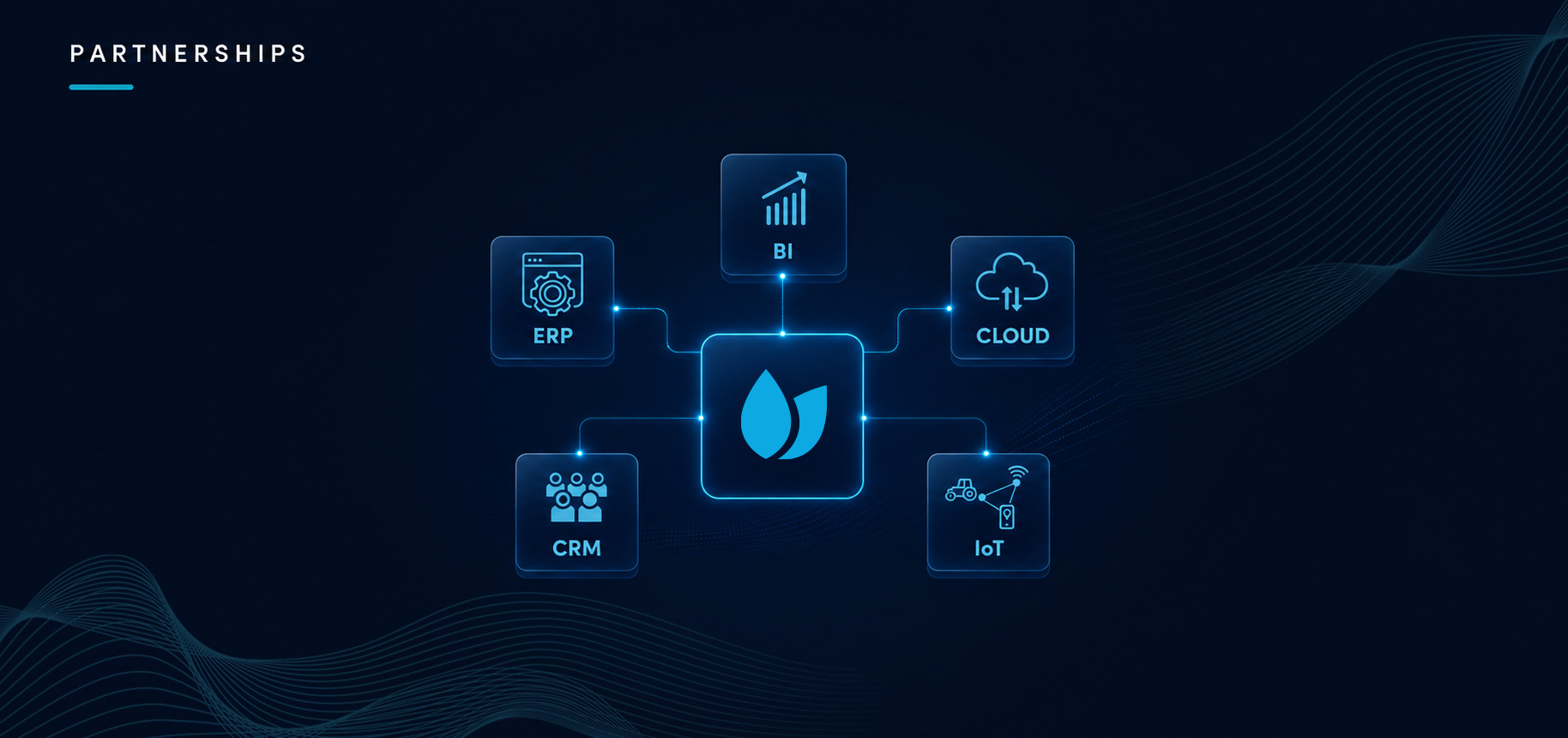
• AGRIVI products complement ERP, CRM, BI, cloud, IoT, and consulting services by adding agriculture-specific operating and AI capability.
• Reviewing 5 accounts creates a practical way to compare fit and identify the first customer conversation without overbuilding the partner plan.
An agri-food technology portfolio combines the products, services, integrations, and delivery capabilities a technology or consulting company brings to food, agriculture, and agribusiness customers. Portfolio expansion adds agriculture-specific capability to that mix. This matters when existing ERP, CRM, BI, cloud, IoT, or consulting offers do not fully represent farms, crops, grower relationships, field operations, or farmer-facing workflows.
Many technology companies already serve food processors, agri-input manufacturers, retailers, enterprise farms, cooperatives, exporters, or public-sector agriculture organizations. However, agriculture-specific operations may still sit outside those systems. Teams may handle them through spreadsheets, paper, email, and messaging applications.
That gap can support a valuable portfolio extension, but only when the partner can recognize the right customer situation. The objective is not to label every food-sector account as an agriculture opportunity. It is to identify where agriculture exposure, business importance, customer access, and delivery readiness create a credible first use case.

What Agri-Food Technology Portfolio Expansion Means
Agri-food technology portfolio expansion means adding a credible agriculture-specific proposition to capabilities a partner already sells and delivers. The expansion should complement the existing portfolio and create a clear customer use case. It should also define where the partner can participate in consulting, implementation, integration, training, support, or account development.
For an ERP or cloud partner, the new layer may connect farm records with finance, procurement, inventory, or reporting. A BI practice may use structured agricultural data for analysis. Similarly, an IoT company may place device signals inside crop and operational context. A consulting firm may add a product foundation for process and operating-model work.
AGRIVI gives partners ready enterprise agriculture products and agriculture expertise rather than a generic industry presentation. The partner does not need to replace its existing services. It needs to identify where those services can become more valuable when the customer has agriculture-specific work that current systems do not cover. The OECD’s analysis of digital transformation in agriculture and food systems and the World Bank’s agrifood digital transformation report provide wider context for this portfolio view.
Why Existing Accounts Are the First Place to Look
Existing accounts are the first place to look because the partner already understands the customer’s business, systems, priorities, and decision-makers. That knowledge reduces the distance between a general market opportunity and a credible customer conversation. It also reveals agricultural work that may be invisible from public company information.
A food processor may have a modern ERP while direct crop sourcing and grower coordination remain fragmented. An agri-input manufacturer may have CRM and campaign systems but lack continuous farmer engagement and structured field feedback. In addition, a multi-farm operation may have finance and reporting tools without a shared agriculture operating record.
The partner’s account knowledge is therefore a qualification asset. Combine it with AGRIVI’s agriculture use-case knowledge instead of replacing it with a broad list of target industries. The first objective is to recognize a specific workflow, owner, data gap, and business consequence inside a relationship that already has trust.
Five Account Signals That Indicate an Agriculture-Specific Gap
Five signals often indicate that an existing account may need an agriculture-specific technology layer. First, look for direct involvement with farms or growers and repeated manual data collection. Then check for disconnected field and enterprise records, a business decision that depends on production context, and an internal owner with a reason to improve the workflow.
The first signal is agriculture exposure. The customer may own farms, contract growers, source crops directly, manage a grower programme, advise farmers, or depend on production information. The second is workflow repetition. A recurring process creates more value than a one-time reporting request because the customer needs a stable operating method.
The third signal is disconnected information. Field records, grower updates, agronomic activities, costs, traceability details, or farmer conversations may sit outside the systems used by management. The fourth is business consequence. Delays or weak visibility should affect planning, cost, supply, quality, customer service, or commercial performance.
The fifth signal is ownership. A strong opportunity has a person or team responsible for the workflow and able to participate in discovery. Without ownership, the problem may be visible but remain too diffuse to support a first project.
Where Agri-Food Technology Portfolio Expansion Fits Existing Services
Agri-food technology portfolio expansion fits existing services when AGRIVI products add agriculture context to capabilities the partner already knows how to sell and deliver. The strongest fit is complementary. As a result, the partner can take a larger role in the account without creating confusion about product ownership or promising services the team cannot yet perform.
ERP and finance practices can connect agricultural operations with cost, procurement, inventory, and management reporting. CRM and customer-experience practices can connect farmer engagement with approved knowledge, commercial processes, and escalation. In addition, BI and data practices can work with structured farm, crop, operational, and economic records instead of manually assembled files.
Cloud and integration partners can design data flows, identity, access, and enterprise architecture. IoT partners can connect sensors, weather, equipment, or field devices with the operating context that gives the data meaning. Meanwhile, consulting firms can lead discovery, process design, adoption, and change management around ready AGRIVI products.
Strong Account Signal vs Weak Account Signal
A strong account signal connects a visible agriculture workflow with business importance, customer access, and delivery readiness. A weak signal relies on company size, a broad industry label, or the assumption that every food-sector organization needs the same technology. Qualification protects both partner effort and customer trust.
How AGRIVI Products Fit Different Customer Situations
AGRIVI products fit different customer situations according to the workflow and business owner. AGRIVI 360 FMS supports complex farm operations as the agriculture-specific system of record and system of action. AGRIVI AI Engage adds managed AI capacity for farmer engagement, advisory, data collection, and intelligence. AGRIVI Food Traceability presents approved product and production information through a consumer-facing view.
An enterprise farm or cooperative may begin with planning, work execution, resource use, risk management, or economic visibility in AGRIVI 360 FMS. A food company may need structured production records before raw materials reach enterprise systems or customer-facing traceability. An agri-input company may need continuous farmer access, approved agronomic knowledge, commercial routing, or field feedback through AGRIVI AI Engage.
The partner’s task is not to present every product in the first conversation. Instead, identify the customer situation where one AGRIVI capability produces the clearest business improvement. The partner should also have a credible role in that customer journey.
Starting Agri-Food Technology Portfolio Expansion With 5 Accounts
Starting agri-food technology portfolio expansion with 5 accounts creates enough range to compare opportunities. At the same time, the work stays grounded in real customer knowledge. The objective is a ranked view of account fit and the first customer conversation. It is not a completed outreach campaign or a fully designed solution before discovery.
- Select 5 accounts where the partner has a credible relationship and some evidence of agriculture exposure.
- Map the customer’s farms, growers, sourcing model, field operations, farmer engagement, or traceability context.
- Identify one recurring workflow that remains manual, fragmented, or outside current enterprise systems.
- Name the business owner, likely decision-makers, and the consequence of leaving the workflow unchanged.
- Match the strongest AGRIVI entry use case and agree whether the next step is customer discovery, internal qualification, or continued nurture.
Add Enterprise Agriculture Capability to Your Portfolio – Explore how AGRIVI products and agriculture expertise can complement your customer relationships, technology services, and delivery model.
Frequently Asked Questions About Agri-Food Technology Portfolio Expansion
What Is an Agri-Food Technology Portfolio?
An agri-food technology portfolio combines products and services that support food, agriculture, and agribusiness customers. It may include ERP, CRM, BI, cloud, IoT, consulting, integration, agriculture operating systems, traceability, and AI capabilities. A credible portfolio explains how those components work together around customer workflows.
Which Existing Accounts Are Most Relevant for AGRIVI?
Relevant accounts may include enterprise farms, cooperatives, food processors, agri-input manufacturers, retailers with direct sourcing, exporters, grower programmes, and public-sector agriculture organizations. Relevance depends on the workflow, customer access, business consequence, and delivery fit rather than company size or industry label alone.
Does AGRIVI Replace a Partner’s Existing Technology Portfolio?
No. AGRIVI adds agriculture-specific product and domain capability. AGRIVI 360 FMS, AGRIVI AI Engage, and AGRIVI Food Traceability can complement ERP, CRM, BI, cloud, IoT, and consulting services. The partner should define how each system and service fits the customer’s operating model.
What Makes an Account Ready for a First Conversation?
A ready account has visible agriculture exposure, a recurring workflow gap, and a clear business consequence. It also has access to the relevant team and enough execution readiness for discovery. Therefore, the first conversation should focus on the workflow and owner rather than a broad presentation of every AGRIVI product.
Why Start With 5 Accounts?
Five accounts provide enough variation to compare fit without turning qualification into a large research exercise. The review can identify common patterns, prioritize the strongest opportunities, and show whether the partnership has a practical route to customer action before both sides invest in a broader programme. The AGRIVI Solution Partner Program provides the framework for taking that review into a qualified partnership conversation.