CSRD compliance food companies must collect a type of data that most organisations have never systematically tracked: farm-level environmental and operational information from their agricultural supply chain. The EU Corporate Sustainability Reporting Directive does not just ask what happens inside your facilities. It also asks what happens at the farms you source from. For CSRD compliance food companies, that single shift turns sustainability reporting from a finance-and-operations exercise into a supply-chain data challenge.
For food and beverage companies, this represents a fundamental shift in reporting scope. Scope 3 emissions, the category covering your upstream and downstream value chain, typically represent 70 to 90% of a food company’s total carbon footprint according to the GHG Protocol Corporate Value Chain Standard. Within that Scope 3 footprint, agricultural sourcing alone accounts for 40 to 60% of total emissions, well ahead of other contributors like suppliers (20 to 30%), transportation (5 to 15%), packaging (5 to 10%), and distribution (5 to 10%).
The majority of those emissions originate in agricultural production: the inputs used on farms, the practices applied, the energy consumed, and the land use patterns in your sourcing regions. Therefore, the farm becomes the foundation of credible Scope 3 reporting.
This article provides a practical perspective on what CSRD-compliant food companies need to address, where the data gaps are, and how building farm-level data infrastructure turns compliance from a crisis into an operational advantage.
What Scope 3 Reporting Means for CSRD Compliance Food Companies
The CSRD took effect with reporting obligations phased in starting in 2024, and additional company tiers fall under the regulation in subsequent reporting years. For food companies, the European Sustainability Reporting Standards (ESRS) define specific disclosure requirements that reach deep into agricultural sourcing.
In practical terms, the requirements that CSRD-compliant food companies must address include:
Scope 3 GHG emissions from purchased goods. This means quantifying the carbon footprint of agricultural commodities you source. For a food company buying from thousands of farms, this requires farm-level data on inputs (fertilizers, pesticides, fuel), practices (tillage, cover cropping, irrigation), and land use. In initial reporting years, the standards accept industry averages. However, the trajectory clearly points toward supplier-specific data.
Biodiversity and ecosystems impact. Reporting on how your supply chain affects biodiversity requires understanding land use, proximity to protected areas, and agricultural practices at the production level. This data exists at the farm, not in procurement databases.
Water and marine resources. Companies must assess water consumption and pollution from agricultural sourcing. For crops grown in water-scarce regions, this proves particularly material. However, farms rarely collect water usage data systematically.
The European Commission estimates that approximately 50,000 companies must report under CSRD (European Commission CSRD overview), up from roughly 11,700 under the previous Non-Financial Reporting Directive. Many of these are food and beverage companies encountering farm-level data requirements for the first time.
The Farm-Level Data Gap in CSRD Compliance Food Companies
The central challenge that CSRD-compliant food companies face is not the regulation itself. It is the infrastructure required to collect the data that the regulation demands.
Most food companies have well-established systems for tracking quality, safety, and logistics data within their own operations and immediate supplier relationships. However, farm-level data, the information about what actually happens in the field, typically exists in one of three forms.
Paper records and memory. Many farms, particularly smallholders, record activities informally or not at all. Farmers often track input usage, application timing, water consumption, and labor practices through experience rather than documentation.
Fragmented digital records. Farms that use digital tools often use multiple disconnected systems: one for crop planning, another for financial tracking, and a third for compliance documentation. The data exists, but the systems cannot aggregate or transmit it efficiently.
Certification audit snapshots. GlobalG.A.P. and similar certification schemes collect farm data, but only at audit intervals (typically annual). In contrast, CSRD reporting requires ongoing monitoring, not periodic snapshots.
When food company compliance teams begin preparing their CSRD report, they consistently discover that the most material data, the farm-level Scope 3 information, is also the hardest to obtain. They can report on their own energy use, their transport emissions, and their processing efficiency. However, the agricultural sourcing data, which represents the majority of their environmental footprint, remains either unavailable or unreliable.
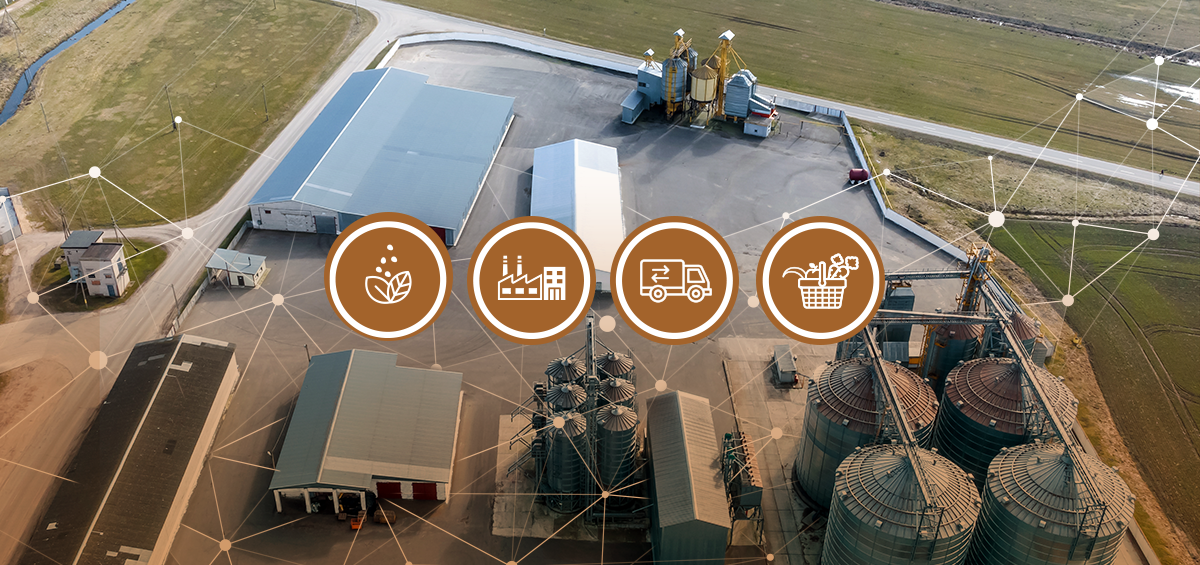
Building a complete farm-to-shelf record requires five categories of data flowing from farm to retailer: crop protection records, input records, fertilizer applications, field activities, and traceability data. Each category represents a layer of the agricultural reality that the CSRD report must reflect.
Building Farm-Level Data Infrastructure for CSRD Compliance Food Companies
The companies treating CSRD compliance as an infrastructure project rather than a reporting exercise consistently find that the investment pays for itself beyond compliance. Below is a practical framework.
Step 1: Map Your Agricultural Supply Chain for CSRD Compliance
Start with your top 20 suppliers by volume. Identify the farms or cooperatives that supply them. Additionally, understand the current level of digital maturity in your supply chain: which suppliers can provide digital records, which rely on paper, and which have no systematic tracking.
Step 2: Assess Data Gaps Against CSRD Requirements
Compare what you need to report (Scope 3 emissions, water, biodiversity, social metrics from the ESRS standards) against what data your suppliers can currently provide. The gap analysis will show you where to focus first. Typically, GHG emissions from agricultural inputs represent the most material and measurable starting point.
Step 3: Build a Digital Collection Pilot for Farm Data
Select 3 to 5 of your most digitally mature suppliers for a pilot. Implement a farm-level data collection system that captures the specific data points your CSRD reporting requires. The pilot validates the process, identifies practical challenges, and provides the first set of supplier-specific data to replace industry averages in your report.
Step 4: Scale Your CSRD Compliance Infrastructure
With pilot learnings, expand to your broader supplier base. The infrastructure you build for CSRD also serves EUDR due diligence (which requires geolocation and deforestation-free proof for seven commodity groups), supplier quality management, and sourcing risk assessment. As a result, one system delivers multiple compliance and operational benefits.
Step 5: Integrate Farm Data Into Your CSRD Reporting
Connect farm-level data to your corporate sustainability reporting framework. Data should flow from farm to report without manual aggregation. For more details on the framework and practical preparation, the CSRD Handbook provides a comprehensive walkthrough.
Beyond CSRD Compliance: Operational Value for Food Companies
Food companies that build farm-level data infrastructure for CSRD reporting consistently discover that the same infrastructure serves broader operational needs.
Supplier quality management. When you have visibility into farm practices, input usage, and environmental conditions, your team can anticipate quality issues rather than discover them at receiving.
Sourcing risk assessment. Climate data, water stress indicators, and practice data from the farm level enable proactive risk management in your sourcing decisions.
Customer transparency. Retailers and end consumers increasingly demand farm-to-shelf transparency. Therefore, the data collected for compliance becomes a competitive differentiator in buyer conversations.
AGRIVI Food Traceability provides the infrastructure to collect, manage, and report farm-level data across your agricultural supply chain. Explore the AGRIVI 360 Agriculture Supply Chain platform to see how this works in practice.
Frequently Asked Questions About CSRD Compliance for Food Companies
What Is Scope 3 and Why Does It Matter for CSRD Compliance for Food Companies?
Scope 3 covers all indirect emissions in your value chain, both upstream (suppliers) and downstream (distribution, use). For CSRD-compliant food companies, agricultural sourcing typically represents 70 to 90% of total emissions, making Scope 3 the most material reporting category.
When Do CSRD Reporting Obligations Apply to Food Companies?
The CSRD applies in a phased rollout that began in 2024 and extends through subsequent reporting years for additional company tiers. Specific timelines depend on company size, listing status, and the latest EU Omnibus adjustments. Therefore, food companies should check the current schedule against their entity type.
Can CSRD Compliance Food Companies Use Industry Averages Instead of Supplier Data?
In initial reporting years, the standards accept industry averages for Scope 3 calculations. However, the ESRS standards emphasise progression toward supplier-specific data over time. Companies that start building direct data collection infrastructure now will stay ahead of the curve.
How Does EUDR Relate to CSRD Compliance for Food Companies?
EUDR and CSRD share overlapping data requirements. EUDR requires geolocation and deforestation-free proof for seven commodity groups. CSRD requires broader environmental and social data. Building one farm-level data infrastructure serves both regulations. Learn more about AGRIVI Food Traceability.