
Key Takeaways
Specialty crop water management in Mediterranean climates is shifting under 2026 drought pressure from scheduled irrigation to data-driven block-level decisions.
Farm managers who see water status per block daily are making mid-season adjustments. Those relying on weekly manual checks cannot.
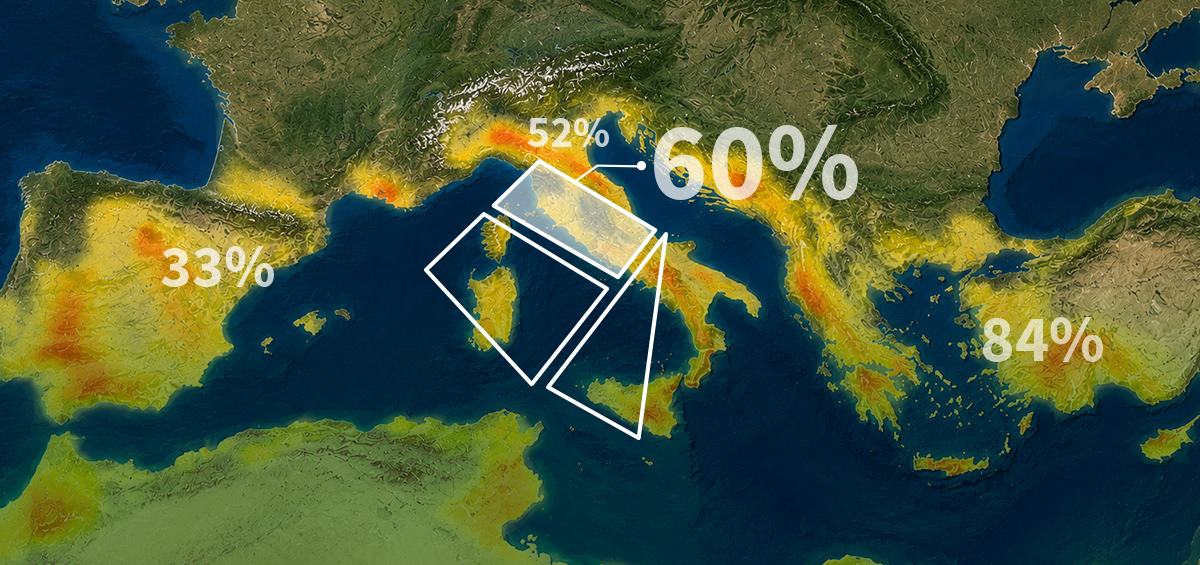
The European Drought Observatory reported below-average soil moisture across Southern Europe through April and May 2026, with Spain, Morocco, and southern France among the most affected.
Block-level visibility into irrigation status, soil moisture, and weather forecasts allows farms to allocate water to the blocks that need it most, rather than applying uniform schedules.
The farms making this shift report fewer water-stress events and more consistent yield across blocks.
Specialty crop water management refers to the integrated practice of monitoring, scheduling, and adjusting irrigation across specialty crop operations at the block level. Specifically, this includes fruit orchards, tree crops, vineyards, and olive groves, where water demand varies significantly by variety, rootstock, soil type, and microclimate. According to the FAO, Mediterranean agriculture accounts for approximately 60% of total water withdrawals in Southern European countries. That makes water management the single most consequential operational decision in these regions.
The 2026 season has made one thing visible earlier than usual: water is the binding constraint for Mediterranean specialty crop farms. The pressure arrived before the peak of summer. The European Drought Observatory reported below-average soil moisture across Southern Europe through April and May. Spain, Morocco, and southern France were among the most affected regions.
For specialty crop farms in these regions, the question is no longer whether to manage water carefully. It is whether the farm has the data infrastructure to make water decisions at the right level of detail. Block by block. Day by day.
Why Specialty Crop Water Management Is Different in Mediterranean Climates
Mediterranean specialty crop water management is different because water availability is seasonal and unpredictable, crop water demand varies by block (variety, rootstock, exposure, soil), and the cost of getting it wrong is measured in multi-year yield loss, not single-season shortfall.
In row crop agriculture, water management decisions are made at the field level with relatively uniform application. In Mediterranean specialty crops, the situation is structurally different. An olive grove with three varieties on two soil types across a slope has five or six distinct water-demand profiles. All within a single farm.
A citrus operation in the Souss-Massa region of Morocco manages water across blocks with different densities, rootstocks, and maturity stages. A uniform schedule wastes water on low-demand blocks and underserves high-demand ones.
Additionally, the consequences of water mismanagement in tree crops and vines are multi-year. A water-stressed citrus tree does not just produce less fruit this season. It may produce smaller fruit, weaker wood, and reduced yield for two or three subsequent seasons. The decision made in June 2026 affects the harvest in 2027 and 2028.
What the 2026 Drought Season Has Made Visible About Water Data
The 2026 drought season has made visible that farms operating on scheduled irrigation without real-time block-level data are making water allocation decisions 3 to 7 days too late. Consequently, the margin for error has compressed, and farms without daily visibility are losing yield they could have protected.
According to the European Drought Observatory, soil moisture anomalies in Southern Spain, southern France, and coastal Morocco reached levels in May 2026 that are typically not seen until July. The season started drier than normal and has stayed dry.
For farms relying on scheduled irrigation, this means the schedule was wrong from the start. It assumed average rainfall. The rainfall did not come. By the time the farm adjusted, water stress had already affected fruit size and canopy health in the most exposed blocks.
Farms with block-level soil moisture data, integrated with weather forecasts and crop water-demand models, identified the problem earlier. They reallocated water from lower-demand blocks to higher-demand ones in real time. The same total water volume, distributed differently, protected the yield in the blocks that mattered most.
Specialty Crop Water Management Practices Across Spain and Morocco
Specialty crop farms in Spain and Morocco that have implemented block-level water data practices report fewer water-stress events, more consistent yield across blocks, and better water-use efficiency measured in cubic meters per ton of marketable fruit.
In the Murcia and Andalusia regions of Spain, citrus and stone-fruit operations are increasingly using integrated water data systems. These combine soil moisture readings at the block level with weather forecasts and evapotranspiration models. As a result, farm managers receive daily water-status reports per block and can make allocation decisions before stress signals appear in the canopy.
In Morocco’s Souss-Massa region, citrus cooperatives managing aggregated production across multiple farms have started requiring block-level water data from member farms. The cooperative uses this data to coordinate allocation across the aggregated area. Consequently, over-irrigation in low-demand blocks is reduced while high-value blocks remain protected.
The common factor across these examples is not the specific technology. Instead, it is the practice of making water decisions at the block level rather than the farm level, and making them daily rather than weekly.
Where Most Specialty Crop Water Management Loses Time
Most specialty crop farms lose time on water decisions in three places: delayed detection of soil moisture changes (weekly checks instead of daily data), uniform irrigation schedules that do not differentiate between blocks, and a lack of integration between weather forecast data and irrigation planning.
The delay pattern is consistent across farms that have not yet implemented block-level data. A farm manager walks the blocks once or twice per week. By the time a water-stress signal is visible in the canopy, the stress has been building for 3 to 5 days. Leaf curl, reduced turgor, and color change are late indicators. Treatment at that point is reactive, not preventive.
Uniform irrigation schedules compound the problem. A farm applying 4mm per day across all blocks will over-irrigate some and under-irrigate others. In a drought year, this means wasting the water that the most stressed blocks need.
Finally, most farms do not integrate weather forecast data into their irrigation planning. For example, a farm that knows rain is forecast in 48 hours can defer irrigation on the less-stressed blocks and redirect water to the ones that need it now. Without that integration, the farm irrigates uniformly. The forecast rain then either causes waterlogging in some blocks or falls short of covering the deficit in others.
What Farm Managers Are Asking About Specialty Crop Water Management Right Now
Farm managers in Mediterranean specialty crops are asking three practical questions in 2026: how to prioritize water allocation when supply is constrained, how to detect block-level stress before it becomes visible, and how to justify the investment in real-time water data systems to farm ownership.
The first question (prioritization under constraint) is the most urgent. In a drought year, total water availability may be 70% or 80% of a normal year. The farm cannot irrigate every block fully. The question becomes: which blocks get full allocation, which get reduced, and what is the yield impact of each scenario? Block-level data makes this scenario analysis possible. Without it, the decision is intuition.
The second question (early detection) is where sensor integration matters most. Soil moisture sensors at the block level, connected to a platform that visualizes trends and flags anomalies, give the farm manager a 2 to 4 day advantage over manual scouting alone. That gap is the difference between preventive and reactive decisions.
The third question (investment justification) is answered by the economics of the season itself. A single season of drought-related yield loss in a high-value citrus or stone-fruit operation typically exceeds the multi-year cost of implementing block-level water monitoring. The ROI case writes itself in a drought year.
Assess Your Farm’s Data Readiness – the Free Farm Digitalization Assessmentt gives specialty crop operations a structured starting point for evaluating where digital tools can reduce manual work and improve operational decisions.
Frequently Asked Questions
1. What Is Specialty Crop Water Management?
Specialty crop water management is the integrated practice of monitoring, scheduling, and adjusting irrigation across fruit, tree crop, vine, and olive operations at the block level. It uses real-time data from soil moisture sensors, weather forecasts, and crop water-demand models to make daily allocation decisions. According to the FAO, Mediterranean agriculture accounts for approximately 60% of total water withdrawals in Southern European countries.
2. Why Is Block-Level Water Data Important for Mediterranean Farms?
Mediterranean specialty crops have highly variable water needs within a single farm. Different varieties, rootstocks, soil types, and slope exposures create distinct water-demand profiles per block. Farm-level averages mask these differences and lead to over-irrigation in some blocks and under-irrigation in others, wasting water and risking multi-year yield loss.
3. How Does the 2026 Drought Affect Specialty Crop Water Decisions?
The European Drought Observatory reported below-average soil moisture across Southern Europe through April and May 2026. Farms operating on scheduled irrigation without real-time data are making water decisions 3 to 7 days too late. Block-level data allows farms to reallocate water to the most stressed blocks in real time, protecting yield with the same total volume.
4. What Countries Are Most Affected by Mediterranean Drought in 2026?
Spain (particularly Murcia and Andalusia), Morocco (Souss-Massa region), southern France, and Portugal are among the most affected. These regions are major specialty crop producers in citrus, stone fruit, olives, and vines. The drought has compressed the margin for error in water management decisions.
5. How Can a Farm Justify the Investment in Block-Level Water Monitoring?
A single season of drought-related yield loss in a high-value specialty crop operation typically exceeds the multi-year cost of implementing block-level water monitoring. The ROI is clearest in drought years, where the difference between data-driven allocation and uniform scheduling directly affects marketable yield per hectare.