
Farm Management Software Implementation: Define the Outcome First
A practical pre-configuration checklist for enterprise farms: define the improvement, design the workflow, agree ownership and prove that the data can support it.
AGRIVI
Farm management software implementation starts with a business improvement that the farm can measure. Before configuring AGRIVI 360 FMS or another platform, teams should agree on the workflow, accountable owners, required records and acceptance criteria. Configuration, training and rollout then follow an operating model that is clear enough to test.
For enterprise farms running several crops, locations and teams, this guide explains what to decide before configuration, how to check readiness and which responsibilities determine whether an implementation becomes part of everyday work.
At a Glance
- Define the improvement and baseline before choosing screens or reports.
- Map each priority workflow from trigger and assignment to completion and management review.
- Assign owners for business decisions, data, configuration, training and acceptance.
- Check identifiers, data quality and update responsibility before importing records.
- Pilot one complete workflow and measure adoption before expanding the scope.
What Should Farm Management Software Implementation Define First?
The first decision is which operating result must improve. That result should be specific enough to determine the scope, workflow, data and acceptance test. A broad objective such as “digitalise operations” is not enough to configure a useful system.
For example, an enterprise farm might need managers to see actual crop-protection costs by block each week, work supervisors to close assigned activities with consistent records, or finance and agronomy to use the same field identifiers. Each is a different operating problem and requires a different set of people and data.
A farm considering enterprise farm management software should describe its current process, the delay or error it creates, the intended future process and how managers will know it has improved. This is the design brief for the implementation, rather than a feature wish list.
Why Should Workflow Design Come Before Configuration?
Configuration should reflect agreed work. If teams decide screens, forms and permissions before agreeing how an activity moves between roles, the software can reproduce existing inconsistencies rather than resolve them.
Take a spray operation. A complete workflow connects the agronomic decision and approved plan with scheduling, field assignment, available inputs, execution, application records, exceptions and cost review. The configuration needs to support that sequence and the people responsible for each part.
The existing AGRIVI guide to farm work management explains how planning, assignment and resource visibility affect execution. During implementation, its principles become concrete acceptance tests: can the correct operator receive a task, complete it, and leave the record another team needs?
Four Business Improvements Worth Defining Before Configuration
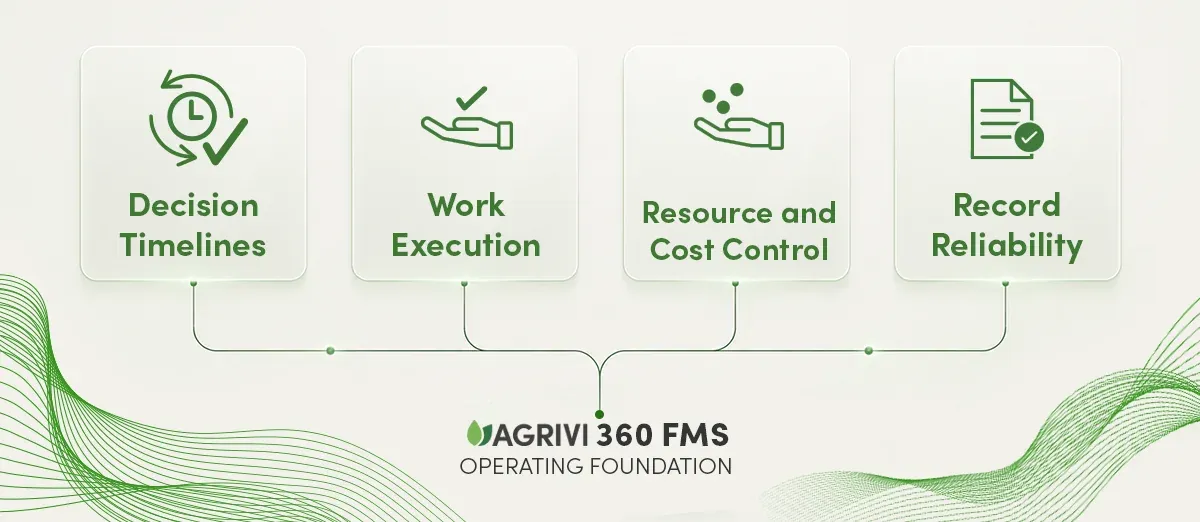
Enterprise FMS projects often begin with four closely related improvements: faster decisions, reliable work execution, clearer resource and cost control, and dependable records. The first implementation phase should prioritise the areas that have an identifiable owner and a measurable business impact.
- Decision timeliness. Can managers act while an activity, cost or crop condition can still be changed? Define the decision, its deadline and the record that supports it.
- Work execution. Can planned work become assigned, completed and reviewed activity, with exceptions visible to the responsible person?
- Resource and cost control. Can managers see inputs, labour, machinery and spending at the relevant farm, crop or field level instead of reconstructing them after the season?
- Record reliability. Do agronomy, operations and finance share compatible identifiers and agreed definitions, so a record can be reused instead of re-entered?
The budget-versus-actual farm management guide shows why cost visibility needs regular operational updates. The related guide to tracking farm costs covers how expense categories and field-level records support that view. These are useful companions when defining the economic acceptance criteria for AGRIVI 360 FMS.
Who Owns Implementation and Adoption?
A successful implementation needs named owners on both sides. The customer owns its business objectives, decisions about operating processes, data meaning, staff availability and change management. AGRIVI provides the agreed product, configuration, implementation expertise and support. Partners may have defined integration or local-delivery responsibilities.
The responsible people should be identified before the project begins: an executive sponsor to resolve competing priorities; an operating owner to sign off the workflow; data owners for source systems and identifiers; key users for testing; and the implementation lead for coordination. A single person may cover more than one role, but every decision still needs a clear owner.
For multi-farm operations, the need for a common record across roles is explained in one shared operating record for agronomy, operations and finance. That shared definition matters when testing what AGRIVI 360 FMS should display to each role.
How Do You Prepare Farm Data for an FMS Rollout?
Data readiness means knowing what each record represents, where it comes from, who owns it and whether it can support the selected workflow. Importing a spreadsheet is a technical step; agreeing field, crop, input and cost definitions is the business work that makes the import useful.
Start with the master records needed for the first workflow: farms, blocks or fields, crops, workers or teams, activities, inputs and, where relevant, machinery and cost categories. Check duplicate identifiers, missing values, inconsistent naming, dates and historical information that is actually needed for decisions.
The customer and AGRIVI team should agree which records are imported, which are created in the system, how corrections work and how data from another system will be kept consistent. These records support the connected agronomy, operations and economics capabilities of AGRIVI 360 FMS for enterprise farms.
What Does Implementation Readiness Look Like Before Configuration?
A project is ready for configuration when the first business objective, workflow, ownership, source data and acceptance criteria are clear enough to test. Unresolved decisions should appear openly in the project plan rather than being concealed as technical tasks.
- Business improvement: an agreed problem, current baseline, target indicator and decision owner.
- Workflow: a documented trigger, sequence of roles, approvals, exceptions and required completion record.
- Ownership: named customer, AGRIVI and any partner responsibilities, including escalation decisions.
- Data: an inventory of source records, identifiers, quality gaps, history and update owners.
- Acceptance: realistic test scenarios describing what users must complete and what managers must see.
This readiness test is different from vendor selection. For earlier-stage buyers, AGRIVI’s farm management software evaluation standards covers what to assess before choosing a platform. Once the software is selected, readiness determines whether implementation can begin with clear objectives.
How Should Teams Sequence Configuration, Testing and Rollout?
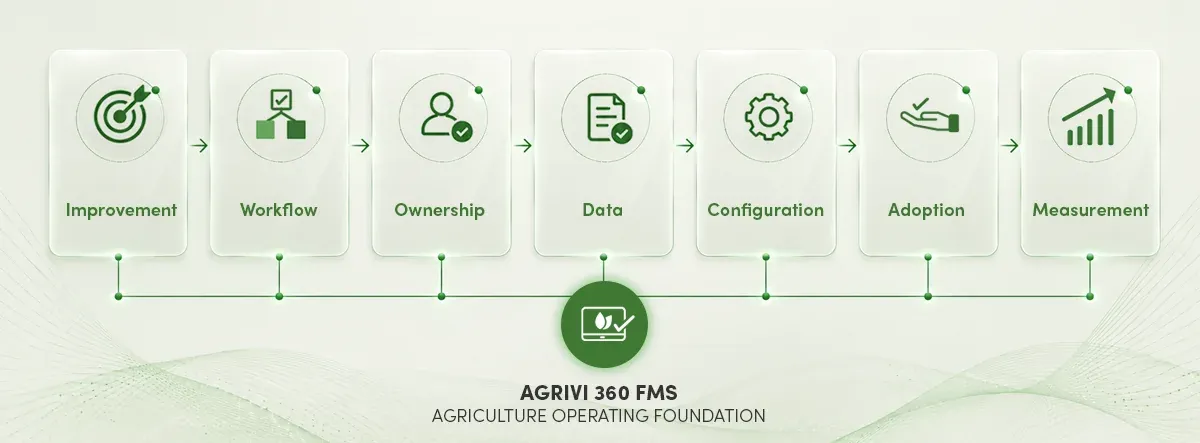
A practical sequence starts with a limited operational scope and expands after the team can perform the full workflow reliably. The purpose of the pilot is to prove that users, records and decisions work together, not just that individual features function.
- 1. Define the improvement: agree the baseline, desired decision or operating change, sponsor and first scope.
- 2. Map the workflow: agree the trigger, owner, supporting roles, required records, exceptions and review.
- 3. Prepare the data: resolve definitions, identifiers, quality issues, sources and import responsibilities.
- 4. Configure and test: validate the full scenario with representative users, including handoffs and exceptions.
- 5. Adopt and measure: establish training, support, a review cadence and proof of improvement before scaling.
For a more detailed view of the delivery phases, see AGRIVI’s existing 10-step farm management software implementation guide. This article focuses specifically on the decisions that should be made before those phases proceed.
How AGRIVI 360 FMS Supports a Measurable Rollout
AGRIVI 360 FMS connects planning, field operations, input use and farm economics around structured agricultural records. Its enterprise farm management software capabilities include field execution, operational visibility and budget-versus-actual cost monitoring. AGRIVI also describes implementation, digital transformation and adoption support for enterprise deployments.
The implementation scope should follow the customer’s priorities and confirmed product capabilities. Teams should not assume that every integration, report or workflow is available without configuration or agreement. The starting measure is whether the chosen activities are consistently recorded, visible to the people who need them and useful for decisions. The enterprise farm operating model page provides wider context for multi-site organisations.
For additional context on digital adoption, the FAO Digital Agriculture and AI Innovation programme discusses the role of agricultural digital technologies, while the OECD report on trust in agricultural digitalisation examines factors that influence confidence in agricultural data and digital tools.
Farm Management Software Implementation FAQs
What Should Be Decided Before Farm Management Software Configuration Begins?
Agree a measurable business objective, the first workflow, the accountable owners, the required data and the acceptance test. Configuration should express those decisions rather than substitute for them.
Who Should Join a Farm Management Software Implementation Team?
Include an executive sponsor, an operating owner, agronomy, finance or economics, a data or IT owner, representative field users and the implementation lead. Add integration or local-delivery partners where the agreed scope requires them.
How Much Historical Farm Data Should Be Migrated?
Import the history needed for current operations, comparisons, reporting or continuity. First assess the quality, definitions and identifiers; importing inconsistent historical records can create more work than value.
What Is an FMS Implementation Acceptance Criterion?
It is a testable statement describing what a user must complete and what the organisation must be able to review. For example, a completed field activity should update its operational record and the relevant management view.
How Do You Measure Farm Software Adoption?
Measure whether the intended users complete the workflow correctly and on time, whether records are usable, and whether managers act on the information. Logins and training attendance alone are insufficient.
How Long Does Farm Management Software Implementation Take?
Duration depends on the initial scope, data readiness, integrations, locations and rollout approach. A fixed timeline cannot be stated responsibly without assessing those dependencies.
Can a Farm Implement FMS in Phases?
Yes. Begin with a defined operational workflow and set of farms or teams, test the record and decision process, then expand when the first scope is stable and owned.
How Does AGRIVI Support Implementation?
AGRIVI provides AGRIVI 360 FMS expertise, agreed platform configuration, implementation and adoption support. The customer retains responsibility for internal process decisions, data meaning and organisational change; exact delivery scope is agreed for each project.
Published by AGRIVI. Editorial responsibility: AGRIVI Marketing & Communications.



Ready to digitalize your farm?
See how AGRIVI can help you apply these insights in your own operations.
Book a Meeting