
Farm Operations Management: One Event, Three Decisions
Follow one crop protection application from agronomic approval through field execution to activity-level cost review, with one connected farm record.
AGRIVI
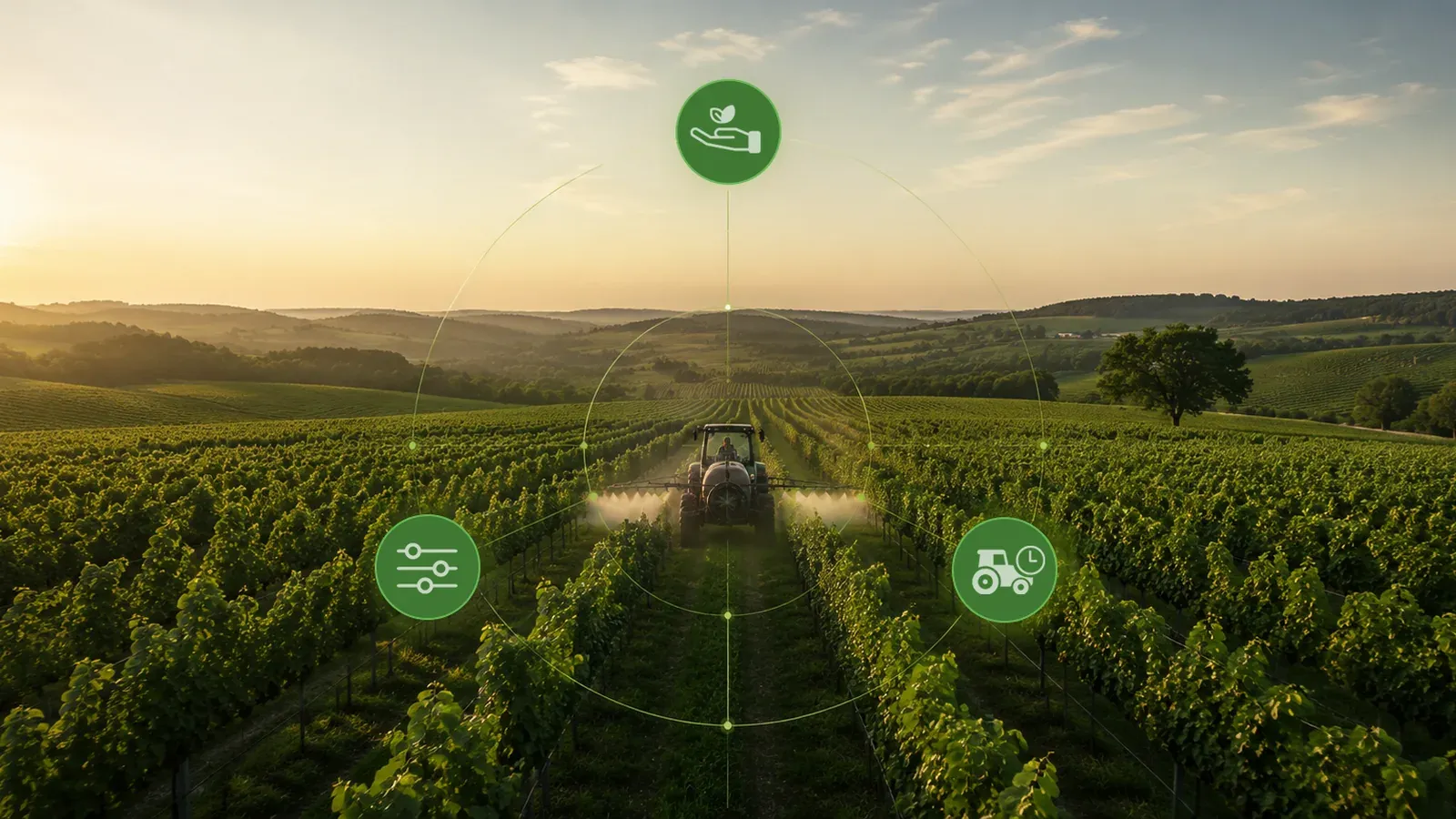
Farm operations management connects agronomic decisions, field execution and costs around a single activity record. For a crop protection application, agronomy needs the treatment rationale, operations needs the assigned work and completion status, and finance needs the actual resource cost. One connected event can support all three decisions without rebuilding the information separately.
A crop protection application is a useful test of how a large farm operates. The task begins with an agronomic reason, moves through scheduling and field work, and ends with a record of what was used and what it cost. If those steps live in disconnected tools, managers often see only part of the picture.
This guide follows that single example from decision to execution and cost review. It is intended for farm operations leaders, agronomy managers and finance teams assessing a connected farm management software platform.
At a Glance
- One crop protection application generates three management questions: why treat, how to execute, and what did it cost?
- The core activity record should retain field, crop, timing, treatment, assigned resources, completion and actual usage.
- Agronomy, operations and finance need distinct views of the same event rather than three manually reconciled copies.
- Cost visibility is most useful while the season still offers an opportunity to change a plan.
- The strongest vendor test is whether one real workflow can be followed from approval through completion and cost review.
What Does Farm Operations Management Need from One Activity?
Farm operations management coordinates the decisions, people, machinery, materials and field activities needed to complete agricultural work. At enterprise scale, a useful operating model also relates each activity to its crop context, available resources and economic consequences. The activity becomes the reference point shared by the teams involved.
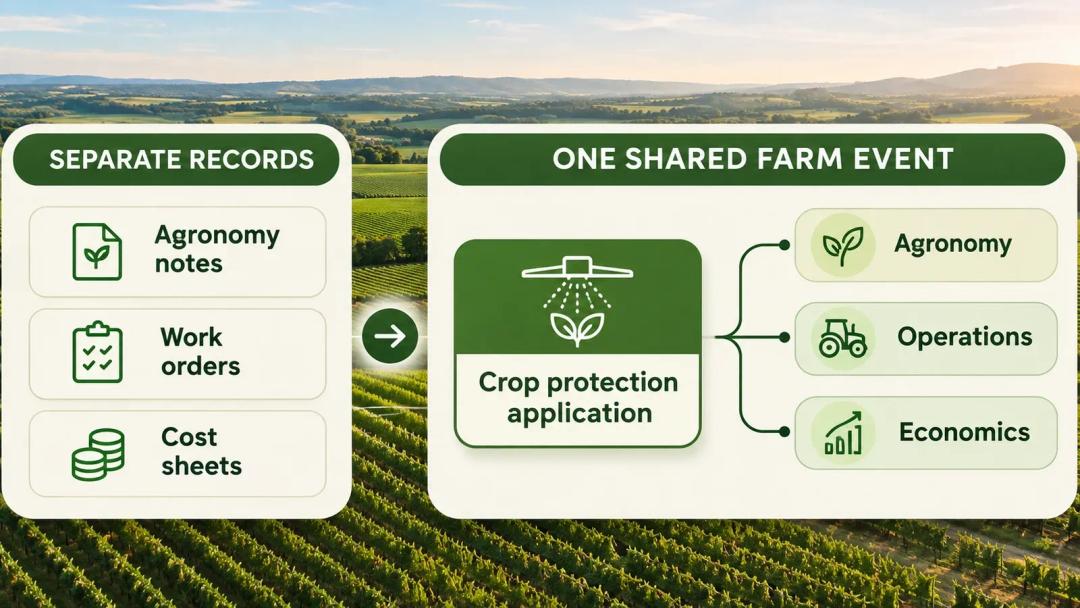
A farm may collect agronomic notes, work orders and financial entries in separate systems. Each has a purpose, but the operating decision becomes slower when someone must reconstruct how they relate. AGRIVI already explains the broader platform architecture in its guide to a shared operating record for farm management; the practical question here is what happens to one field event.
The European Commission’s overview of agricultural digitalisation describes a sector working with several types of data, including information from fields, machines and business processes. Connecting those categories around a real activity is an operational design choice, not simply an exercise in accumulating data.
A Crop Protection Application: Three Questions, One Event
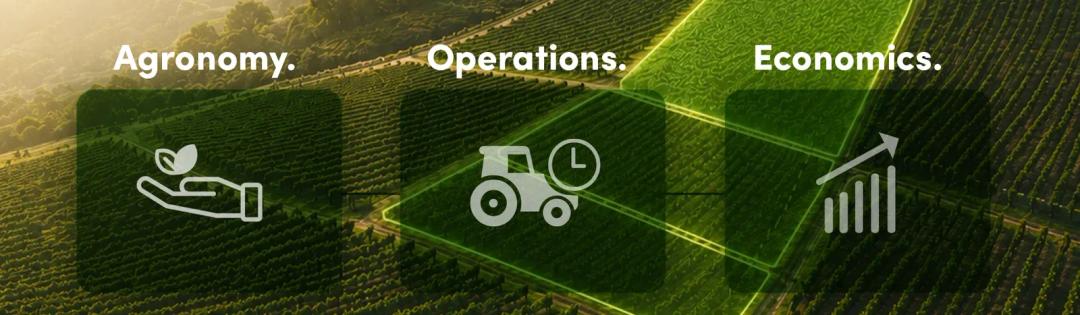
A crop protection application gives agronomy, operations and economics different questions to answer. The event should preserve the links between those questions from the moment treatment is planned until the completed work and actual costs can be reviewed.
Agronomy: Why Is the Treatment Needed?
The agronomy view should establish the crop and block, the treatment reason, relevant observations, product instructions and approved timing. An agronomist may also need the previous treatment history and conditions affecting the decision. The important output is a documented recommendation linked to the correct field. For the timing side of that decision, see the guide to planning the first crop protection spray window.
Operations: Who Will Carry It Out, with Which Resources?
The operations view translates an approved plan into a scheduled activity with an owner, team, machinery, inventory and expected completion time. The farm needs to know whether the work is assigned, delayed, completed or requires a change. For related execution disciplines, see the guide to farm work management and work orders.
Economics: What Was the Actual Cost?
The economic view needs quantities used, labour time, machinery time and the relevant cost allocation. Managers can then compare the actual application against the planned resource and cost assumptions for that block or crop. A total expense number alone does not explain which field event created the deviation.
What Should Be Recorded Before the Spraying Starts?
Before the field team starts, the record should be detailed enough to connect an approved treatment with the planned execution. Missing context at this stage usually creates manual corrections later. The exact fields depend on crop, jurisdiction, approved protocols and the company’s operating process.
- Field and crop: farm, block or parcel, crop, variety and relevant growth-stage context.
- Agronomic decision: treatment rationale, approval, product, dose or planned rate and permitted application window.
- Work plan: assigned owner, operator, planned date, equipment and required inputs.
- Economic baseline: estimated input quantities, labour and machinery hours, and planned cost where available.
Where records are also needed as evidence for a production or assurance process, the relevant traceability and compliance-supporting workflows need the same underlying field activity information. The details of any regulatory or certification requirement must be confirmed for the market and operation.
How Should the Farm Manage Execution and Exceptions?
During execution, management needs an accurate view of the job’s status and enough context to understand exceptions. A late application may be caused by weather, unavailable equipment, delayed input delivery, a changed agronomic decision or insufficient labour. Those causes require different actions.
The operator records what was actually done, when and where, including material usage and relevant time or equipment details. Where the work changes from the approved plan, the exception should have an owner and a documented resolution. A completed activity is only genuinely useful when the farm can distinguish planned quantities from actual consumption.
The operating goal is the same one AGRIVI 360 FMS describes for field execution, workforce and machinery management: connect plans, assigned resources and execution to the farm record. Which functions are included in a particular deployment should be confirmed during implementation.
A real-world example is the AG Horticulture customer story, which describes daily work orders and recording material and irrigation-water use. That story concerns the customer’s reported workflow, not a guarantee of the same outcome for every farm.
How Does One Field Event Become an Economic Record?
The economic record should link actual resource consumption to the specific activity, field and crop. This gives managers a way to investigate cost deviations while the season is underway. Without the activity connection, a monthly total may show overspending but leave its operational cause unclear.
For example, an application may need more labour hours than planned because it was interrupted or had to be rescheduled. A second application may use additional material because the treated area changed. When that context is preserved, finance can separate a price change from a quantity change or an execution issue.
The practical measurement is budget versus actual in farm management: compare the approved plan with recorded costs at a level where managers can still act. Teams building this capability can also use the guide to tracking farm expenses and cost per field.
AGRIVI 360 FMS links operating activity with farm economics in its farm management software platform, including budget review and cost analysis by farm, crop or field. The objective is visibility and evidence for decisions, without implying that software alone determines the correct agronomic or commercial action.
What Changes When the Three Records Become One Reference?
A connected field event allows teams to work from a common set of recorded facts while using different information for their roles. Agronomy sees the treatment context; operations sees timing, resources and completion; economics sees quantities and costs associated with that same event.
The distinction is important when the farm uses multiple business systems. An ERP may remain the financial system of record for corporate accounting, while the agricultural record maintains the field and crop context needed to explain operational costs. The systems must have clear ownership, timing and integration rules.
For an enterprise architecture discussion beyond this field example, see connecting agriculture systems with ERP and BI. The OECD review of agricultural digitalisation also discusses barriers and opportunities involved in making agricultural data useful across actors.
How Does AGRIVI 360 FMS Support the Three Views?
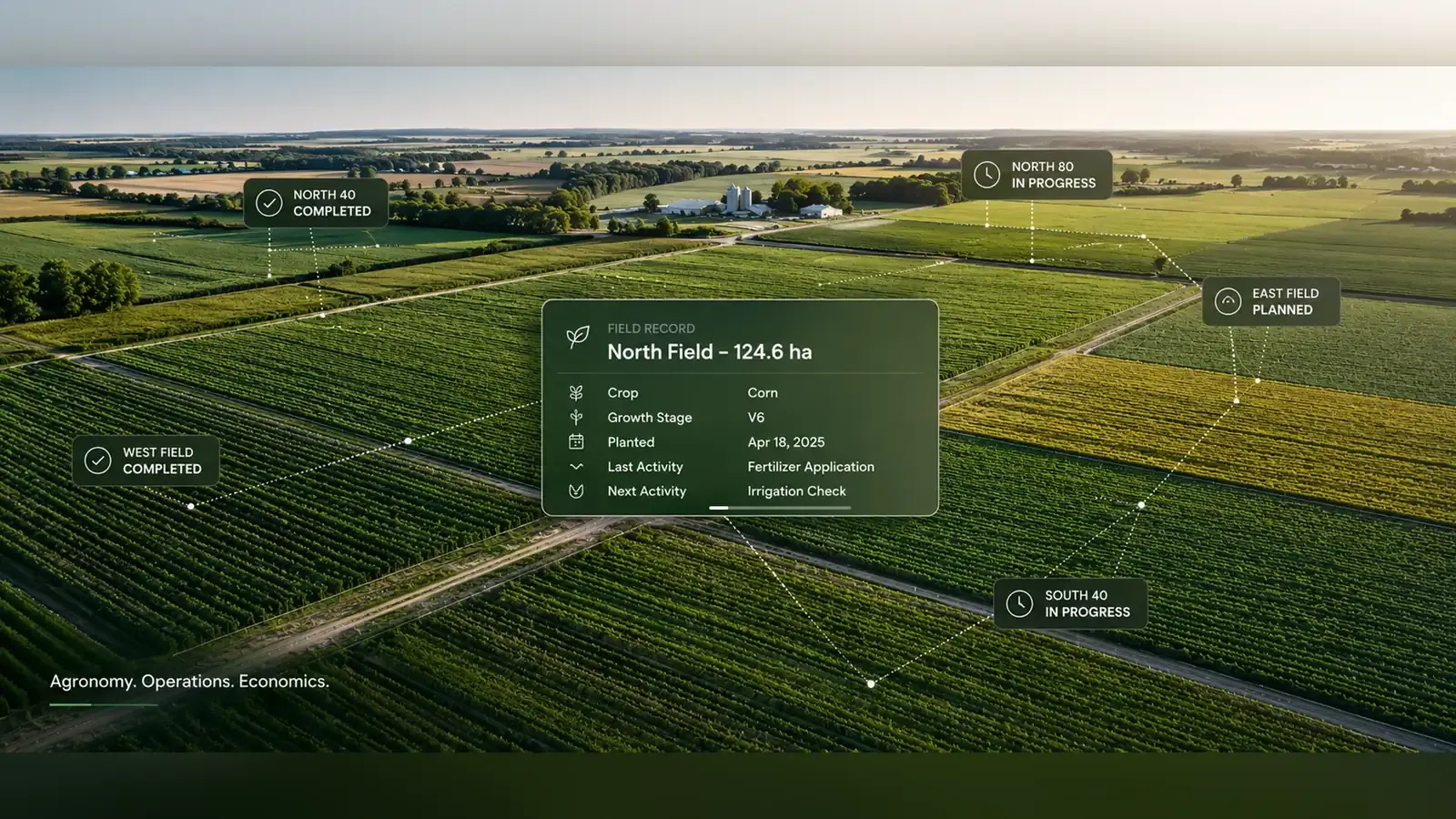
AGRIVI 360 FMS is AGRIVI’s farm management software for connected agronomy, operations and economics. Its enterprise-farm capabilities bring field records, planning, assigned work and financial visibility into a shared operational environment. Different teams can use the information relevant to their work without losing the connection to the original activity.
The AGRIVI 360 FMS enterprise-farm solution describes crop planning, farm and field records, work orders, machinery and workforce, input use, and budgets with actual costs. The broader AGRIVI 360 FMS platform also connects those records to traceability and compliance-supporting information where relevant.
A crop protection event is an illustrative workflow rather than a claim that all clients configure identical roles, approvals or integrations. Actual configuration depends on the operation, selected scope, required data and implementation decisions.
For a discussion of how the same event might be represented in your operation, teams can book a meeting with AGRIVI to review the workflow and the records it should produce.
Five Questions Enterprise Buyers Should Test
The most revealing software evaluation follows one actual activity through a full operational cycle. These five questions reveal whether the system supports coordinated management or simply maintains another collection of records.
- Can an agronomist approve or document a treatment against the correct field and crop context?
- Can the operating team schedule work, assign resources, record exceptions and confirm completion?
- Can managers compare the planned material, labour and machinery use with what actually happened?
- Can finance relate the activity to field or crop cost without reconstructing it in a separate spreadsheet?
- Can the organization identify who owns each record and what data must flow to its other business systems?
The FAO Agro-informatics programme describes how agricultural information systems can help transform raw data into actionable information. In procurement terms, the important test is the complete flow from evidence to an operating decision, using the farm’s actual roles and data.
Farm Operations Management FAQs
What Is Farm Operations Management?
Farm operations management coordinates farm plans, teams, machinery, inputs and field activities. On enterprise farms it also connects execution with crop context and cost information so managers can review progress and performance.
Why Should Agronomy, Operations and Finance Use the Same Activity Record?
The teams need different views, but they benefit from a common underlying event. A shared reference reduces duplicate entry and helps each function trace its decisions to the same field activity.
What Should a Crop Protection Application Record Include?
Typical elements include the field and crop, treatment rationale, approved plan, product and planned rate, assigned resources, application timing, completed work and actual input use. The final fields depend on the operation and relevant requirements.
How Can a Farm Connect a Spray Application to Its Costs?
Record actual product quantities, labour and machinery usage against the activity and its field or crop. The farm can then compare these costs with the planned budget and investigate variances.
Does Farm Management Software Replace ERP?
Not necessarily. ERP typically supports wider enterprise functions such as finance and procurement, while farm management software retains agriculture-specific context for fields, crops, work and production costs. The integration and system ownership depend on the organization.
How Can Farm Managers Detect an Execution Delay Earlier?
They need current activity status, assigned owners, planned timing and exception reasons. Comparing the plan with actual completion allows management to distinguish a weather or resource issue from a change in agronomic priority.
What Should Enterprise Farms Test During an FMS Demonstration?
Use one real field activity and ask the vendor to follow it from decision and scheduling through execution, resource consumption, cost review and reporting. Confirm the roles, data fields and integrations required for that workflow.
Published by AGRIVI. Editorial responsibility: AGRIVI Marketing & Communications.

Ready to digitalize your farm?
See how AGRIVI can help you apply these insights in your own operations.
Book a Meeting