
Food Product Traceability System: Beyond the QR Code
Traceability starts with production records and product identifiers, long before a consumer scans a QR code. Here is what food businesses need to connect.
AGRIVI
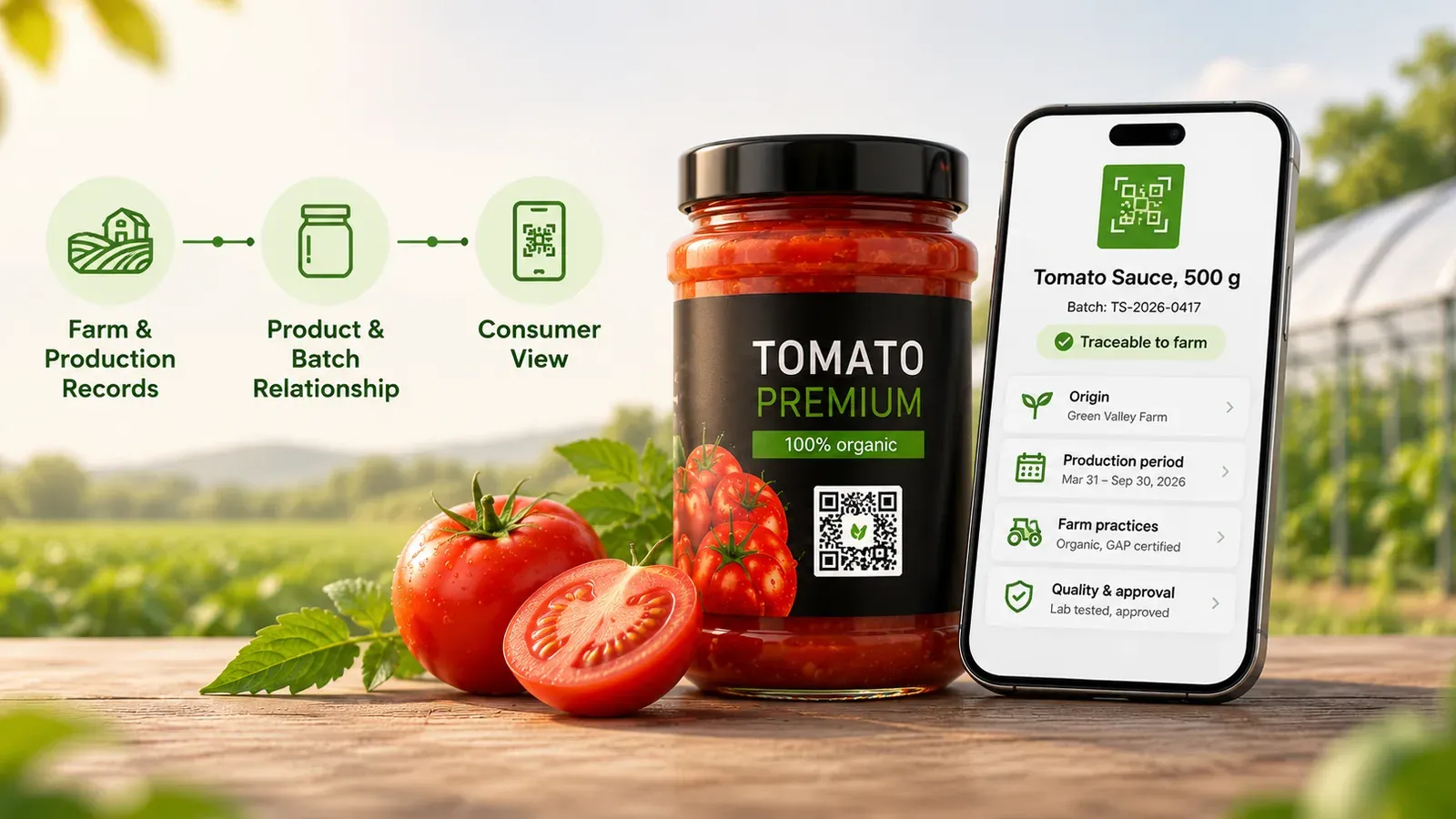
A food product traceability system connects farm and production records to a specific product, batch or lot through reliable identifiers and data relationships. A QR code can give customers access to selected, approved information, but it cannot establish origin, verify production practices or reconstruct missing records on its own.
For food and beverage producers, processors, retailers and sourcing teams, the main challenge is knowing which information exists, who is responsible for it and how it travels from the field to the finished product.
At a Glance
- Traceability starts with structured source records: grower, farm, field, crop, activities, inputs, and harvest.
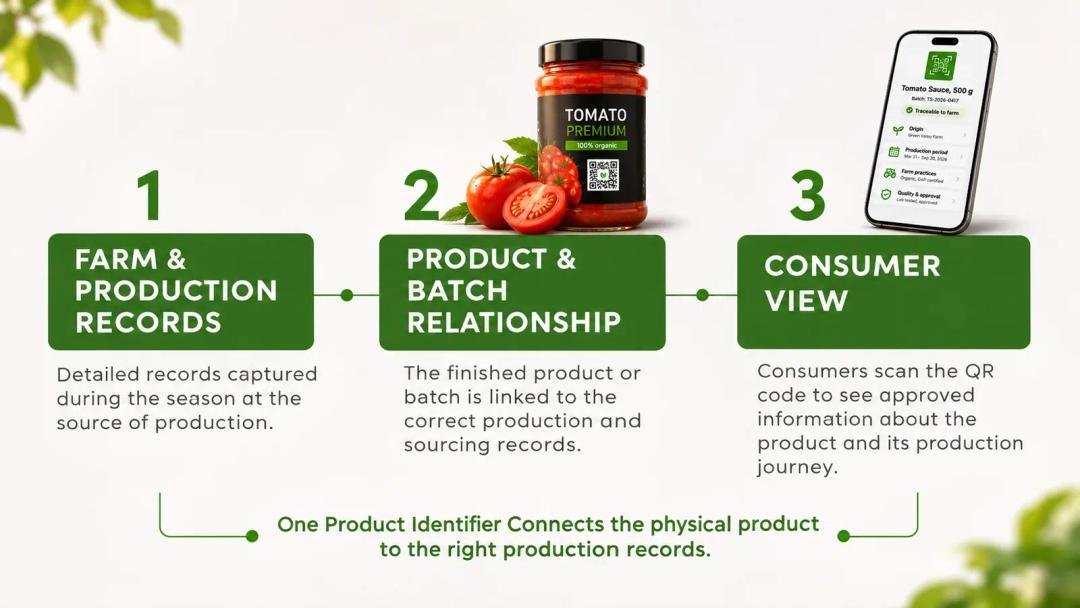
- A product or batch identifier connects finished goods to the relevant production and sourcing records.
- A consumer QR code is an access point to approved information, not proof of accuracy by itself.
- Records should be collected during normal operations, not rebuilt when a customer asks for them.
- Traceability design must address shared-source products, missing data and ownership of external claims.
What Does a Food Product Traceability System Contain?
A food product traceability system needs source records, product identifiers, documented relationships, review responsibilitie,s and controlled access to information.
At farm level, source records can identify the grower, crop, variety, field or block, production activities, input applications, harvest dates and quantities. At product level, the business needs a reliable way to associate the appropriate harvest or sourcing record with its lot, batch or finished product.
Traceability also requires governance. Teams must define who creates and maintains records, how discrepancies are corrected, what information is approved for external use and what happens if a batch draws from multiple growers or harvests.
For a broader explanation of identifying and documenting product origin, see AGRIVI’s agriculture traceability guide.
Why Is a QR Code Only the Access Layer?
A QR code opens a digital destination linked to the physical product. It does not independently establish that the information shown is correct or complete.
An attractive consumer page can present the wrong impression if a product identifier is not linked to the right batch, if production records are incomplete or if displayed statements were never reviewed. The reliable sequence is to connect the data first, agree what may be shown and only then design the consumer experience.
The illustration below shows how information moves from source records to a product identifier and finally to a consumer-facing view. The jar, brand and mobile interface are illustrative mockups, not verified product or customer data.
Which Production Records Should Be Collected?
The records required depend on the product journey and the information a company intends to share, but the essential starting point is knowing what happened, where, when and to which crop or lot.
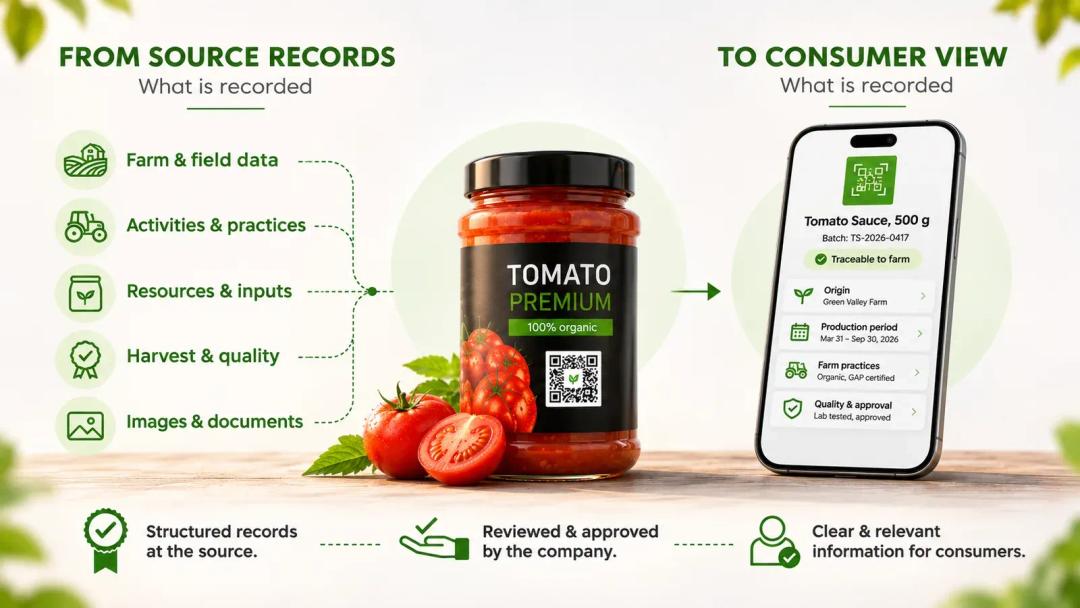
A practical record set can include farm and field identification; crop, variety and growing period; field work and crop-protection applications; resources and inputs; harvest and quality information; and supporting documents or images. Product preparation or transformation can introduce additional relationships that must be captured in the business’s own systems.
These records should be created within routine operations wherever possible. Gathering them retrospectively whenever a retailer asks a question creates repeated work and increases the risk of conflicting answers.
For businesses managing field activities, AGRIVI 360 FMS for enterprise farms supports structured agricultural operations and records. The wider AGRIVI 360 FMS platform connects operational information with traceability workflows.
How Do Source Records Differ from the Consumer View?
Source records are detailed operating evidence used by the business. A consumer view presents a narrower, reviewed selection that the company can explain and support.
Source data may include field-level activities, inputs, dates, quantities and documents. The consumer page should display only relevant information that the company has chosen to publish, at an appropriate level of detail. A company may choose to show origin or selected practices without exposing its entire internal operating record.
The approval process matters as much as the display. Quality, sourcing, legal and marketing teams may have different responsibilities, but the business needs one clear decision about what each product page can claim.
How Does Data Move from Farm Activity to a Finished Product?
Traceability depends on connecting individual production events to the appropriate harvest, sourcing record and product identifier so the product can be traced back to its source.
A field activity belongs to a crop, location and date. Harvest data connects that production history to a harvested quantity or lot. Sourcing and processing records then connect that lot to a finished product, sometimes through several transformations and combinations. Where ingredients come from multiple sources, the record model must reflect that complexity rather than imply a single field of origin.
The GS1 Global Traceability Standard provides an established framework for designing interoperable identification and traceability information across trading partners. A company still needs to define the records and responsibilities appropriate to its own processes.
Companies working with contracted growers can explore AGRIVI 360 FMS for agriculture supply chains to connect farm-level information with sourcing coordination. For the underlying standards, see the GS1 Global Traceability Standard.
What Can Food Companies Responsibly Show to Consumers?
Food companies can publish selected origin and production information when it is relevant to the product, supported by appropriate records and approved for external communication.
Depending on the product and data available, this may include grower or farm origin, production location, growing period, selected practices, harvested crop information, documents or images. Any sustainability, organic, certification or quality statement needs independent substantiation that matches the exact product or batch.
Traceability software does not by itself confer organic certification, regulatory compliance or independent verification. The illustrative “100% organic” and approval language in the accompanying visual should not be reused as factual claims about a real product.
For a documented application of consumer-facing transparency, the Kaufland customer story describes how QR codes on produce packaging were used to give shoppers access to selected product-origin information.
Explore the AGRIVI 360 FMS traceability and compliance capabilities and AGRIVI’s related explanation of food transparency and consumer information.
How Should a Food Business Start Building Traceability?
Start with one product journey, map the records and identifiers it requires, assign responsible owners and test the connection before expanding to further products or growers.
- Choose one product or product family with a clearly understood production and sourcing journey.
- Map all relevant farms, records, systems, identifiers and manual handoffs.
- Define the customer questions the experience should answer and which evidence supports each answer.
- Assign approval ownership, update rules and a process for missing or corrected data.
- Test the product-to-record connection with actual lots before scaling the model.
For food businesses planning these connections, the AGRIVI 360 FMS traceability workflow is a relevant starting point. A review of agricultural supply chain management can help frame the wider sourcing process.
This information is also important when a problem requires product withdrawal or recall. AGRIVI’s product recall management guide explains the response process; reliable links between source records and affected lots must already be in place.
Food Product Traceability System FAQs
Is a QR Code the Same as a Food Product Traceability System?
No. A QR code opens an information page. The traceability system consists of the source records, identifiers, connections, ownership rules and controls that support the information displayed.
What Is the Difference Between a Batch and a Product Identifier?
A product identifier describes a product or trade item, while a batch or lot identifier distinguishes a particular production quantity. The exact identification scheme depends on the business process and standards it uses.
Can a Processed Food Product Be Traced to One Farm?
Sometimes. A single-source product may support a direct link, while blended or multi-source products require records connecting each contributing source to the relevant finished batch.
Who Is Responsible for Consumer-Facing Traceability Claims?
The company publishing the page is responsible for deciding which statements it can substantiate, who approves them and how corrections are made. Technology supports the record and publication process.
Does a Traceability QR Code Prove Organic Certification?
No. A QR code can display a statement or supporting information, but organic status must be established through the appropriate certification and evidence.
What Information Should Food Companies Collect First?
Start with the grower or source, crop, production location, relevant activities and inputs, harvest record and identifier linking the harvest to the product or batch.
What Happens If Source Records Are Missing?
The company should avoid publishing unsupported claims, identify the missing information and follow a defined review and correction process before updating the consumer view.
Published by AGRIVI. Editorial responsibility: AGRIVI Marketing & Communications.
Ready to digitalize your farm?
See how AGRIVI can help you apply these insights in your own operations.
Book a Meeting