Key Takeaways – Agriculture Partner Ecosystems
• Agriculture partner ecosystems connect ready products, agriculture expertise, customer relationships, and delivery capacity around one customer outcome.
• A productive partner model extends beyond introductions. It defines who sells, discovers, implements, integrates, supports, and expands the customer relationship.
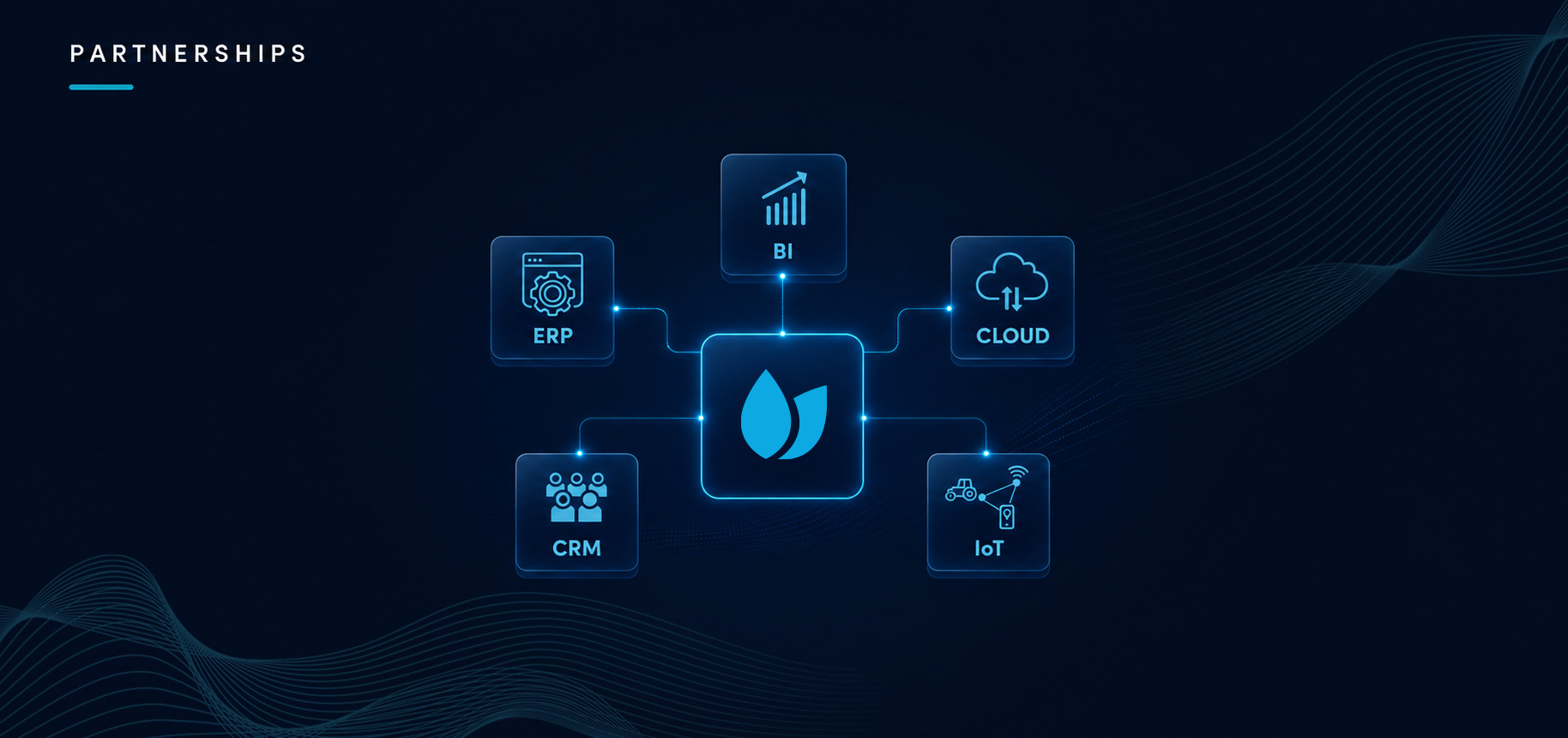
• AGRIVI gives partners enterprise agriculture products and a data and AI foundation that complements ERP, CRM, BI, cloud, IoT, and consulting portfolios.
• The commercial opportunity can include software participation, consulting, implementation, integration, training, recurring support, and account expansion.
• The most practical first step is to review 5 existing agri-food accounts and identify where agriculture-specific workflows remain outside current systems.
Agriculture partner ecosystems are structured commercial and delivery relationships between agriculture technology companies, consulting firms, system integrators, resellers, and local service organizations. They combine products, customer access, process knowledge, integration, implementation, and support so enterprise agriculture technology can become part of a customer’s operating model rather than remain an isolated software purchase.
Enterprise agriculture projects rarely sit inside one department. Farm operations, agronomy, finance, IT, sourcing, quality, and senior management may all influence the decision. A credible offer therefore requires more than a product catalogue. It needs agriculture-specific technology, access to the right customer relationships, and a clear delivery model.
AGRIVI approaches partnership as a commercial expression of its role as the data and AI foundation for enterprise agriculture transformation. AGRIVI contributes ready products, agriculture depth, and product support. The solution partner contributes customer access, consulting, integration, local delivery, and long-term account ownership. The combined model gives customers a clearer route from selection to adoption and expansion.
What Agriculture Partner Ecosystems Mean for Enterprise Growth
Agriculture partner ecosystems create enterprise growth when each participant contributes a capability the customer needs and when those capabilities are organized around a shared commercial and delivery model. Product strength, customer access, agriculture expertise, integration, and local support become one coordinated offer rather than separate vendor activities.
For technology and consulting companies, this model creates a credible route into agriculture-specific opportunities without abandoning their existing portfolio. An ERP, cloud, BI, IoT, or consulting practice can remain anchored in its core expertise while adding an agriculture layer for customers with farms, grower networks, direct crop sourcing, or field-level operating requirements.
For AGRIVI, the model extends market access and delivery capacity while keeping the company product-first. AGRIVI 360 FMS and AGRIVI AI Engage remain the foundation of the customer proposition. Partner services help the customer connect those products with enterprise systems, local processes, change management, and long-term support.
Four Capabilities an Agriculture Partner Ecosystem Must Combine
A credible ecosystem combines four capabilities: ready enterprise products, agriculture expertise, trusted customer relationships, and delivery capacity. However, missing any one of them weakens the offer. Products without access struggle to reach the right accounts. Likewise, access without agriculture depth creates a generic conversation. Finally, delivery without clear product ownership creates customer risk.
Ready products give the partner something concrete to take to market. Agriculture expertise connects those products to farm and food-industry workflows. Customer access brings context about priorities, systems, and decision-makers. Delivery capacity covers discovery, implementation, integration, training, support, and account development.
The World Bank’s work on digital agriculture highlights the importance of complementary capabilities, infrastructure, skills, and institutions in moving digital solutions into practical use. The same principle applies at company level: enterprise customers gain more when technology and delivery capacity arrive through a coordinated model. The FAO Digital Agriculture and AI Innovation programme provides additional context on the relationship between digital tools, AI, knowledge, and agricultural capacity.
Where AGRIVI Fits in Agriculture Partner Ecosystems
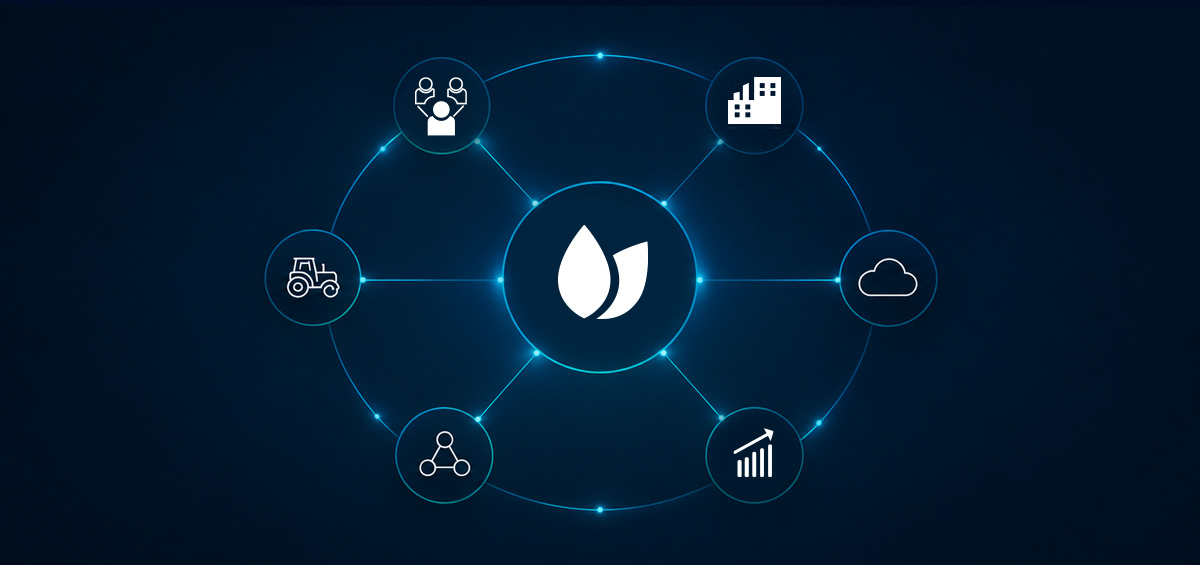
AGRIVI fits agriculture partner ecosystems as the product and domain foundation. AGRIVI brings AGRIVI 360 FMS, AGRIVI AI Engage, agriculture expertise, implementation knowledge, and enterprise support. Partners add customer relationships, consulting, integration, regional delivery, and services that connect AGRIVI products with the customer’s wider technology landscape.
AGRIVI 360 FMS provides the agriculture-specific system of record and system of action for complex farm operations. It structures fields, crops, agronomic activities, work, resources, costs, and operational decisions. AGRIVI AI Engage adds AI Workforce capacity across farmer engagement, 24/7 advisory, AI data collection, and intelligence.
This architecture complements rather than replaces ERP, CRM, BI, cloud, and IoT. The partner can connect agriculture-specific records with finance, procurement, customer management, analytics, device data, and reporting. The result is a larger customer proposition and a clearer role for the partner across the enterprise environment.
Why Customer Access Needs a Defined Delivery Model
Customer access becomes commercially valuable only when both sides agree how an opportunity will be qualified, sold, delivered, and supported. A trusted introduction is important, but it does not define product fit, discovery ownership, implementation responsibilities, integration scope, or the support route after launch.
Before the first customer project, the working model should answer practical questions. Who owns the account? Which team leads process discovery? Who confirms agriculture use-case fit and defines product scope? How will services be priced and delivered? Finally, who coordinates support and escalation? Clear answers protect the customer relationship and prevent gaps between the software and the surrounding work.
Partner capability can grow over time. A company may begin with customer access and joint selling, then add discovery, integration, training, or first-line support as its team gains experience. The model should make that progression visible without promising capabilities that do not yet exist.
Agriculture Partner Ecosystems: Passive Referral vs Solution Partnership
Agriculture partner ecosystems differ most clearly in the partner’s role after the introduction. Passive referral ends with contact transfer. Resale focuses on the software transaction. An active solution partnership connects account knowledge, agriculture use cases, product scope, services, delivery, support, and expansion through a shared customer plan.
How Partner Revenue Extends Across the Customer Lifecycle
Partner revenue extends across the customer lifecycle when the working model recognizes the services required before, during, and after software implementation. The approved AGRIVI partner model covers software participation, consulting, implementation, integration, training, recurring support, and account expansion. The exact mix depends on partner capability and customer scope.
Before implementation, partners may support account assessment, process discovery, business-case development, solution design, and architecture planning. During delivery, the work may include configuration, data preparation, migration, workflow setup, integration, onboarding, and training. After launch, the relationship can continue through support, adoption follow-up, reporting coordination, rollout, and additional use cases.
The model does not require every partner to perform every service from the first project. For example, a BI partner may begin with reporting and data architecture. Similarly, a consulting firm may lead process discovery and operating-model work. In addition, a regional reseller may begin with account access and customer coordination. Clear roles allow each company to build capability at a responsible pace.
Starting With a Solution Partner Model: A Practical Sequence
The practical starting point is not a generic programme presentation. It is a short review of real customer accounts, the agriculture workflows inside them, and the partner’s current capabilities. This keeps the discussion commercial, specific, and close to the first customer action.
First, select 5 food, agriculture, agribusiness, or rural-sector customers or prospects where the partner has a credible relationship.
Next, identify agriculture exposure such as farms, grower networks, direct crop sourcing, field operations, traceability needs, or farmer engagement.
Then, map the systems already in place, including ERP, CRM, BI, cloud, IoT, and manual workflows that remain outside them.
After that, match the strongest AGRIVI entry use case and clarify the partner role across selling, discovery, delivery, and support.
Finally, prioritize the accounts by business fit, visible need, access to decision-makers, and execution readiness.
Explore the AGRIVI Solution Partner Model and see how ready enterprise agriculture products, agriculture expertise, customer access, and partner services can become a repeatable joint offering.
Frequently Asked Questions About Agriculture Partner Ecosystems
What Is an Agriculture Partner Ecosystem?
An agriculture partner ecosystem is a structured relationship between technology providers, consulting firms, system integrators, resellers, and delivery organizations. It combines products, agriculture expertise, customer access, integration, implementation, and support so enterprise customers receive a coordinated solution rather than a disconnected set of vendors.
Does a Partner Need Agriculture Software Expertise Before Working With AGRIVI?
No. A strong partner may begin with customer access, enterprise technology capability, consulting, integration, or local delivery. AGRIVI contributes product and agriculture expertise during qualification and early opportunities. The partner needs a genuine commitment to build the relevant capability and to work on real customer accounts.
How Does AGRIVI Complement ERP, CRM, BI, Cloud, and IoT?
AGRIVI provides the agriculture-specific context of farms, fields, crops, agronomic records, work, grower networks, and production economics. ERP, CRM, BI, cloud, and IoT remain important parts of the customer environment. The partnership opportunity is to connect those systems with structured agriculture records and workflows.
How Can a Solution Partner Create Revenue With AGRIVI?
The approved AGRIVI partner model includes software participation, consulting, implementation, integration, training, recurring support, and account expansion. The mix depends on the partner’s capability, the commercial agreement, and the customer project. AGRIVI does not publish invented margins, guaranteed revenue, or standard project timelines.
What Is the Best First Step for a Potential AGRIVI Partner?
Select 5 relevant customer accounts or prospects. AGRIVI and the partner can review agriculture exposure, current systems, visible workflow gaps, decision-makers, and delivery readiness. The output should be a ranked account list, the strongest entry use case for each priority account, and agreed next customer conversations.