
ERP Farm Management: What Runs the Agriculture?
Enterprise ERP manages finance and corporate processes, while farm management software keeps the detail of agricultural work. This guide explains how to divide responsibilities and connect the records.
AGRIVI
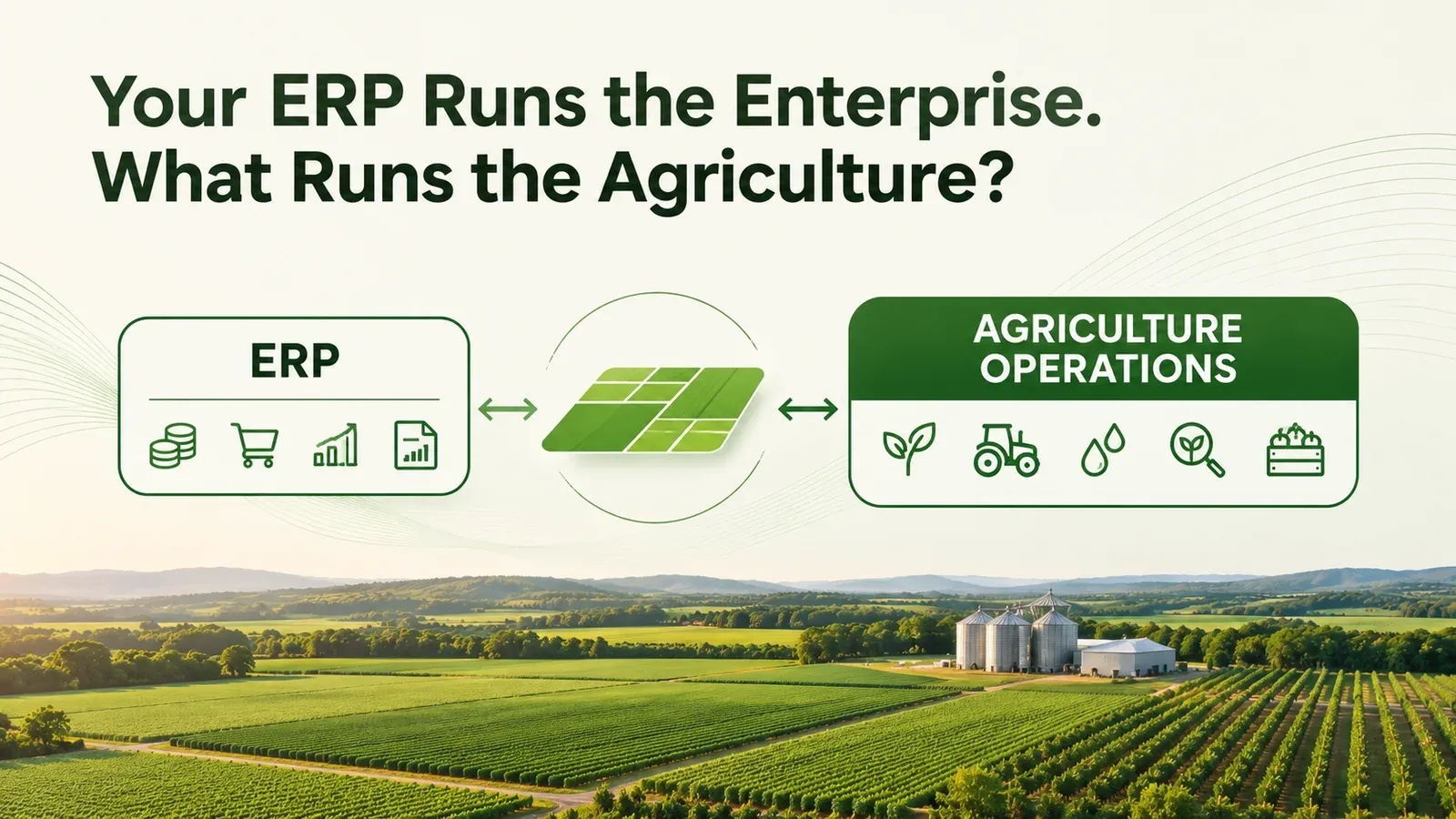
ERP farm management works when enterprise software and farm management software have clearly assigned responsibilities and exchange the information both need. ERP generally manages finance, procurement and corporate reporting. Farm management software covers fields, crops, work, input use and production costs. A connected approach keeps agricultural detail useful without requiring either system to replace the other.
An ERP can be essential to a farming group and still leave important questions about field execution unanswered. The gap appears when finance knows what was purchased but the farm team needs to know where an input was applied, why, by whom and at what cost per hectare. This guide looks at that boundary and the decisions enterprise buyers should settle before integration begins.
At a Glance
- ERP and FMS can work together: the goal is clear ownership of processes and records.
- ERP typically owns enterprise purchasing, finance and accounting; FMS owns agricultural planning and execution.
- An agriculture operating layer connects fields, crops, activities, resources and farm economics.
- Integration should move the information required for decisions, with agreed identifiers and update rules.
- Start with one real workflow to test which system creates, updates and approves each record.
What Is ERP Farm Management?
ERP farm management refers to how a farm business coordinates enterprise processes with agricultural production records. Some ERP products include agricultural functionality, but larger operations may still need specialised workflows for crops, fields and seasonal work. The practical question is whether the existing system supports the detail and pace of farming.
ERP software generally organises purchase orders, suppliers, invoices, financial inventory and reporting. Farming teams organise crop plans, field activities, scouting, work orders, harvest and input usage. Their data needs to connect because a field operation affects both agricultural performance and business costs. A farm management software platform can provide the agriculture-specific part of that architecture.
The European Commission’s overview of agricultural digitalisation discusses connected agricultural data and technologies across the value chain. Its emphasis on usable information is relevant here: digital records must retain enough agricultural context to inform real operating choices.
ERP vs Farm Management Software: What Should Each System Own?
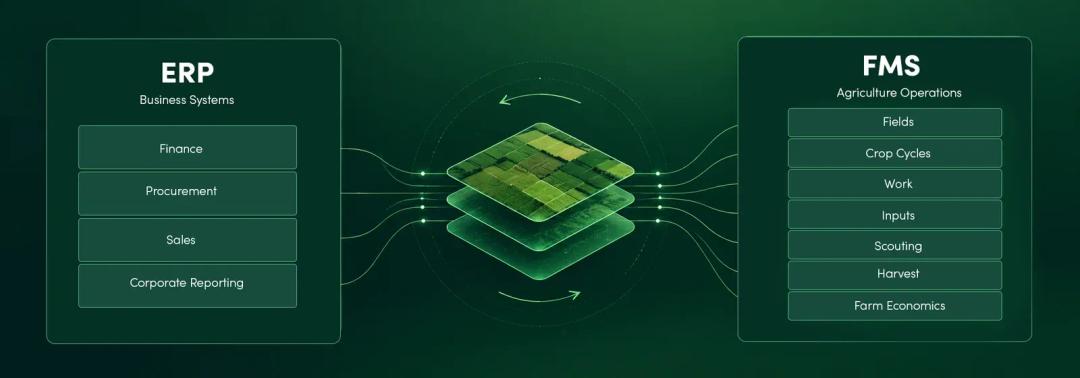
The right division depends on the organisation, but a useful default is to place corporate transactions in ERP and field-level agricultural activity in FMS. One system should be authoritative for each record, with information shared where the other system needs it.
- ERP: Supplier and purchasing records, invoices, general ledger, enterprise financial reporting, approved procurement policy and group-level financial controls.
- FMS: Fields and blocks, crop cycles, production planning, work orders, treatment applications, scouting, resource use, harvest and activity-level farm economics.
- Shared where necessary: Product and supplier references, field or cost-centre identifiers, planned versus actual usage, inventory events and cost allocations. The receiving system should not create a second uncontrolled version.
Consider one crop-protection application. ERP may have the purchase order and invoice for the product. The farm record needs the crop, field, date, planned and actual dose, operator and completion status. Finance may then need the cost allocated to the correct field or business unit. That exchange is specific; it does not require a full copy of every agricultural field in the ERP.
What Belongs in the Agriculture Operating Layer?
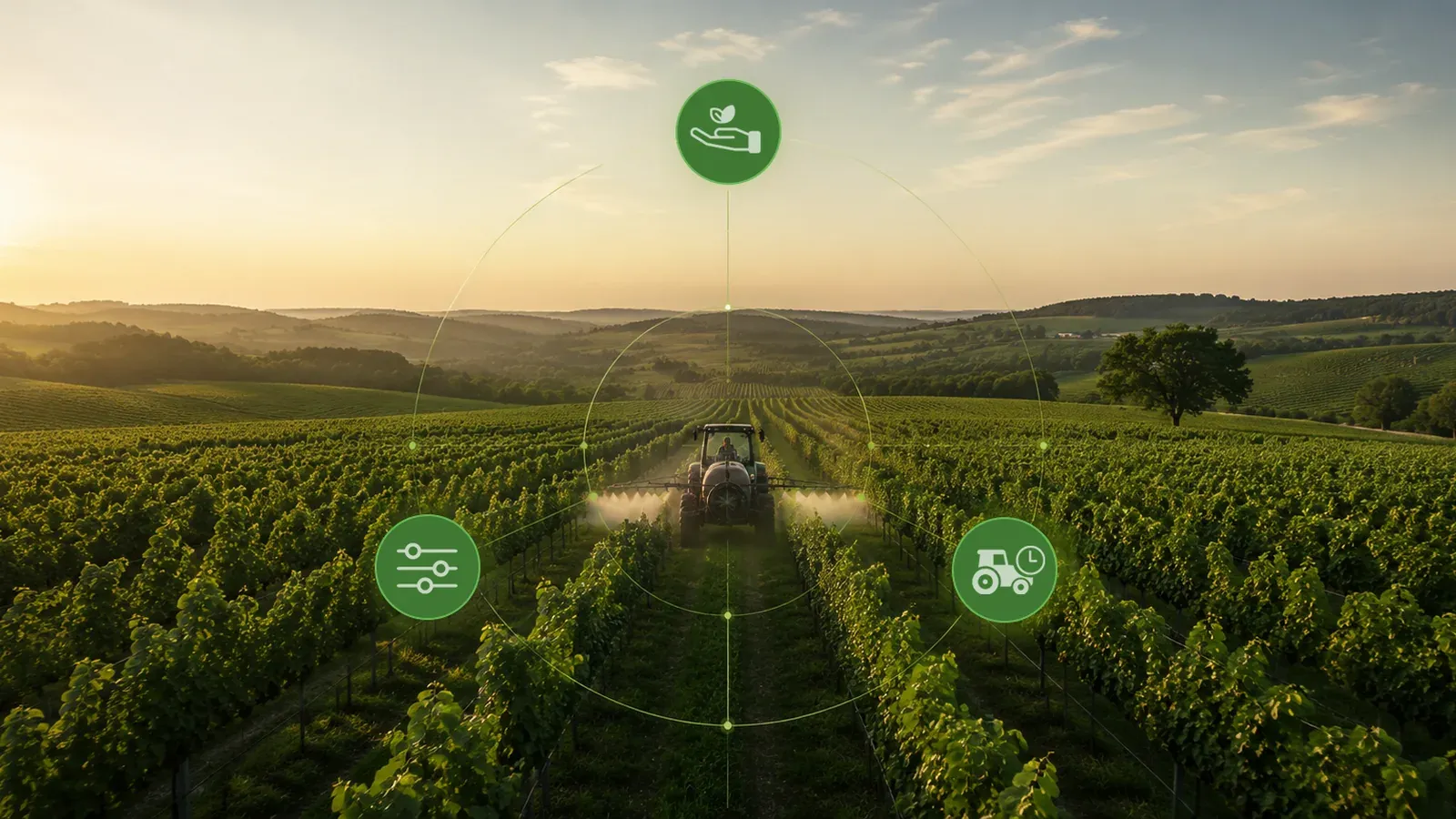
The agriculture operating layer contains the objects and workflows that explain what happens on the farm. For enterprise operations, these need to remain connected across agronomy, field work, people, machinery, inputs, harvest and cost.
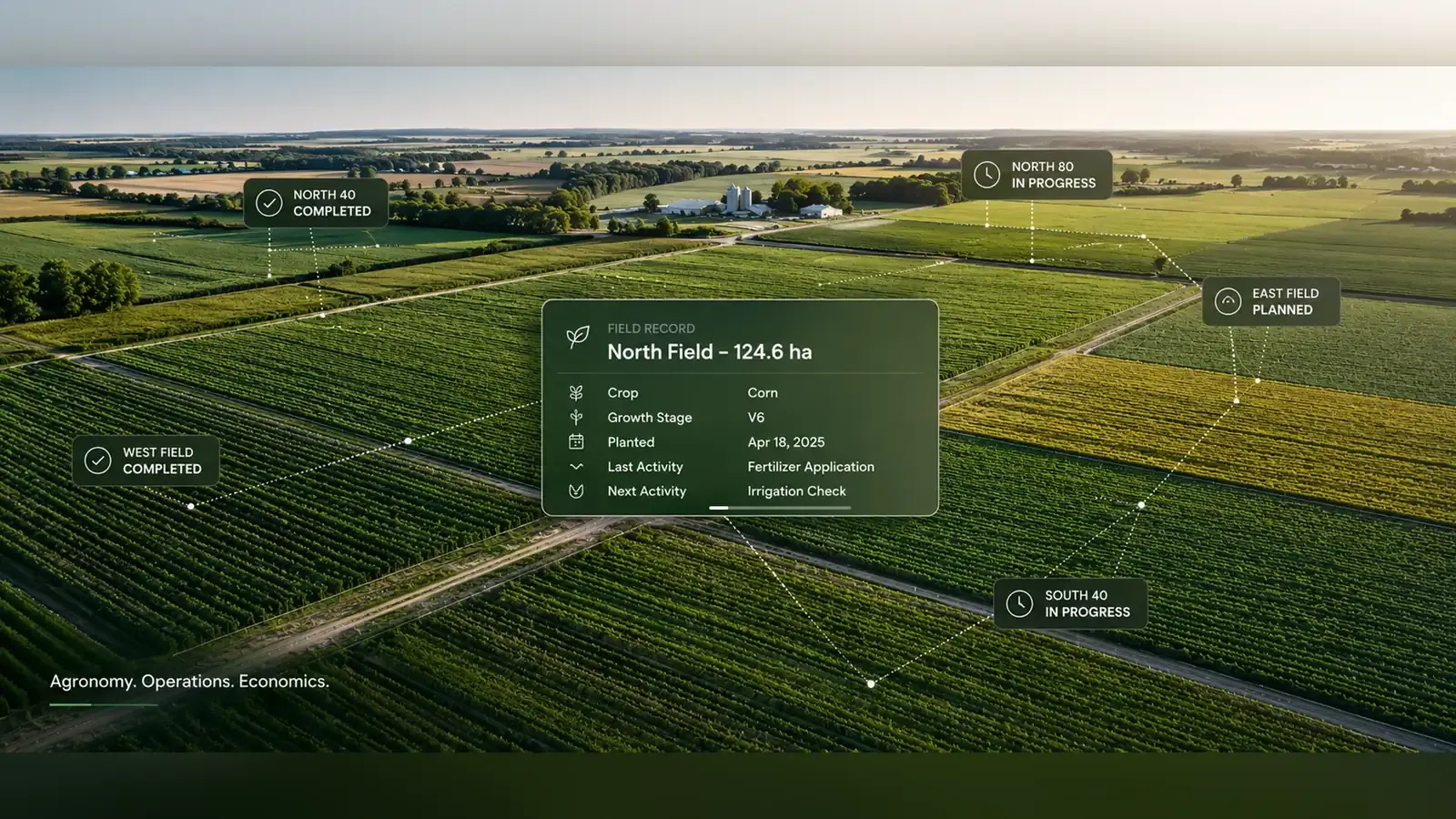
Within AGRIVI 360 FMS for enterprise farms, those records can support planning, assignment, execution, monitoring and economic review. Field teams work with agricultural objects, while management receives a consolidated view across farms and crop programmes. The exact setup depends on the operation and its agreed scope.
Useful records commonly include:
- Farm, field, block, crop, variety and season identifiers.
- Scheduled activity, responsible person, machinery, resources and completion evidence.
- Scouting observations, input applications, treatments and relevant conditions.
- Harvest quantities, allocations and information needed for production reporting.
- Input, labour and machinery consumption linked to the activity that incurred the cost.
This is why enterprise farming organisations need to assess agricultural workflow fit rather than compare enterprise software feature counts alone. A capable finance system does not automatically capture the information needed by an agronomist during a crop-protection decision.
Which Information Should Move Between ERP and FMS?
Only the information necessary for the receiving process should cross the system boundary. A sensible integration design starts with three common flows: purchased inputs, work-related costs and harvest or stock events.
Purchased Inputs and Field Application
ERP may own procurement and supplier invoices. FMS can hold the field application plan and actual product usage. Shared identifiers let the business connect purchased quantities to operational consumption without confusing a purchase with an application.
Labour, Machinery and Activity Costs
Payroll and financial accounting may remain in enterprise systems, while FMS provides hours, machinery use and the agricultural activity behind each cost. The receiving finance process needs the appropriate cost category, period and allocation reference.
Harvest, Inventory and Reporting
FMS can record the field and crop context of a harvest. Downstream warehouse or ERP systems may manage financial inventory, shipments or sales. Connections should preserve the identifiers required for reconciliation and traceability, but details will vary by crop and organisation.
For processors that work with contracted growers, the agriculture supply chain management area of AGRIVI 360 FMS provides a related example of connecting farm-level production visibility with procurement, quality and supply processes.
How Do You Prevent Duplicate Ownership and Inconsistent Records?
Avoiding duplicate records is a governance decision before it becomes an integration task. Teams should agree where each record begins, which system is authoritative, and what happens when information is corrected or arrives late.
- Choose the owner. Name the system and team that create and approve each master or transaction record.
- Agree identifiers. Use consistent field, crop, product, supplier, cost-centre and activity references where relevant.
- Define the data contract. Specify exchanged fields, units, required values and validation rules.
- Set timing. Decide which updates must arrive during field execution and which can be reconciled later.
- Design exceptions. Assign owners to missing identifiers, failed exchanges and corrected records.
- Test reconciliation. Follow a complete farm event into the relevant ERP record and back to an auditable source.
AGRIVI’s separate guide to agriculture systems integration covers the broader technical connections with ERP, CRM, BI, cloud and IoT systems. This article focuses on the business ownership decisions that should come first.
Can Farm Economics and Corporate Finance Work from Consistent Figures?
Yes, when the organisation defines how activity-level cost information relates to accounting records. Farm operations need timely, detailed consumption figures. Corporate finance needs auditable transactions, valuation rules and reporting periods. These are connected views, but they may have different timing and levels of detail.
A fertiliser application may be completed today while the associated supplier invoice is processed later. The operating team still needs to know what was used, where and how that affects the crop budget. Finance needs to reconcile those records according to its accounting policies. Clear rules allow both functions to use the same source events without claiming that operational and ledger figures are always identical at every moment.
That distinction also matters for farm data management and operational decisions: a record gains value when teams can use it during the decision window while retaining a path to later enterprise reporting.
What Can Enterprise Teams Learn from Agricultural Deployment Examples?
A practical example shows why data quality and operating ownership matter. In AGRIVI’s story from the agave fields in Mexico, the production support team validates field data across regions, checks the registration of agrochemical use and builds reports for agronomists and managers. This is evidence of the work required to maintain reliable agricultural records; it is not a claim that every deployment uses the same ERP integration.
The broader lesson is that data exchange begins with consistent data entry and clear responsibilities. Technology can move a record between systems, but it cannot make an incomplete application record accurate or resolve who should approve a correction.
The OECD review of agricultural digitalisation identifies practical barriers including relevance, usability, skills and trust. These considerations are as important as the integration specification when enterprise farms ask people to adopt new operating workflows.
What Should Buyers Test Before Connecting ERP and FMS?
An enterprise buyer should test a complete agricultural event across the intended systems, from planning to finance. A diagram or list of API capabilities does not establish that the operating workflow will work for the people and decisions involved.
- Does the system keep field, crop, activity and resource context together?
- Can an operator record and complete work in the agreed process?
- Which application data and identifiers pass into enterprise reporting?
- How are input quantities, units and cost allocations reconciled?
- What happens when an identifier is missing or a record is corrected?
- Can managers trace the reported cost back to the original field event?
- Who monitors the data exchange, investigates exceptions and approves changes?
For a wider selection framework, use AGRIVI’s farm management software evaluation criteria. When design decisions are clear, the next step is to plan implementation readiness and workflow ownership around a manageable initial scope.
How Does AGRIVI 360 FMS Work Alongside Existing ERP Systems?
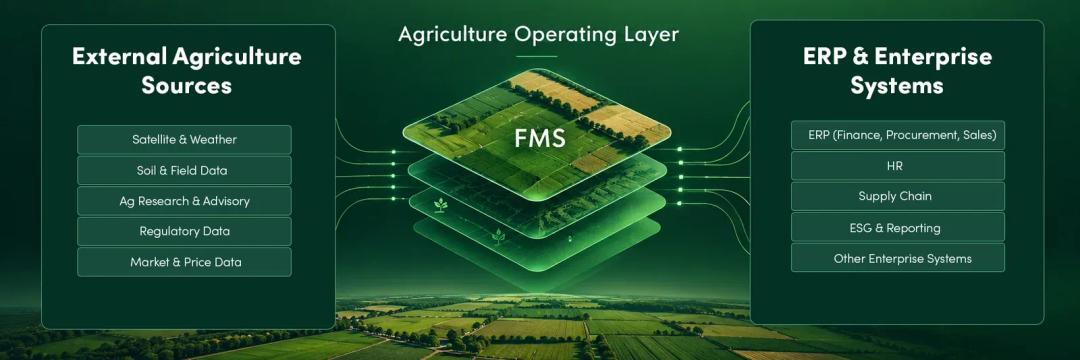
AGRIVI 360 FMS is the agriculture-specific system of record and system of action. It supports farm and field records, planning, execution, monitoring and farm economics, with supported integrations and APIs for relevant data exchange with wider enterprise systems. It is not presented as a replacement for the organisation’s ERP, financial accounting or procurement systems.
The AGRIVI 360 FMS platform provides the product foundation, while the enterprise farm solution addresses multi-farm agricultural operations and management visibility. Integration scope, systems, ownership and transfer frequency must be confirmed for each implementation.
For teams evaluating that architecture, an AGRIVI implementation discussion can establish which farm records are needed and which enterprise system should remain authoritative.
The European Commission’s common data spaces programme provides a broader example of why shared information also requires governance. At company level, the same lesson applies: interoperability is most useful when ownership, access and update responsibilities are understood.
ERP Farm Management FAQs
Does AGRIVI 360 FMS Replace an ERP?
No. AGRIVI 360 FMS complements ERP with agriculture-specific records and workflows. The systems can exchange relevant data through supported integrations and APIs, depending on implementation scope.
What Should Normally Remain in ERP?
Corporate accounting, supplier invoices, purchasing policies, enterprise sales and group-level financial reporting commonly remain in ERP. Each business should confirm the system of record for its own processes.
What Should the FMS Manage?
FMS should manage the crop and field context of agricultural work, including planning, field activity, scouting, input applications, harvest and farm economics. The exact scope depends on the enterprise operating model.
Does ERP-FMS Integration Need to Be Real-Time?
Not every data flow needs real-time exchange. Field execution and operational exceptions may need faster updates, while some finance or reporting transfers can follow scheduled cycles. Timing should match the decisions the data supports.
How Do Companies Avoid Duplicate Farm Records?
Assign one authoritative system for each record type, align identifiers, agree validation rules and define how corrections and failed exchanges are resolved. Test one complete agricultural workflow before scaling.
Can Agricultural Input Inventory Be Managed Across ERP and FMS?
Yes, if procurement, financial inventory, farm stock and actual field usage have clearly assigned owners and agreed data exchanges. A purchase order and a field application are different business events.
What Should an Enterprise Team Check Before Implementation?
Test field workflows, record ownership, data quality, access permissions, integration responsibilities, exception handling and management reporting. Acceptance criteria should reflect the decisions people need to make, not only whether data moves.
Published by AGRIVI. Editorial responsibility: AGRIVI Marketing & Communications.
Ready to digitalize your farm?
See how AGRIVI can help you apply these insights in your own operations.
Book a Meeting