
AI Sales Representative in Agriculture: From Question to Context
Learn how farmer questions become sales-ready context through approved answers, selective qualification, reliable handoff and human-owned follow-up.
AGRIVI
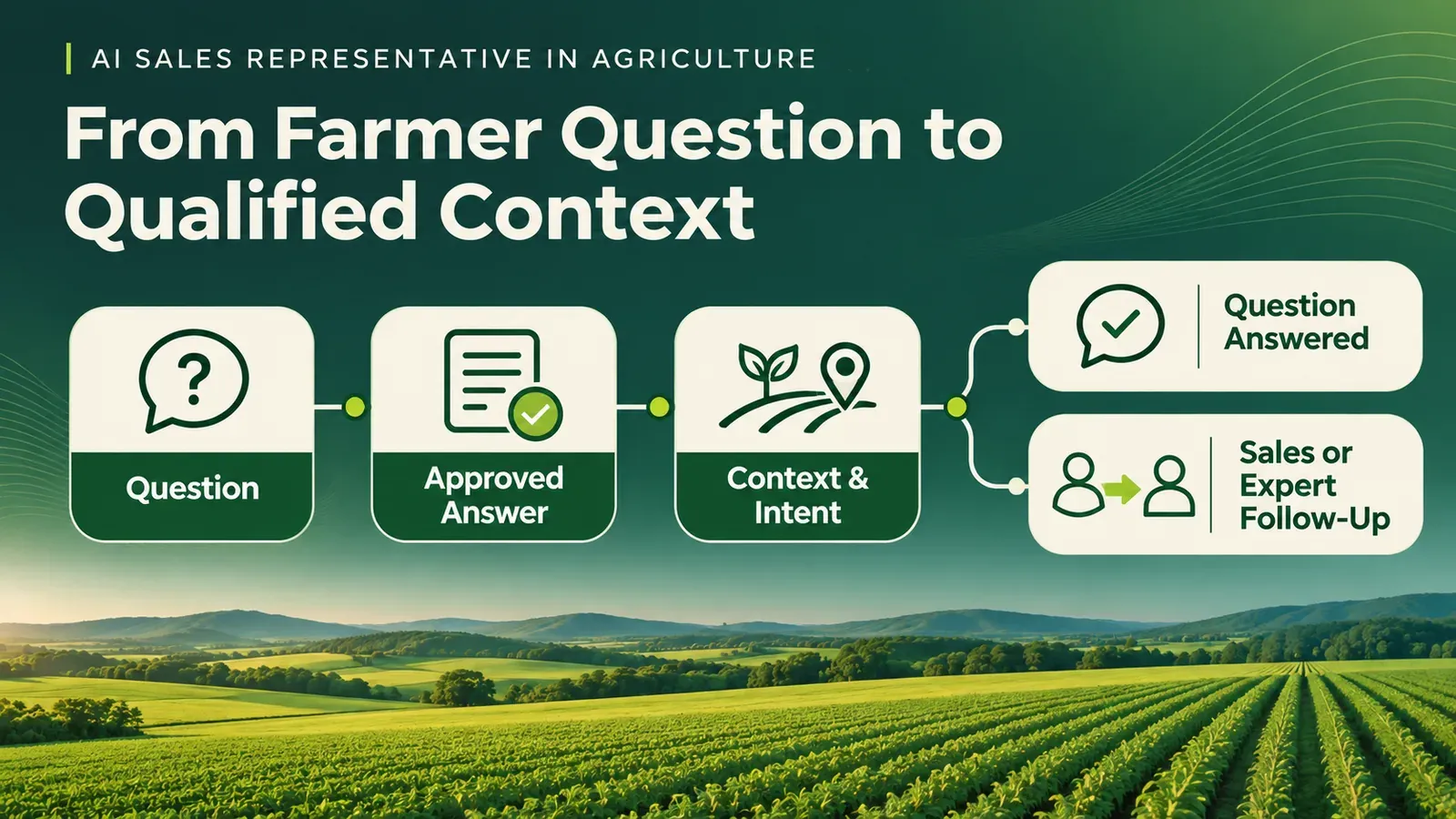
An AI sales representative in agriculture turns a farmer question into a useful next step by answering from approved knowledge, collecting only relevant crop and purchasing context, and recognising when a sales or agronomy specialist should become involved. The goal is a qualified conversation that a named human owner can continue, not a high message count.
For agri-input manufacturers, the business case depends on the information preserved between a farmer’s first question and the next commercial action. This article explains what should be collected, when qualification is appropriate and how teams can judge whether the handoff actually improved the sales process.
At a Glance
- A product question is not automatically a qualified lead; intent and timing matter.
- Approved agronomy and product knowledge sets the limits of the Digital Agent’s answer.
- Farmer context should be collected only when it supports a useful next step.
- Routine questions can finish with an answer; sales and expert cases need an accountable owner.
- Handoff quality, follow-up and outcomes matter more than conversation volume.
Why Does a Farmer Question Contain More Than a Sales Signal?
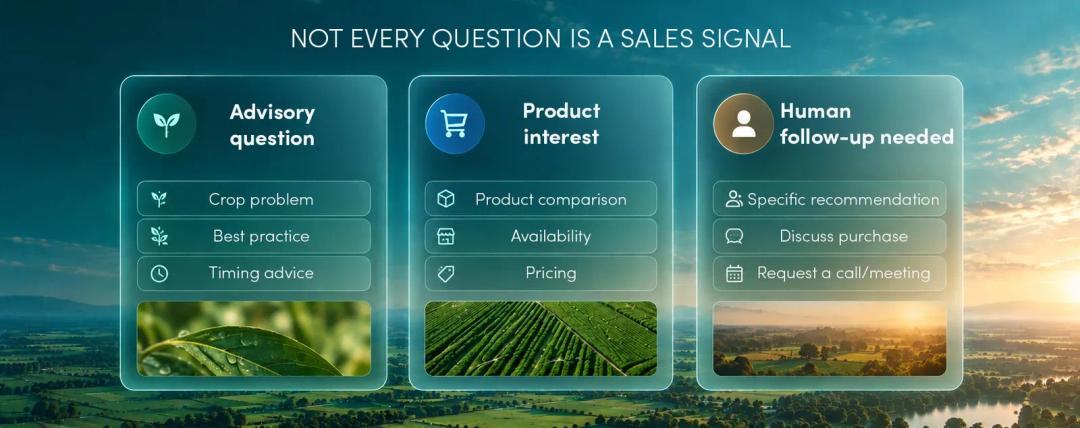
The same farmer question may signal a need for advice, a search for product information or a near-term buying decision. An AI sales representative in agriculture should recognise that difference without classifying every interaction as a prospect.
A grower asking about symptoms on a crop may need approved guidance and, in uncertain cases, a qualified agronomist. A question about pack size, local availability or a meeting with a distributor indicates a different next step. Our article on what farmers ask agricultural AI agents explains why timing and local production context are often more prominent than direct product requests.
For companies operating through distributors and regional teams, the distinction is also practical. As described in Reaching Farms Outside the Sales Call Cycle, engagement may continue between visits without displacing the human or distributor relationship.
What Does the AI Agri-Input Sales Representative Actually Do?
The official AGRIVI role, the AI Agri-Input Sales Representative, supports agronomic and product guidance, farmer engagement, buying-intent recognition, qualification and an appropriate human sales handoff. The company defines its approved portfolio, regional rules and the commercial path used after qualification.
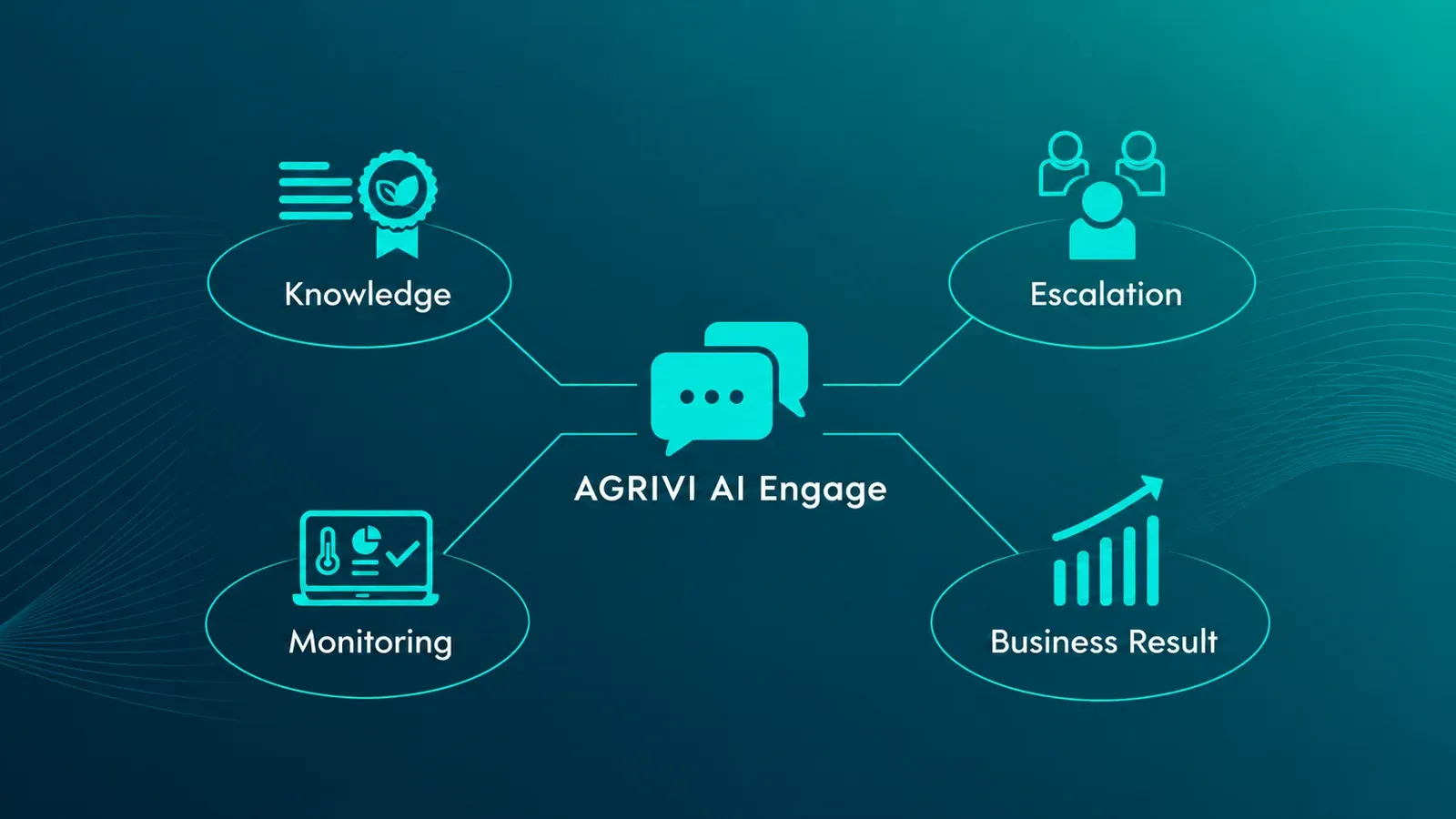
It operates within the broader AGRIVI AI Workforce category, with AGRIVI AI Engage as the platform for configuring Digital Agents. Where appropriate, the deployment can connect with existing commercial systems; the exact integration, ownership and data flows must be agreed for the project.
How Does a Farmer Conversation Become Sales-Ready Context?
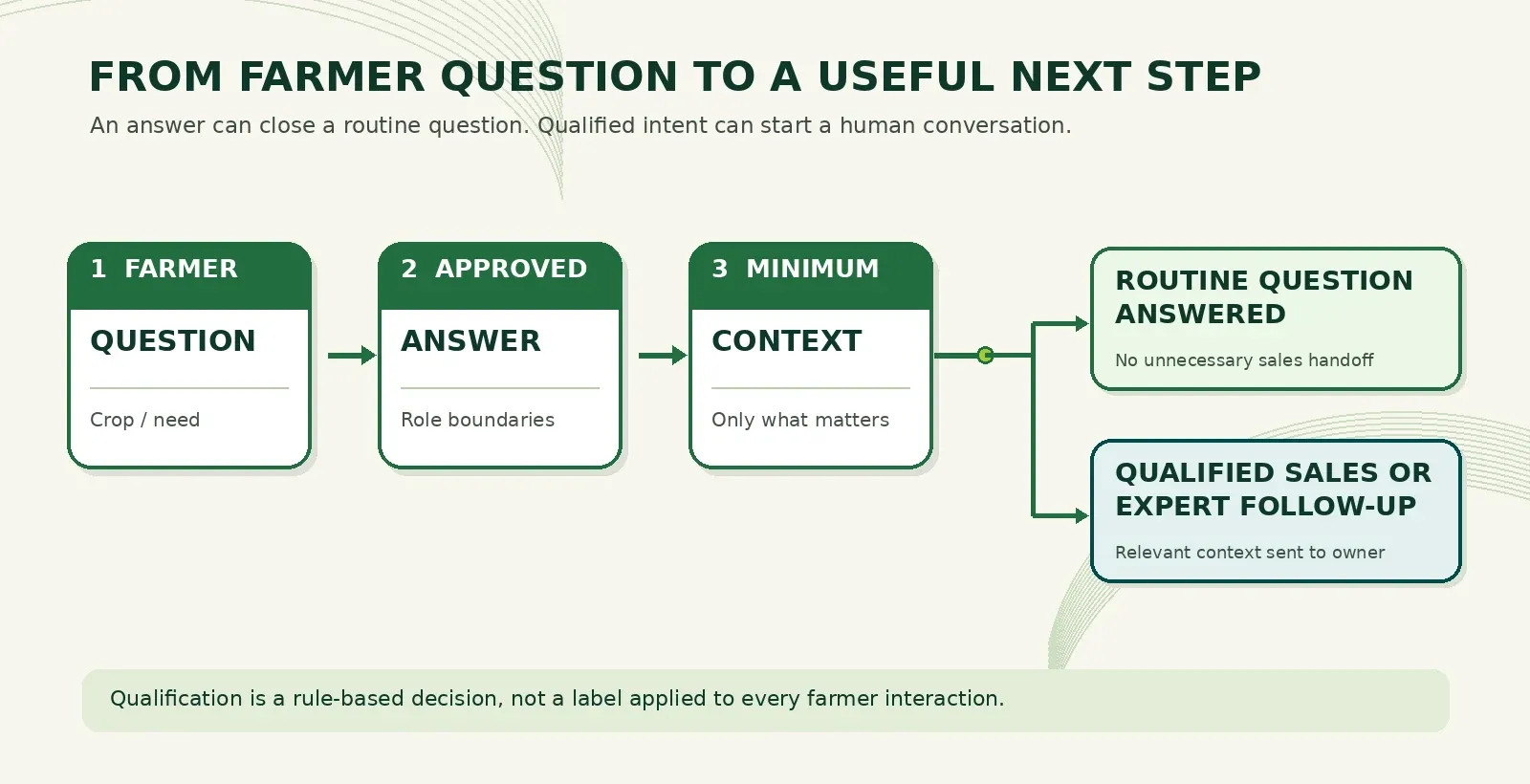
A workable process has five stages. The fifth is conditional: only a relevant sales opportunity or specialist case should be routed to a human, while ordinary questions may end after an approved answer.
- Receive the farmer’s question through an agreed channel, such as WhatsApp, Viber or web chat.
- Answer using approved agronomic and product knowledge, staying within the role’s boundaries.
- Collect the minimum useful context, such as crop, location, issue, product interest and timing.
- Apply explicit intent and exception rules to determine whether the conversation needs sales, agronomy or no immediate follow-up.
- When appropriate, transfer the question, context, reason for follow-up and assigned next step to the human owner.
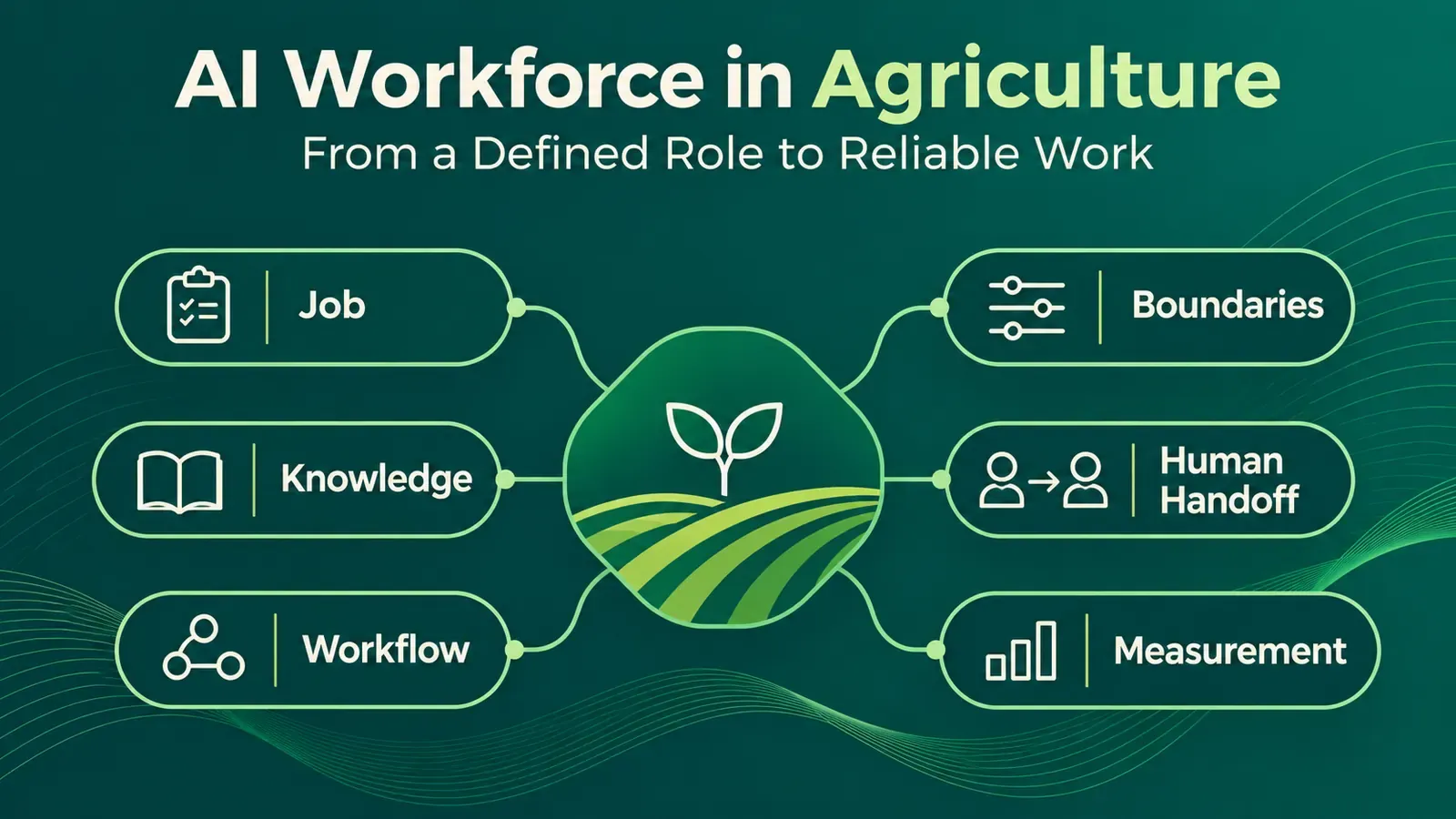
The role design must be reviewable by the business teams that will use its output. The AGRIVI article on six elements of an operational AI Workforce role sets out the wider job definition, knowledge, workflow, boundaries, handoff and measurement requirements.
Which Farmer Questions Indicate Commercial Intent?
Commercial intent is strongest when the farmer asks for an identifiable purchase-related next step, such as local stock availability, product comparison, a price discussion or contact with a representative. A technical question by itself is not sufficient evidence that the farmer is ready to buy.
The same request can also require an expert rather than a salesperson. An uncertain crop symptom or a question outside approved product-use guidance should follow the organisation’s agronomy escalation rules. The agri-input companies industry overview describes where farmer guidance and commercial coordination meet.
Classification rules should remain conservative. False positives create extra work for sales teams and can undermine farmer trust, while missed signals can delay a useful response. Clear examples and regular review are more valuable than treating all conversations as opportunities.
What Minimum Farmer Context Should Be Shared with Sales?
A qualified handoff should contain enough information for the assigned representative to act without asking the farmer to repeat the same conversation. The required fields depend on the product, crop, territory and existing CRM process.
- Farmer and contact details collected with the appropriate permission.
- Crop, location and current production context that influence the request.
- The original question and approved answer already provided.
- The expressed commercial signal, urgency and preferred next step.
- Assigned sales or agronomy owner and the status of follow-up.
The example should be minimal, not a new questionnaire. A request about nearby product availability may need only the location, product and preferred contact channel. A more technical question may need specialist review before any commercial follow-up is appropriate. The AI Agri-Input Sales Representative workflow is built around these contextual next steps, with scope defined during deployment.
How Should Human Handoff Work After Qualification?
A human handoff needs a named owner, a reason for transfer, the collected context and a clear next action. The Digital Agent can prepare the transition, while the sales representative or qualified expert remains responsible for judgment, relationship management and commercial decisions.
This is also an operating-governance question. The AI governance framework for agriculture describes how knowledge ownership, monitoring, decision rights and escalation should be assigned. The NIST AI Risk Management Framework provides a wider governance reference for designing and reviewing human oversight.
The customer should decide how cases are prioritised, who receives them and what happens when nobody is available. Where supported, relevant information can be connected to the organisation’s CRM or routing process, but there should be no assumption that every workflow automatically writes data into a customer system.
How Do Sales Teams Measure Handoff Quality?
The primary measure is whether a qualified interaction creates a useful, completed next step. Conversation volume alone cannot show whether a farmer received relevant information or whether sales gained a better opportunity to engage.
- Percentage of handoffs with sufficient context for the assigned owner.
- Time from qualified intent to human response, measured against the agreed service standard.
- Percentage of transferred cases accepted by the assigned sales or agronomy team.
- Follow-up completion, opportunity progression and reason codes for unqualified or closed cases.
- Recurring missing-data and incorrect-routing patterns used to refine the workflow.
For a fuller measurement framework, see how agricultural companies measure ROI on AI advisory programmes. AGRIVI’s wider article on sales and agronomy team capacity addresses the reach problem; this article focuses on the quality of the conversation-to-sales transition.
Who Owns the Knowledge, Privacy Rules and Commercial Decisions?
The customer should own the approved knowledge, qualification thresholds, privacy and access rules, escalation destinations and commercial decisions. AGRIVI supports the agreed platform, workflow configuration and operating model through AGRIVI AI Engage. Exact responsibilities depend on the implementation agreement.
Approved information should be reviewed as products, local guidance and distributor arrangements change. The article on knowledge architecture in agricultural AI explains why crop, regional and product context must be maintained rather than assumed. The FAO Digital Agriculture and AI Innovation programme also places trusted, useful digital agricultural solutions in a broader sector context.
How AGRIVI AI Engage Fits the Agricultural Sales Workflow
AGRIVI AI Engage can support the defined AI Agri-Input Sales Representative role across approved farmer channels, farmer context collection, commercial qualification and human follow-up. The platform belongs to the AI Workforce category and is configured around the organisation’s actual agronomy, product and sales processes.
The practical procurement test is straightforward: can a routine question be answered, can a genuine opportunity be identified, and can the appropriate person continue the conversation with the information already available? The AI Workforce operating model provides the broader category context, including knowledge, skills, boundaries and escalation.
Frequently Asked Questions About AI Sales Representatives
What Is an AI Sales Representative in Agriculture?
It is a Digital Agent assigned to a defined agricultural sales-support role. It can answer approved questions, gather relevant farmer context, recognise commercial intent and route suitable cases to a human sales or agronomy team.
Is Every Farmer Question a Qualified Lead?
No. Some questions need only an approved answer, while others require expert advice or a commercial next step. Qualification should follow the organisation’s explicit intent criteria rather than a generic conversation count.
Which Information Should Be Included in a Sales Handoff?
The handoff should include the question, relevant crop or location context, expressed interest or issue, the reason for routing, contact permission and the assigned next action. It should not request unnecessary personal or farm information.
Can the Digital Agent Recommend Products?
It can provide product and agronomic guidance within the approved portfolio, rules and deployment scope. When the information is uncertain or expert judgment is required, the workflow should refer the case to the appropriate person.
When Should a Farmer Be Connected with a Human?
A human follow-up is appropriate when there is clear buying intent, a request for a representative, an unresolved technical question or a matter outside approved guidance. The organisation defines the specific thresholds and owners.
Does AGRIVI AI Engage Replace the Field Sales Team?
No. AGRIVI AI Engage is used to extend capacity for approved conversations and structured qualification. Sales teams retain responsibility for relationships, negotiation and decisions requiring human accountability.
Can AGRIVI AI Engage Connect to Our CRM?
Relevant information can be exchanged through supported integrations and agreed processes. The exact CRM connection, fields, ownership and write-back requirements must be scoped for the individual deployment.
How Should AI Sales Workflow Performance Be Measured?
Track qualified and accepted handoffs, response time, follow-up completion, opportunity progression and data quality. These measures reveal whether the workflow improves sales action, beyond generating messages.
Published by AGRIVI. Editorial responsibility: AGRIVI Marketing & Communications.
Ready to digitalize your farm?
See how AGRIVI can help you apply these insights in your own operations.
Book a Meeting