
Farm Budget Software: Build Your 2027 Plan from Your Own Operating Records
Most 2027 farm budgets start from last year’s estimate. Here is how to build yours from the records your teams already keep, and how to make avoidable rework visible before the budget meeting.
AGRIVI
Farm budget software helps enterprise farms build a 2027 budget from the work actually completed: inputs used by field, labour and machinery time, and the additional work that did not appear in the original plan. The starting point is the operating record, rather than last year's total alone.
Most enterprise farms enter budget season with a number from the previous year and a good sense of what changed. Their teams also have more specific evidence in spray records, work orders, machinery logs and timesheets. The challenge is bringing those records into a cost picture that finance and operations can both use.
Key Takeaways
- A credible 2027 budget uses operating costs by field, crop and activity, rather than relying only on last year’s totals.
- Inputs, labour and machinery hours become more useful when attached to the work that consumed them.
- Avoidable rework can consume time and resources without appearing as a separate budget line.
- A first value estimate gives finance and operations a practical reference point before the budget meeting.
Why 2027 Budgets Often Start from Last Year's Estimate
Budget templates usually group costs into broad totals: fertiliser, crop protection, seasonal labour, fuel and maintenance. These figures tell finance what the organisation spent. They cannot always explain which field, crop or operating decision produced the expense. The next budget can therefore inherit assumptions that deserve another look.
External benchmarks show how detailed production-cost analysis can become. The USDA Economic Research Service publishes commodity cost-and-return estimates, while the European Commission's Farm Sustainability Data Network collects annual farm-level data for analysis. Those sources offer context, but your 2027 budget still needs evidence from your own production. For the underlying cost-recording method, see How to Track Farm Costs.
What Your Operating Records Already Show
Many enterprise farms already collect the basic information needed for a stronger budget. It is spread across application records, work orders, timesheets, machinery logs, inventory movements and invoices. A common field, crop, activity and date reference makes those records more useful together.
Inputs by Field and Crop
For fertiliser, crop protection products and seed, compare quantities actually applied with the plan, then attach the relevant unit cost. The difference may come from changed field conditions, a justified agronomic decision, inaccurate planning or work that was repeated. For a deeper explanation of field-level attribution, read Farm Economics During the Season.
Labour and Machinery Time
Hours recorded by activity show where operational capacity went. Connect labour hours and machinery time with the relevant cost rates. Include contractor work where it materially affects the field or crop. Waiting time, travel between distant blocks and repeat passes can then be discussed as identifiable causes rather than buried in a monthly total. The cost per hectare calculation guide explains the related unit-cost perspective.
Records That Had to Be Corrected
A corrected spray log, stock entry or harvest record also consumes time. Track how often people re-enter or reconcile information and why it happened. This is a data-reliability signal as well as an efficiency question: a budget is only as useful as the records behind it.
Where Avoidable Rework Hides in the Cost Base
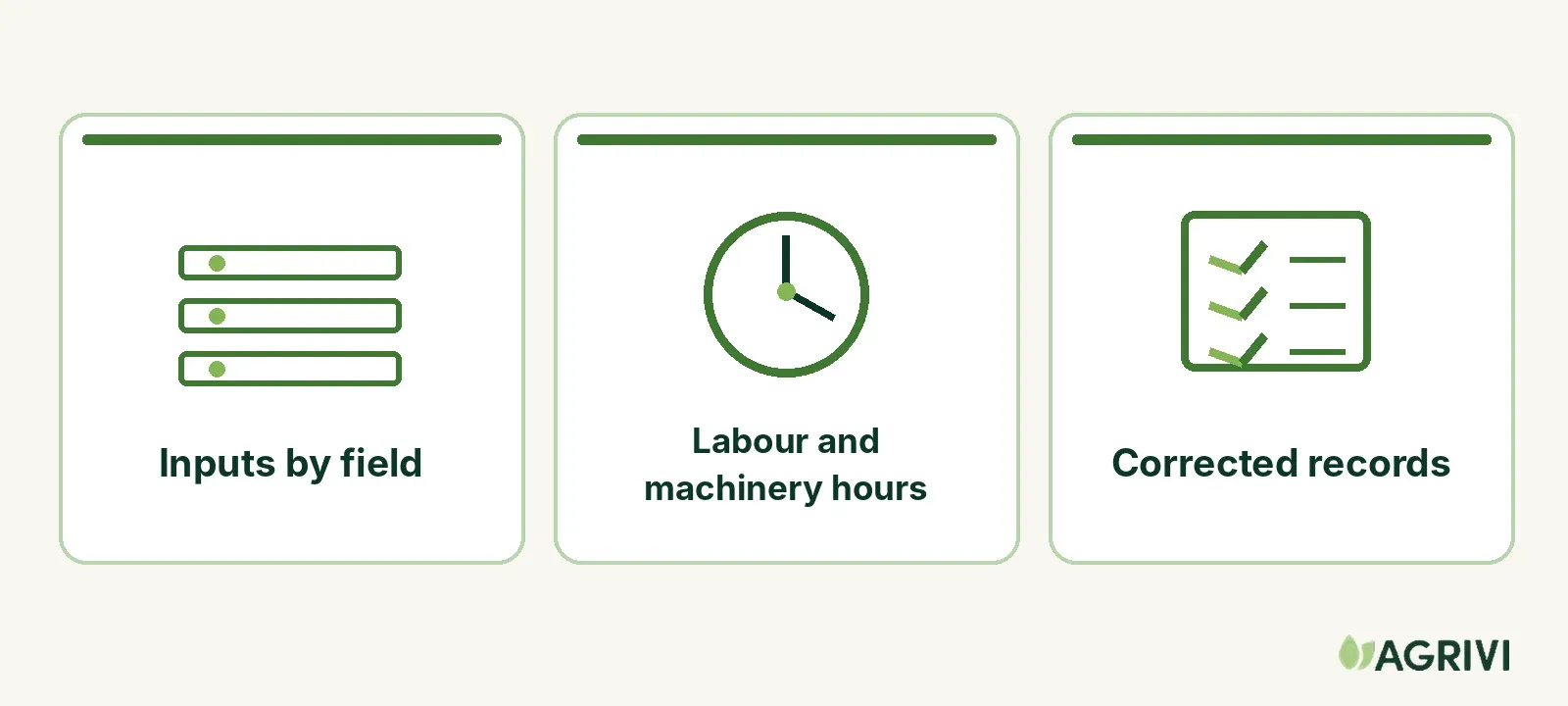
Rework rarely has its own line in a farm budget. It appears as an extra pass with the sprayer, a second visit to a remote block or another afternoon reconciling paper notes with the office system. Each event may look minor. Across multiple farms and a full season, these events consume labour, machinery availability and sometimes additional inputs.
Before the budget meeting, ask each farm manager for three examples of work that the team repeated and why. Was the field instruction unclear? Did the original activity fail to reach the right team? Was stock information unreliable? The answer matters because an unavoidable agronomic second pass and preventable duplication require different decisions.
For changes that require a management response during the season, AGRIVI's Budget vs. Actual in Farm Management article explains how to compare spending with the approved plan. This blog focuses on using those operating records to prepare the next budget.
How Farm Budget Software Connects Field Work with Its Cost
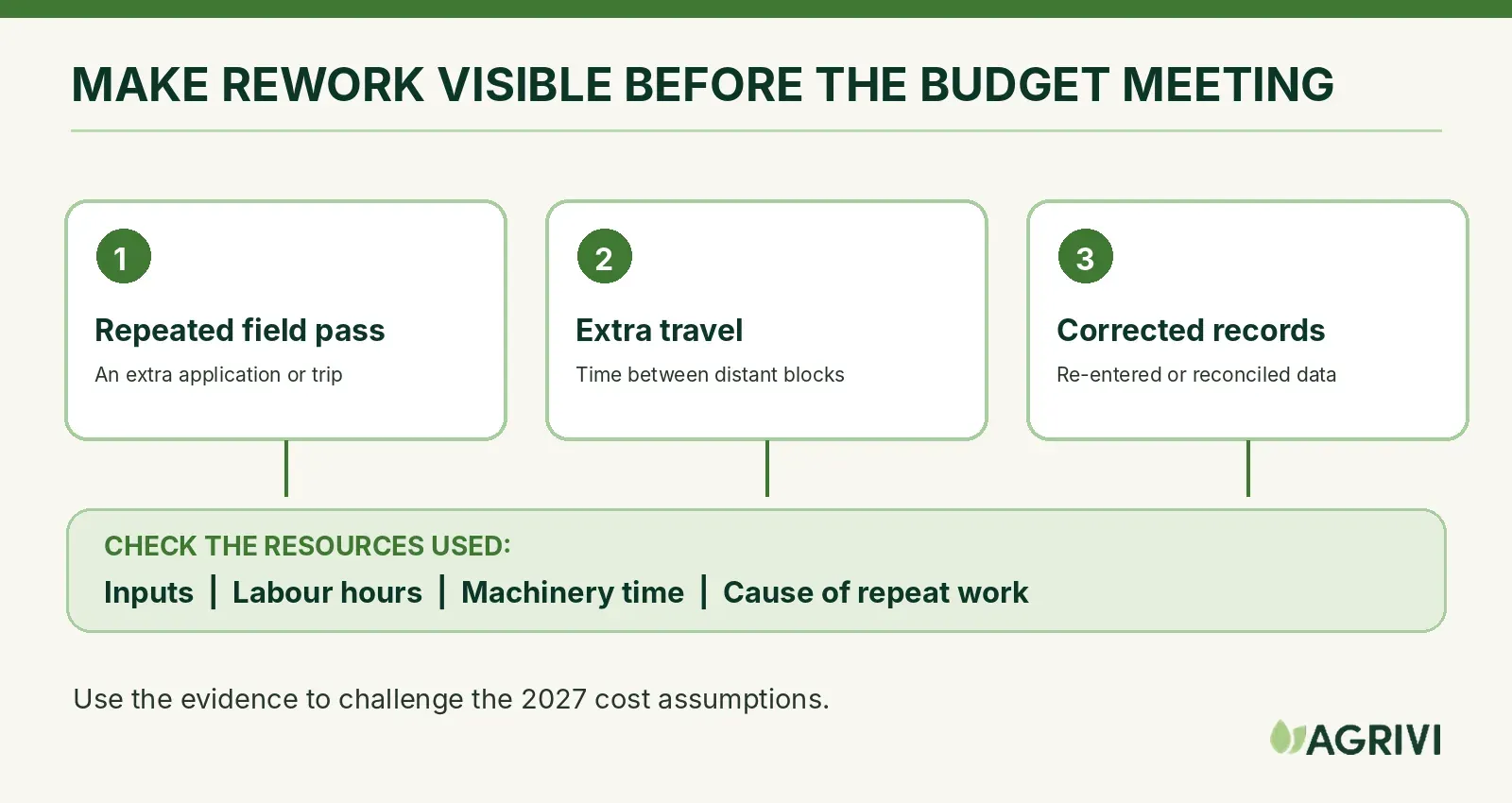
Farm budget software is most useful when it connects to the work teams perform every day. AGRIVI 360 FMS gives agronomy, operations and economics a shared field-level context. In AGRIVI 360 FMS for enterprise farms, work orders, applications, labour, machinery and costs can be reviewed against the field and crop where the work happened.
That is different from building a separate finance spreadsheet at the end of the season. A connected record lets management examine which activity created a cost difference and whether that difference should change the 2027 operating plan. The enterprise farm management software capabilities page describes the connection between work execution and economic visibility in more detail.
Investment decisions need the same discipline. Research discussed by AgTech Navigator from McKinsey's global farmer survey highlights the importance of clear return on investment and easier implementation. For AGRIVI, the business case should be tested against the customer's own conditions and available records, rather than treated as a guaranteed outcome.
Selected enterprise specialty crop customers using AGRIVI 360 FMS have reported 23% input savings and a 10% revenue increase. Individual outcomes vary.
Build a First Estimate before the Budget Meeting
A full activity-level cost model can be developed over time. The first budgeting discussion can begin with a smaller set of inputs and a transparent estimate.
- Select your crop type and the cultivated area you want to evaluate.
- Enter average annual production cost per hectare or acre in the AGRIVI ROI & Savings Calculator.
- Review the estimate alongside your field-level records, known rework and 2027 operating assumptions.
The ROI & Savings Calculator produces a starting estimate, not a detailed upload of each field's actual costs. It is a way to give the finance and operations teams a shared number to question together.
If record quality or process consistency is still uncertain, the Free Farm Digitalization Assessment can help identify where to start. To discuss your existing cost base and the implementation implications for 2027, you can review your 2027 numbers with the AGRIVI team. Use the cost and record gaps from your budget review to build a farm management software requirements brief.
Published by AGRIVI. Editorial responsibility: AGRIVI Marketing & Communications.

Ready to digitalize your farm?
See how AGRIVI can help you apply these insights in your own operations.
Book a Meeting