
Farm Economics During the Season: From Activity to Cost
Farm production costs become more useful when they stay connected to the field activities that created them. Learn how to attribute resource use and trace costs back to operating decisions.
AGRIVI
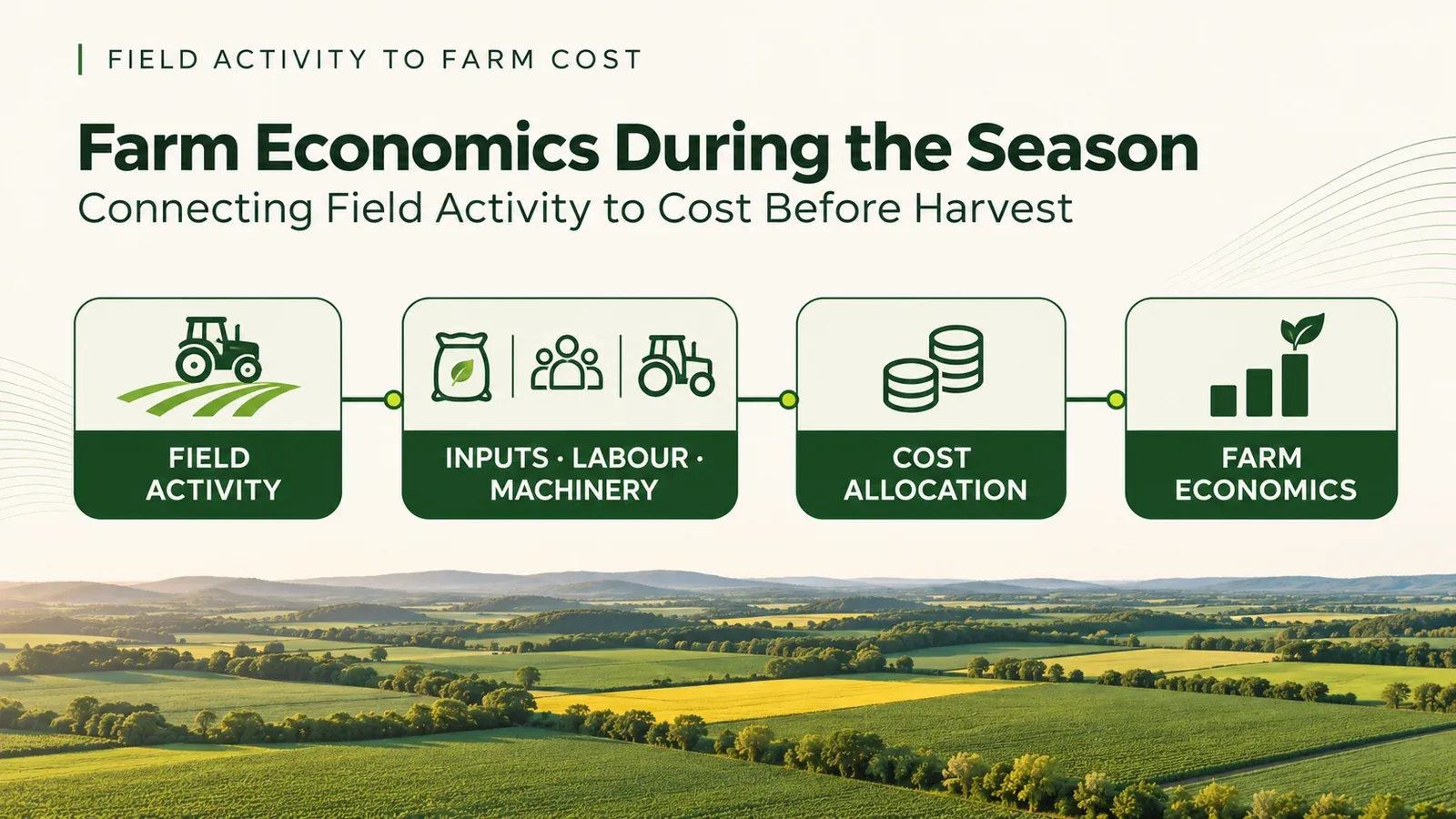
Farm economics during the season depends on connecting actual field work with the resources it consumes. Input applications, labour hours, machinery time and contracted services need to be attributed to the right crop, field and activity. That creates an economic record managers can investigate before harvest, rather than reconstructing costs from purchases and invoices later.
At a Glance
- A purchase records what the farm acquired; an application records what a specific field actually used.
- Inputs, labour, machinery and contracted services need consistent activity and cost attribution.
- Unplanned work is a separate operating event, not a fourth cost category.
- The activity record should connect farm, crop, field, date, resource quantity and the person responsible.
- Costs can then be reviewed at activity, field, crop and enterprise level without losing their origin.
A seasonal budget gives farm management an expectation. Its economic value improves when the business can explain the costs produced by individual operations as the season unfolds. A spray application, irrigation cycle or harvest task creates more than a completed-work status. It also creates input consumption, paid time, equipment use and, in some cases, external service costs.
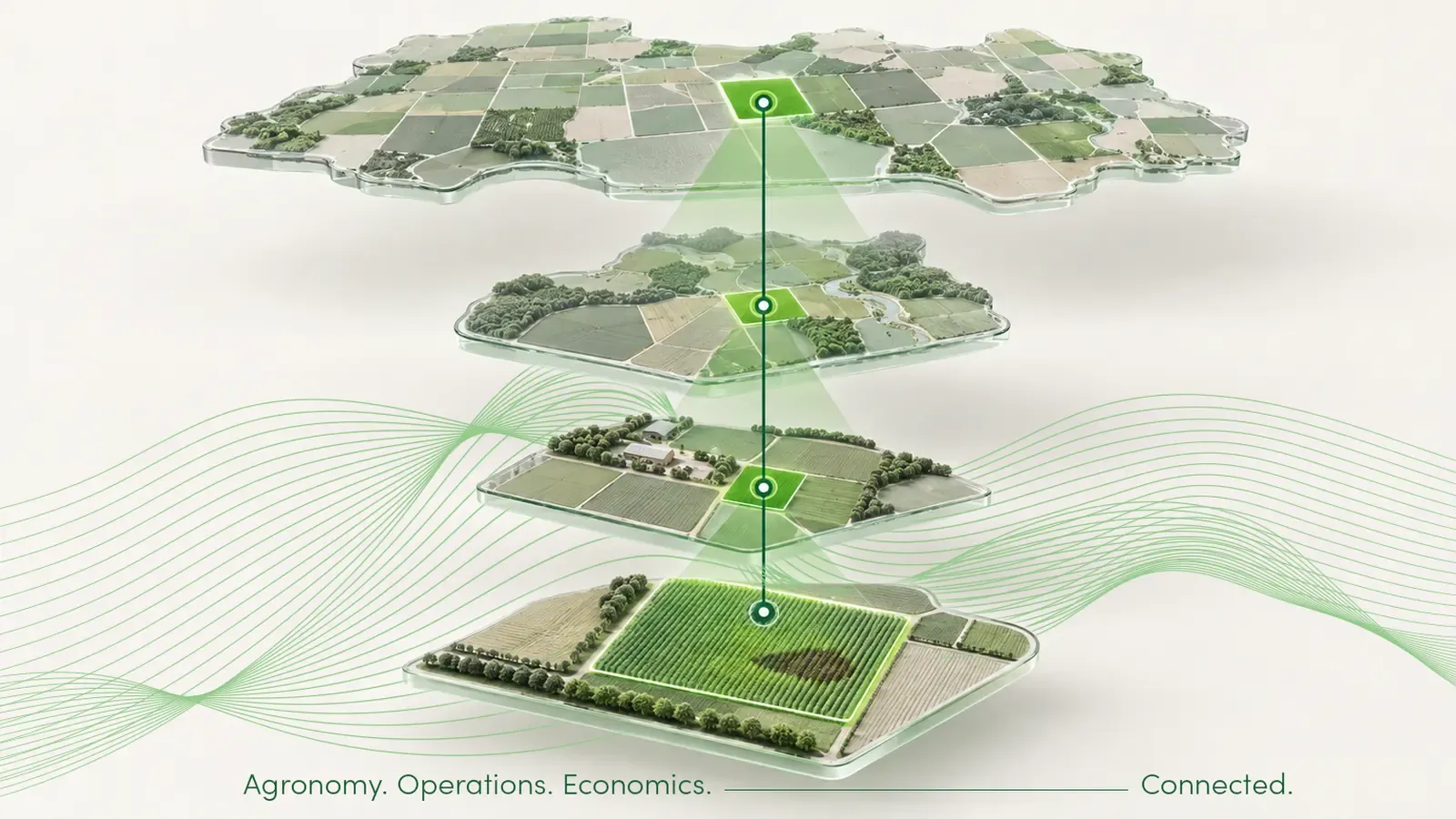
The distinction is important for enterprise farms running multiple crops, blocks and teams. A single farm-wide cost total can look reasonable while specific field activities are becoming more expensive. AGRIVI 360 FMS connects farm records, operations and economics, providing an agriculture-specific context in which those relationships can be reviewed.
How Does a Field Activity Become an Economic Record?
A field activity becomes an economic record when the work completed is connected to actual resources and the operating unit that consumed them. The minimum link is the activity, crop, field or block, date, quantity or time used, and a defensible cost basis. Without it, finance can see spending but may not know which operation created the expense.
Take a crop protection application. The agronomy record explains why it was required and which crop was treated. The operations record shows when and where it took place, who completed the work and which equipment was used. The economic record adds product quantity and applicable labour, equipment and service costs. These perspectives are connected by the same work event.
The USDA's Agricultural Resource Management Survey is a useful example of why production practices and farm-finance information are studied together. It provides sector-level research context; it is not an AGRIVI customer result or a benchmark for individual farms.
Which Costs Belong to the Activity?
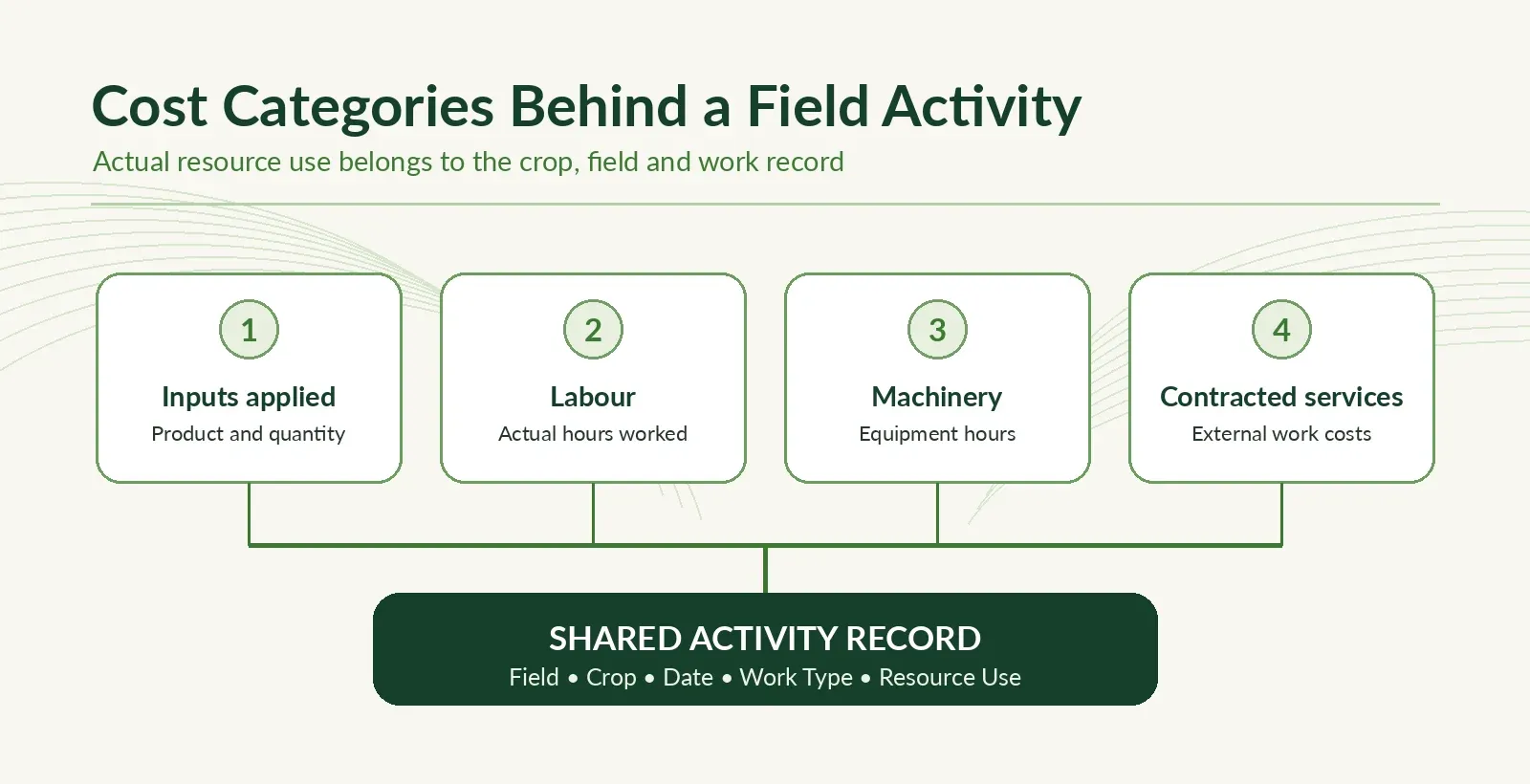
For practical farm economics, the cost categories attached to work should follow the resources actually used. Inputs, labour, machinery and contracted services cover many everyday field activities. Other expenses may need separate allocation rules, particularly overhead, irrigation energy and shared services. The right scope depends on the farm's management-accounting model.
- Inputs: product and quantity applied to the field, using an agreed valuation rule.
- Labour: actual hours recorded against the activity, valued using the agreed labour-cost basis.
- Machinery: hours or operating units used, with the selected internal equipment-cost rate.
- Contracted services: external work charged against the crop, field or activity when applicable.
An additional spray pass is an unplanned activity, not a separate cost category. It may consume more inputs, labour and machinery time, and its reason should be documented. This distinction prevents double counting when management reviews the true cost of a crop response.
Why Is Purchase Cost Different from Field Cost?
Purchasing information records what the business acquired. Field costing needs to show how much of that material was actually consumed by a specific activity. A product received into inventory may be applied over several fields, used in a later season or remain partially unused. Assigning the full purchase value to the first field would distort its actual production cost.
A reliable process records input movement into the operation and actual use against the field event. Inventory valuation, unit conversion, returned materials and application rates must follow an agreed policy. The same principle applies to employee payroll and equipment costs: the expenditure may be known centrally, but its attribution to a field activity needs operational evidence.
For the resulting cost per hectare, farm and crop comparison, the separate cost per hectare calculation guide covers the broader costing model, and the guide to tracking farm costs and expenses explains the expense categories behind it. AGRIVI 360 FMS for enterprise farms places field activities, inputs, labour and machinery inside the same farm-management workflow.
What Must Be Captured When Work Is Completed?
Teams need enough information to assign the cost correctly without creating an unrealistic reporting burden. An activity record should have a stable identifier and identify the farm or operating unit, crop and block, work type, planned and actual dates, completion status, resources consumed and person responsible for confirming the entry.
The economic fields then depend on the event: product quantity and units for an application, hours for labour and machinery, or a contractor charge for outsourced work. Where work covers several fields, the organization needs an agreed allocation basis. If the recorded use is incomplete or arrives late, the cost should be treated as provisional rather than presented as final.
This is an implementation and data-governance question as much as a software question. The farm management software implementation guide explains why workflow ownership and data readiness should be agreed before configuration.
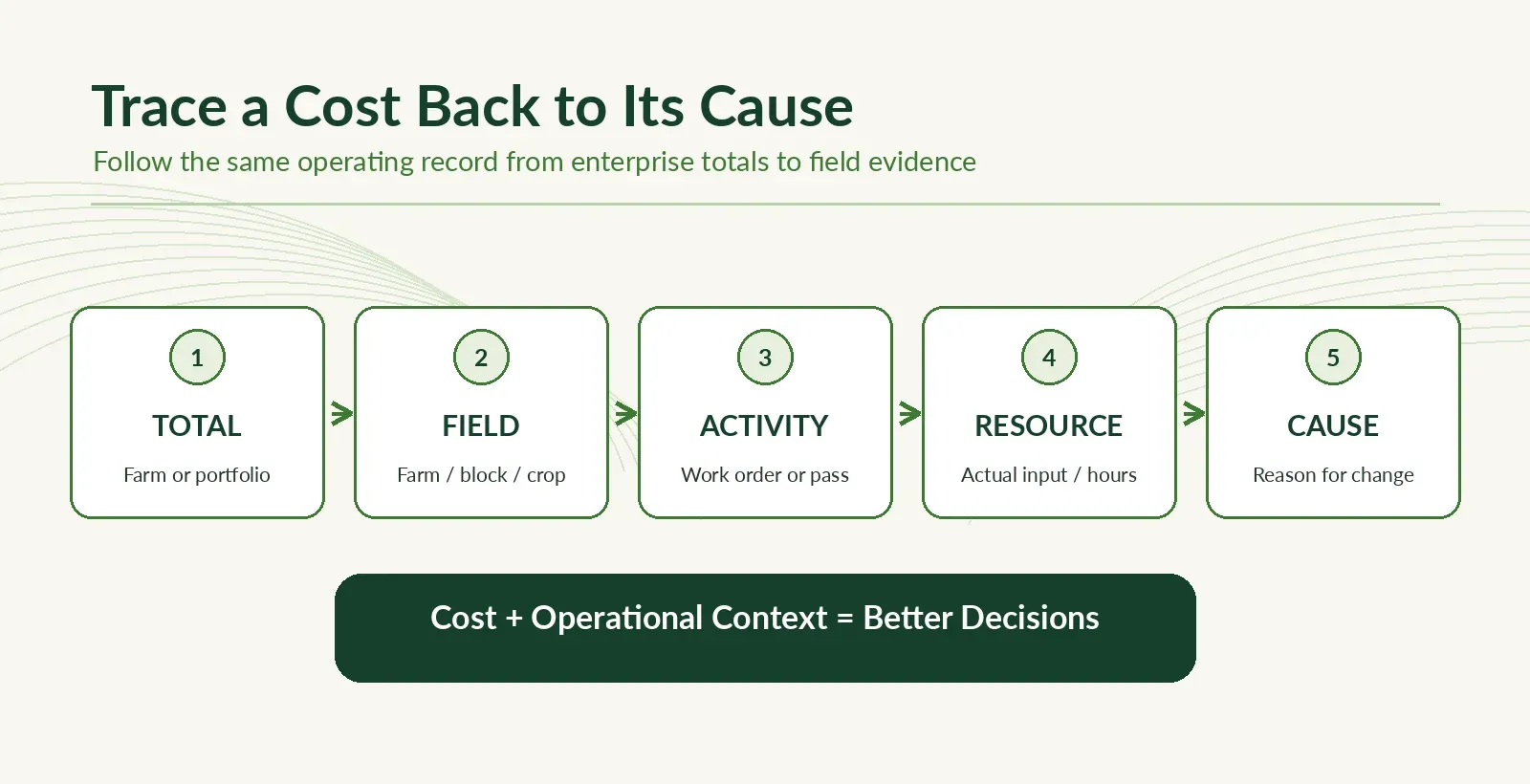
How Can Managers Trace a Cost Back to Its Cause?
A management view should let a person move from the total farm cost to the field, activity, resource and reason behind the number. This preserves the connection between economics and the agronomic or operational choice. It also makes differences between blocks easier to explain without assuming that every higher-cost field is poorly managed.
For example, a block shows greater crop protection expense than another. The activity record may reveal an additional treatment justified by disease pressure, a change in application rate or extra equipment time. Those causes have different implications for the remaining plan. The review should make the reason and its evidence visible before the next decision.
AGRIVI's article on the shared operating record for agronomy, operations and finance addresses how different teams can work from the same event without duplicating its meaning.
How Should Operations and Finance Share Responsibility?
Operations is responsible for confirming what work happened and which resources were used. Finance owns the relevant costing rules, financial reconciliation and reporting treatment. Agronomy explains why a field activity was required. The three roles need compatible definitions, but they do not need identical screens or to approve every routine entry together.
A practical control is to separate entry, validation and review. Field users complete the operating event. A manager checks exceptions or missing information. Finance maintains rates and allocation policies where agreed. This allows an enterprise farm to compare current operational cost with formal finance results without confusing an estimated activity cost with a posted accounting entry.
For a wider operating model, see AGRIVI's enterprise-farm solutions, which connect field-level activity and economics to multi-farm management and enterprise systems.
What Changes When Costs Are Visible During the Season?
Timely cost allocation helps management assess choices that are still open. A corrective treatment can be justified if it protects yield or quality; a repeated input deviation may point to a process issue. Cost visibility provides evidence for that discussion without making cost minimization the only objective.
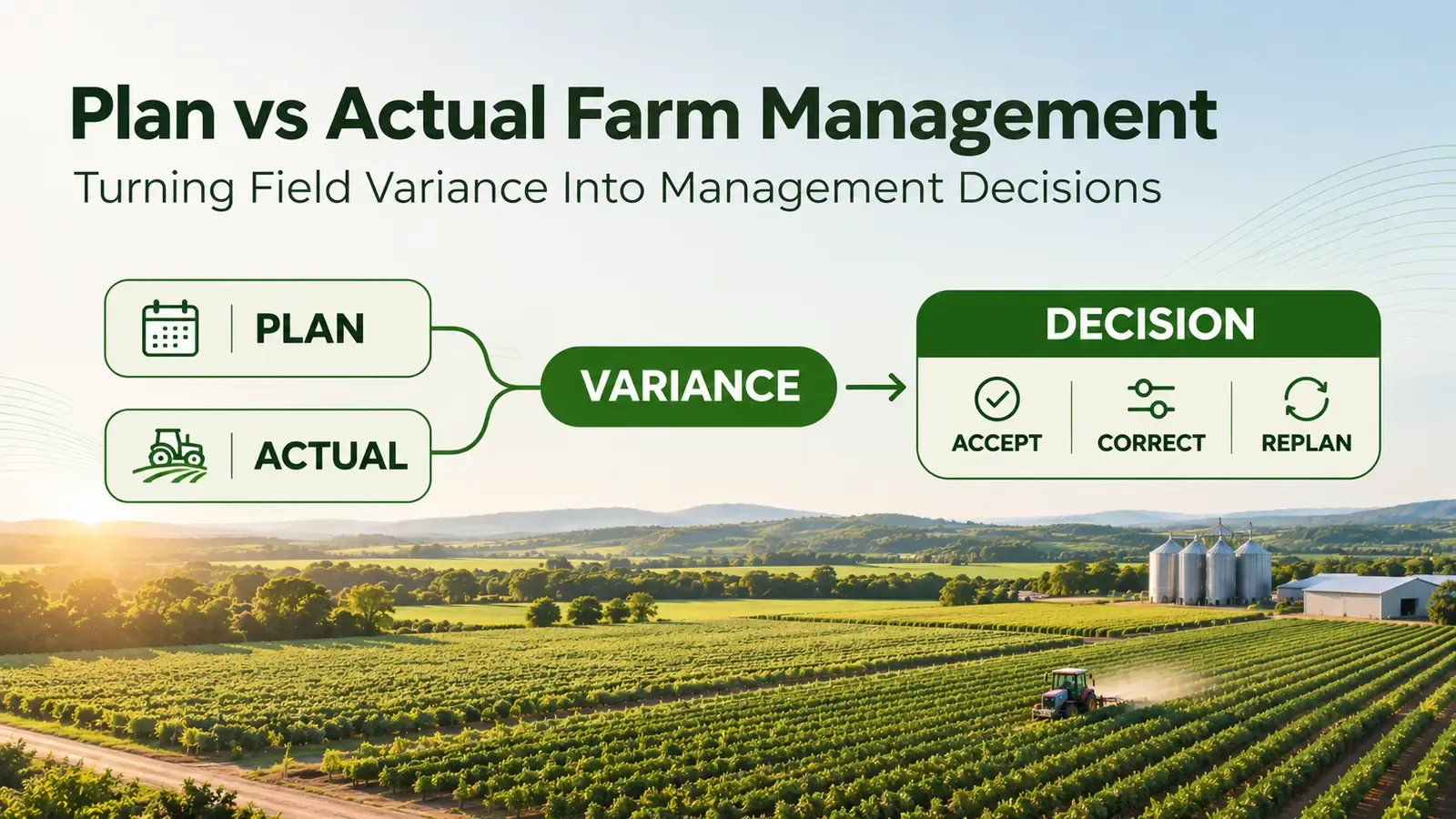
This article concentrates on attribution: how each field event produces a cost record. For the weekly review process and common reporting delays, AGRIVI's Mid-Season Cost Tracking on the Farm article covers the next management task. The separate Budget vs. Actual in Farm Management article explains comparisons between the approved financial plan and actual spending.
National farm-income measures show a different level of economic analysis. The USDA ERS farm-income data documentation describes sector-level income and expense concepts. Farm managers still need local activity records to explain what those numbers mean for a particular crop or field.
What Does the AGRIVI Customer Example Show?
The AG Horticulture customer story offers a concrete example of this operational connection. The company began using AGRIVI for production-cost tracking and later used work orders, material-usage records, irrigation logging and harvest planning to understand the economics of its greenhouse production. The case illustrates the relationship between everyday operating records and cost analysis; it does not establish a guaranteed saving for other farms.
For enterprise agriculture, AGRIVI 360 FMS brings planning, execution, input use and farm economics into a shared operational environment. AGRIVI 360 FMS for enterprise farms describes the cost, field and crop perspectives available to managers. The result depends on how consistently the organization records work and maintains the data and cost rules that support analysis.
Frequently Asked Questions About Farm Economics
What Is Farm Economics During the Season?
It is the use of current farm activity and resource information to understand production costs before harvest. Teams connect recorded work to inputs, labour, machinery and other relevant expenses at field, crop and activity level.
How Do You Calculate the Cost of a Field Activity?
Record the actual resources used, apply agreed prices or cost rates, and attribute the result to the correct activity and operating unit. Shared costs and overhead may require separate allocation rules.
Why Is Input Purchase Cost Different from Application Cost?
A purchase adds material to inventory; an application consumes a quantity on a specific field or crop. Material may remain unused, be returned or be applied elsewhere, so purchase value alone cannot establish field cost.
Should Unplanned Work Be a Separate Cost Category?
No. Unplanned work is an additional activity whose inputs, labour, machinery and any contracted services should be recorded normally. The reason for the extra work should remain visible.
Can Cost per Hectare Explain Every Cost Difference?
No. It is useful for comparing production units, but field activity, crop stage and operating cause are needed to explain why one cost level differs from another.
How Often Should Farm Teams Review Activity Costs?
Review frequency should follow the season and the decision window. A weekly or event-driven review may be useful during intensive periods, while quieter periods can justify a lighter schedule.
Does Farm Management Software Replace Accounting or ERP?
No. Farm Management Software records agriculture-specific work and cost context. ERP and accounting systems can remain responsible for purchasing, ledger entries and corporate financial reporting.
How Does AGRIVI 360 FMS Support Farm Economics?
AGRIVI 360 FMS connects field and crop records, work execution, resource use and farm economics. It enables the organization to review operational costs in their agricultural context, subject to the data and costing practices it maintains.
Published by AGRIVI. Editorial responsibility: AGRIVI Marketing & Communications.
Ready to digitalize your farm?
See how AGRIVI can help you apply these insights in your own operations.
Book a Meeting