
Plan vs. Actual in Farm Management: Which Variances Need Action?
A field variance is not automatically a problem. Learn how enterprise farms connect planned and actual work to agronomic reasons, economic impact and a documented next decision.
AGRIVI
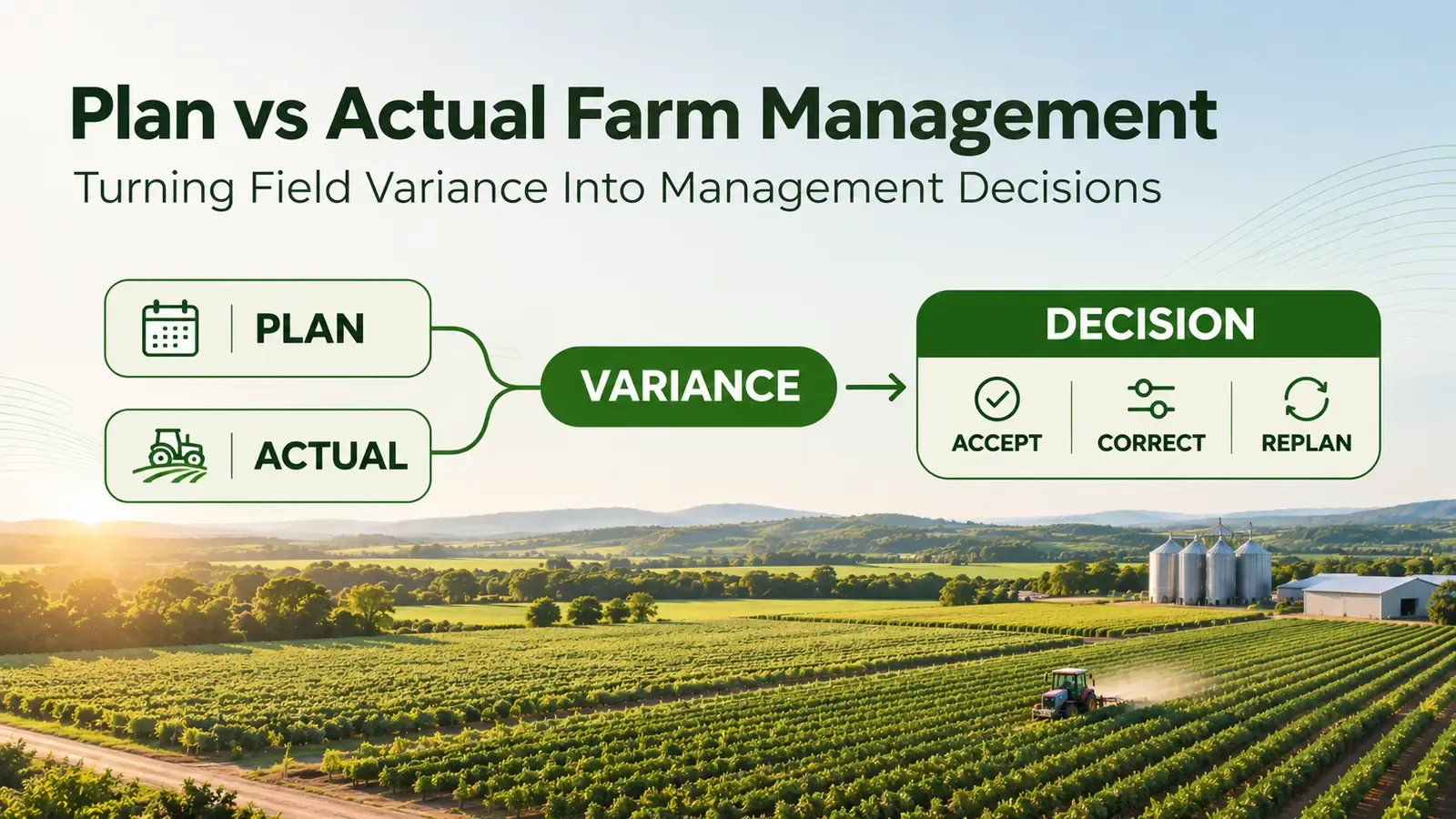
Plan vs actual farm management compares what a farm planned with what teams actually completed, then tests whether each important difference needs a decision. The useful record connects the field event, reason, cost and timing with an accountable owner who can accept the change, correct execution or update the remaining plan.
A seasonal farm plan sets expectations for work, labour, machinery, inputs and timing. Then weather, crop pressure, available resources and field conditions change. Some deviations are the right agronomic response. Others reveal preventable execution problems. Leaders need a way to distinguish them before the next decision window closes.
At a Glance
- A variance is a difference between planned and actual activity, timing, input use or resources, not automatically evidence of poor performance.
- Record the reason and operational consequence alongside the actual field activity, rather than reconstructing them from a later invoice.
- Classify important changes as accept, correct, replan or escalate, and record who owns the decision.
- Use a weekly review for recurring exceptions and event-based review when a time-sensitive decision cannot wait.
- Budget vs actual answers the financial question; field variance decisions determine what the team should do next.
What Does Plan vs. Actual Farm Management Need to Decide?
The purpose of plan vs actual farm management is to identify changes that still require a management response. A variance report is only the starting point. Managers also need to know why the field team changed the plan, whether the difference was justified, what work or cost it affects and who has authority to decide the next step.
AGRIVI already covers the financial comparison in its Budget vs. Actual in Farm Management. That article explains how early cost visibility helps managers respond during the season. This article focuses on the operational decision after a variance appears: whether to accept an agronomic adjustment, correct a work process, update the plan or raise an exception.
That difference is relevant when the same work is visible through farm operations and crop protection activity records. The field activity may be agronomically correct but still require a revised resource allocation or cost forecast.
Which Four Field Variances Need Management Context?
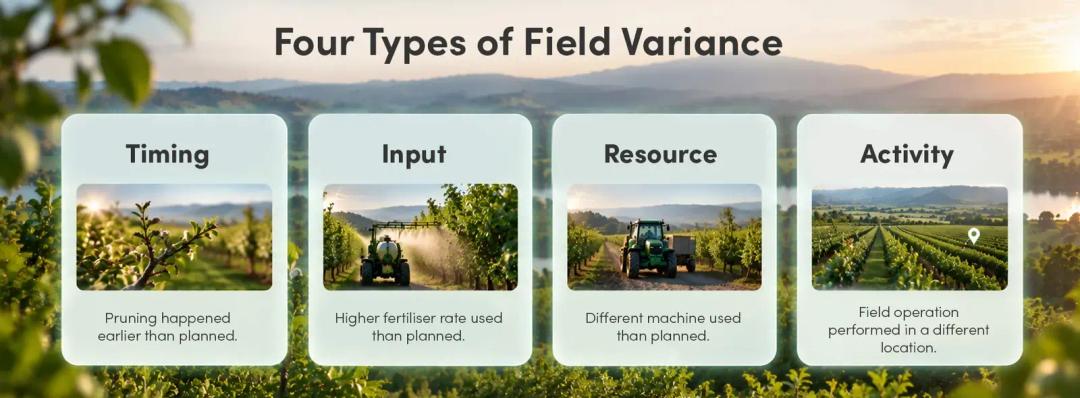
Four common types of field variance deserve separate treatment. Each describes a change from plan, but the correct action depends on its cause and consequences.
Timing variance. A task starts or finishes outside its planned window. Weather, field access, workforce availability and changes to agronomic priority may explain the difference. The team should test whether the remaining schedule or another crop stage is affected.
Input variance. Applied product, quantity or rate differs from the original plan. Before calling the result overspending, check field size, approved agronomic changes, actual area covered, inventory records and the reason for the adjustment.
Resource variance. Labour hours, machine time or contractor use deviates from what was allocated. The issue may be capacity, equipment downtime, changed work scope or recording quality.
Activity variance. A task is added, repeated, cancelled or moved. An additional field pass may be necessary to protect the crop. Management should still record why it occurred and which plan or budget assumptions are now different.
The USDA Economic Research Service explains that production practices affect input costs and time constraints. That is the practical reason to retain the agronomic explanation beside the event instead of judging a cost difference in isolation.
When Should a Farm Variance Trigger Action?
A useful exception rule weighs business significance and decision timing, not just whether a number changed. The threshold may differ by crop, field, activity, production stage and company policy. There is no universal percentage above plan that makes every farm variance unacceptable.
- Materiality: Does the deviation meaningfully affect crop performance, committed work, resource availability or expected cost?
- Decision window: Can the team still change timing, allocation or execution before the consequence becomes fixed?
- Evidence quality: Are planned and actual records comparable, with the reason for the change recorded?
- Ownership: Is there a named person who can approve, correct, update or escalate the issue?
For managers who need a broader view of costs before setting thresholds, see mid-season farm cost tracking. A threshold should support decisions, not become a rule that makes sound agronomic changes look like failures.
Worked Example: An Additional Crop Protection Pass
Consider a planned crop protection programme for a set of orchard blocks. A new field observation leads the agronomist to approve an additional application. The activity was not in the original seasonal plan, so it creates an activity variance and may also change input use, machine hours and labour demand.
The decision should not be based on the extra cost alone. The agronomy owner documents the observation and the reason for the added treatment. Operations confirms which blocks can be reached, the equipment and crew required and the timing of other scheduled activities. Finance or the economic owner reviews the resource and cost implications against the remaining plan.
If the treatment was necessary and correctly executed, management may accept the variance while revising the forecast. If the record shows an avoidable duplicate pass or an incorrect application rate, it may require a process correction. If the additional work displaces a critical task, the schedule may need to be changed or the issue escalated. These are illustrative decision paths, not a recommendation for a particular crop protection treatment.
The distinction between the agronomic decision, field execution and economic consequence is developed further in Farm Operations Management: One Event, Three Decisions.
What Must a Farm Variance Record Explain?
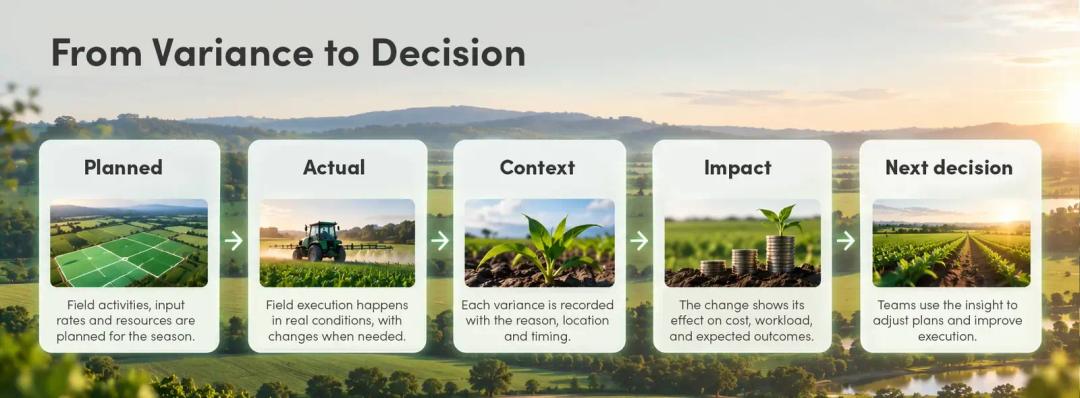
One field-level variance record should make the change understandable without a separate investigation across notes, work orders and invoices. Five linked questions establish a useful decision trail.
- Planned: What activity, date, resource, rate or cost did the approved plan expect?
- Actual: What work happened, where, when and with which recorded inputs and resources?
- Context: Why did the team depart from the plan, and who confirmed that reason?
- Impact: What does the change mean for the next task, workforce, cost, crop or delivery expectation?
- Next decision: Will the owner accept, correct, replan or escalate, and when will the decision be reviewed?
This requires the source record to remain current and understandable across teams. The USDA Agricultural Resource Management Survey illustrates why field-level production practices, resource use and economic records belong in a connected evidence base. The related AGRIVI article on farm data management and records that support action explains the operating data foundation behind such decisions.
Who Should Own the Decision After a Variance Appears?
The owner should be the person with authority over the response, even when several departments contribute evidence. A crop protection adjustment may need agronomic approval, a labour reallocation may require the operations manager and a change in a committed cost target may need financial or senior management review.
A simple operating rule is to name one accountable owner, one decision, a due date and the evidence used. AGRIVI and an implementation partner can support how the workflow is represented in the software, but the customer remains responsible for its operating decisions and approval rights.
For enterprise teams establishing those roles before a rollout, the farm management software implementation readiness guide covers process ownership and acceptance criteria.
Which Decision Should Follow a Field Variance?
An exception review should end in a recorded outcome, not simply a note that the situation was discussed. Four outcomes cover most recurring management decisions.
Accept. The deviation was justified, the work was completed appropriately and no immediate corrective action is required. The reason and economic impact should remain visible.
Correct. The difference resulted from a fixable execution or recording issue. The owner assigns the correction and verifies that it was completed.
Replan. Conditions changed enough that remaining tasks, allocations, timing or economic assumptions should be updated. The revised baseline must be clear for the next review.
Escalate. The issue exceeds the owner’s authority, has unresolved agronomic uncertainty or puts a material commitment at risk. A qualified reviewer needs the full context and a defined decision deadline.
The cadence matters. The existing article on weekly operating cadence on specialty crop farms explains why important resource decisions can be missed by a monthly reporting rhythm. For operational exceptions, hold a recurring review and add event-driven decisions when the next field action cannot wait.
How Can AGRIVI 360 FMS Support Plan-versus-Actual Decisions?
AGRIVI 360 FMS brings planned work, completed activities and operating costs into a connected farm record. Its Farm Management Software capabilities cover field work planning, workforce and machinery, input usage and budget-versus-actual monitoring. The value of that structure is the ability to relate a variance to the recorded activity that caused it.
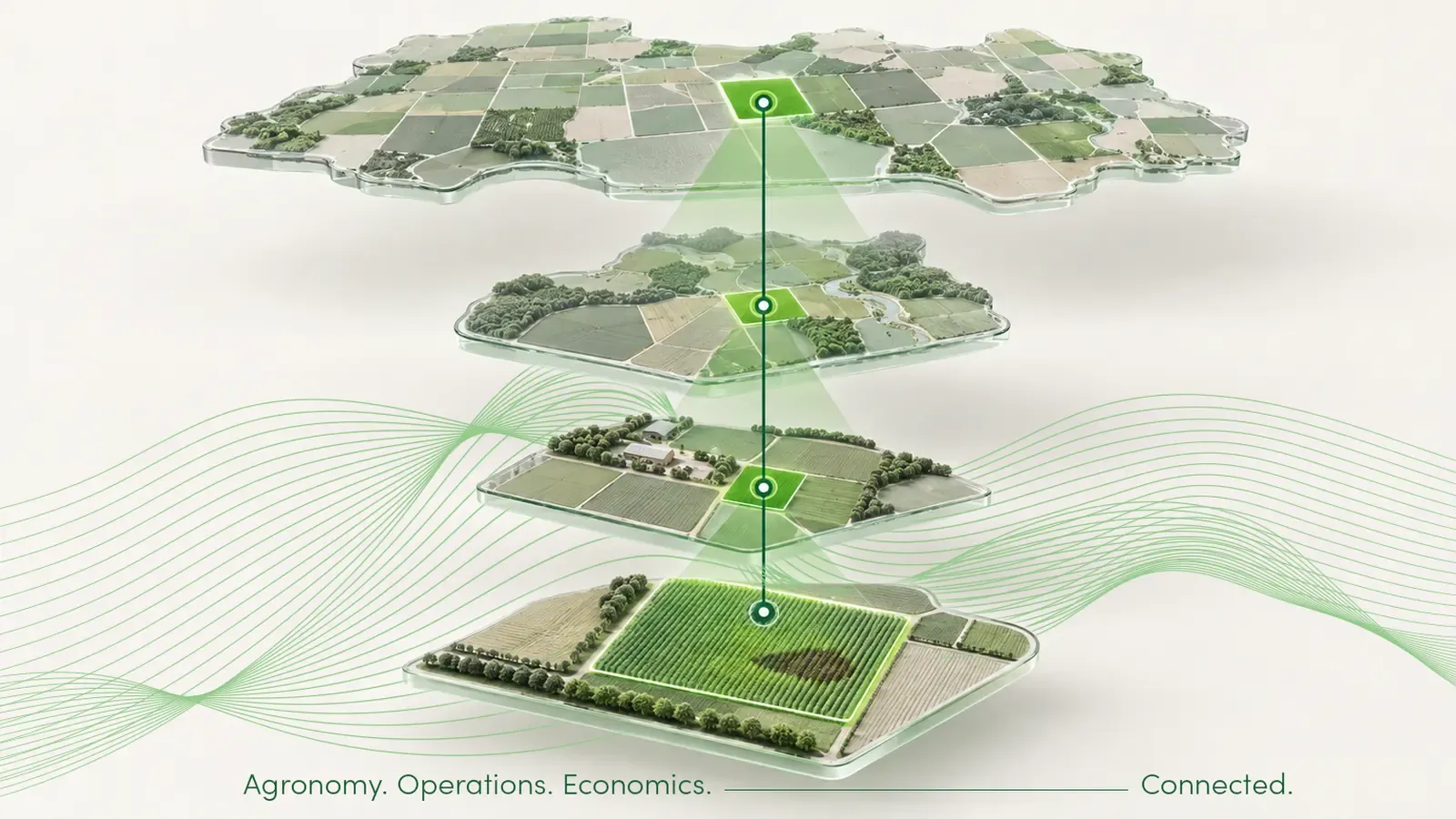
For multiple farms or crops, the enterprise farms solution supports connected agronomy, operations and economics, including budget and actual cost visibility. Which controls, integrations and approvals are configured in a deployment should be agreed during implementation, rather than assumed from a general product description.
A practical example is AG Horticulture’s customer story, which describes connecting work orders, material use and cost tracking in day-to-day operations. The reported workflow is customer-specific; it is not a guaranteed result for other farms.
To review the broader enterprise operating context, see AGRIVI 360 FMS for Enterprise Farms and the enterprise agriculture industry overview. The software makes records and comparisons available; the customer still decides which variance needs action.
What Should Enterprise Managers Check Before Starting?
Begin with one important field workflow. Agree the planned baseline, record the actual event, identify who can approve a change and test whether the next action can be recorded before the decision window closes. Then repeat the exercise for timing, input, labour and unplanned work. A software demonstration should show the complete chain from planned activity to management response.
Where the main problem is still seeing the status of work, the AGRIVI guide to farm operations visibility provides a complementary starting point. If the team needs to connect activity to financial decisions, the AGRIVI 360 FMS economics and operations overview shows the supporting capabilities.
Frequently Asked Questions About Plan vs. Actual Farm Management
What Is Plan vs. Actual in Farm Management?
It compares the approved seasonal plan with recorded field activity, resources, timing and costs. The purpose is to identify important deviations and decide what, if anything, should change next.
Is a Farm Variance Always a Problem?
No. An additional field activity or revised input rate may be an appropriate response to changing conditions. The decision depends on the agronomic reason, operational consequences, cost impact and whether the event was approved.
Which Farm Variances Should Be Reviewed First?
Start with material deviations in timing, input use, labour, machinery and unplanned activities. Prioritize those for which management can still change the outcome and the evidence is sufficiently reliable.
How Often Should Managers Review Plan vs. Actual?
A weekly exception review is a practical starting point during active production, supported by faster event-driven review for major changes. The appropriate rhythm depends on crop, operating intensity and the decision window.
Who Approves a Change to the Farm Plan?
The customer should assign authority according to the type and impact of the change. Agronomy, operations, finance and senior management may all contribute, but each decision needs a named accountable owner.
What Should Be Recorded After a Variance Review?
Record the planned value, actual event, reason, operational and economic impact, decision, owner and next review date. This keeps the following review anchored in the updated reality.
How Is This Different from Budget vs. Actual Tracking?
Budget vs actual focuses on changes in planned and actual cost. A field variance process also evaluates activity, timing, resources and agronomic justification, then records whether to accept, correct, replan or escalate.
Can AGRIVI 360 FMS Support This Process?
AGRIVI 360 FMS connects field planning, work execution, resource use and economic records. Its specific implementation and approval workflows depend on the customer’s configured scope and operating model.
Published by AGRIVI. Editorial responsibility: AGRIVI Marketing & Communications.

Ready to digitalize your farm?
See how AGRIVI can help you apply these insights in your own operations.
Book a Meeting