
Food Traceability Software and the Sample Recall Exercise: What It Reveals About Grower Records
Pick one finished lot and trace it back to the field, treatments and harvest. The missing records become clear grower data priorities for 2027.
AGRIVI
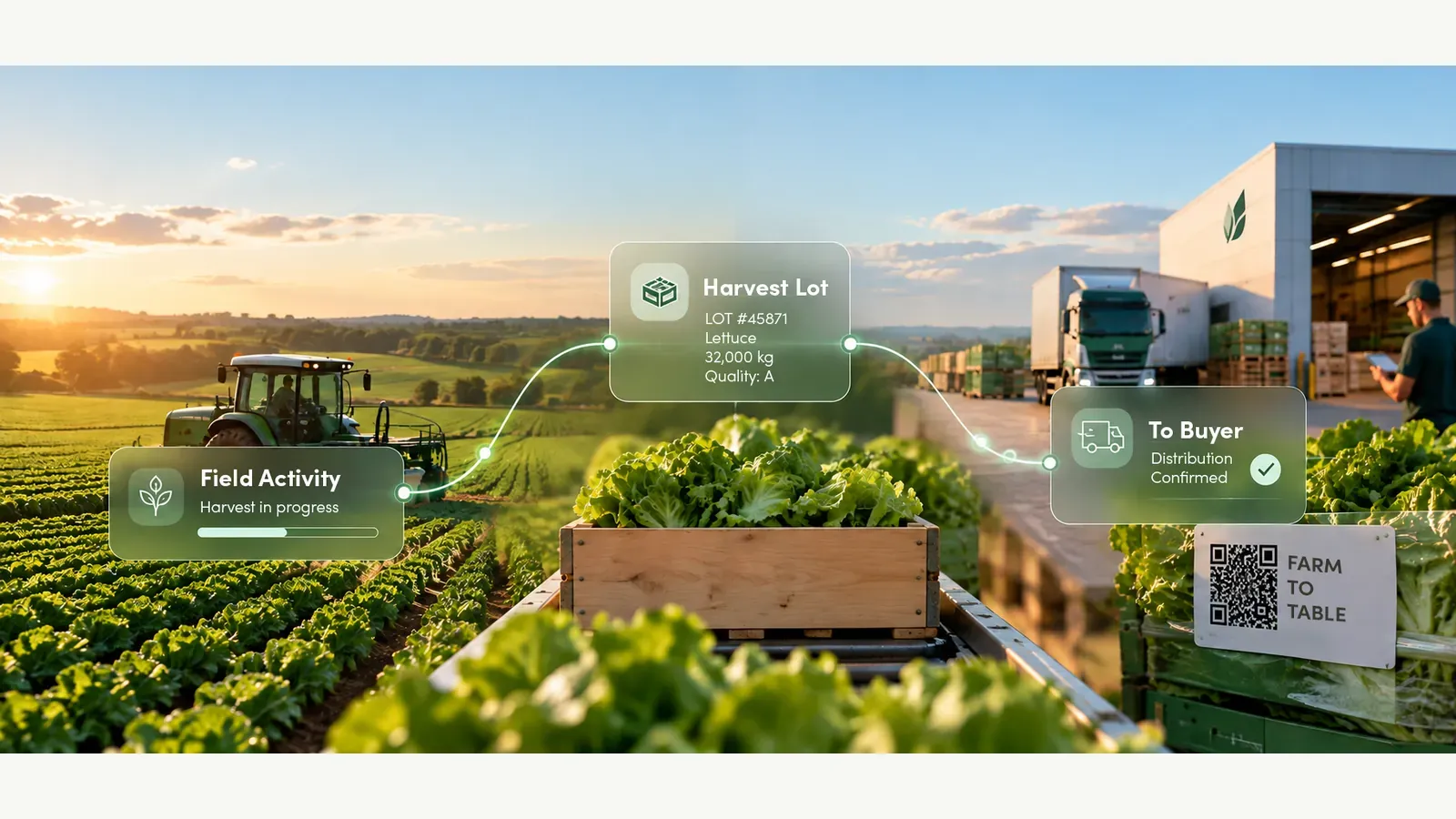
A sample recall exercise tests whether one selected finished lot can be connected to its supplier, field origin, production records and harvest history without reconstructing information from memory. The records you cannot retrieve become practical priorities for your 2027 grower programme.
At a Glance
- Choose one finished lot and follow every source component back to the contributing grower, field and harvest.
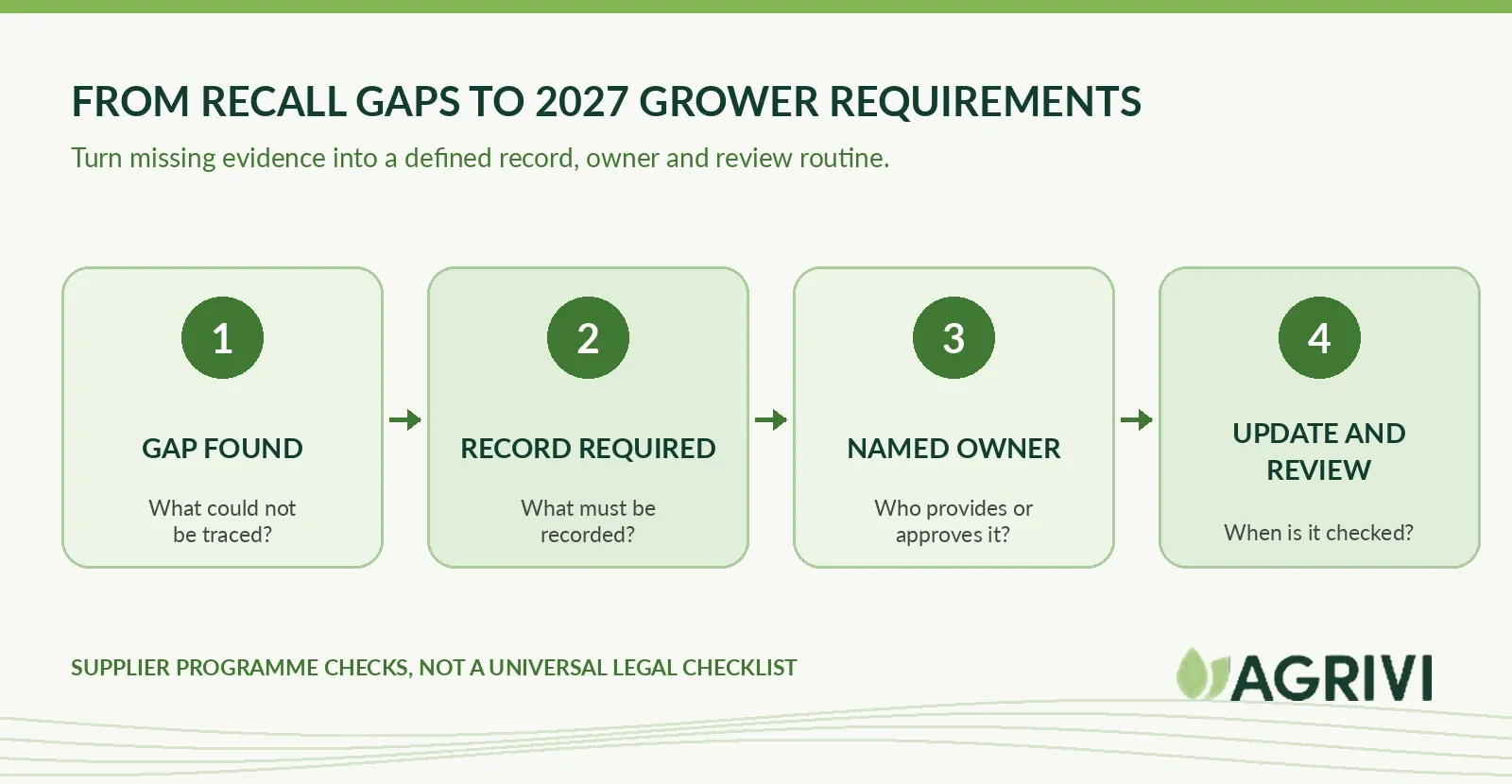
- Check field origin, crop treatments and harvest and post-harvest records as three practical record groups for this exercise.
- Keep legal obligations separate from additional buyer requirements and voluntary field-level evidence.
- Record the missing information, its owner and the action needed before the 2027 sourcing season.
Why a Sample Recall Exposes Missing Grower Records
A processor may be able to identify the supplier delivery and outgoing finished lot within minutes. The question becomes harder when that lot contains produce from several fields, harvest days or contracted farms. A purchase order may show the supplier, but it does not necessarily identify the production history behind every contributing harvest.
The existing AGRIVI guide to farm traceability from field records to the supply chain explains how those source records should be created and linked in normal operations. This exercise tests whether the relationships can be retrieved under time pressure. For the broader financial and operational risks of a recall, see product recalls and the value of production traceability. For the response process once a recall is under way, see how to manage a product recall.
What Do EU and US Traceability Rules Actually Require?
In the EU, Article 18 of Regulation (EC) No 178/2002 requires traceability throughout the food chain. Food businesses must identify immediate suppliers and business customers and make the relevant information available to competent authorities on demand. The article does not, by itself, impose every field-level treatment check used in this exercise. Additional rules, certification requirements and buyer agreements may require more detailed information.
In the United States, the FDA Food Traceability Rule adds record requirements for covered foods and businesses, subject to exclusions and exemptions. Its Key Data Elements and Critical Tracking Events must be evaluated for the product and activity in question. Under specified requests, covered information must be supplied within 24 hours or another reasonable time agreed by FDA. The original compliance date was 20 January 2026. FDA has proposed moving it to 20 July 2028, and a Congressional provision directs FDA not to enforce the rule before that date. The proposed extension and the enforcement restriction should not be treated as the same legal action.
In June 2026, FDA also reported the results of traceability readiness tabletop exercises with industry, which tested whether firms could retrieve lot-level evidence within a defined window. For a food company planning 2027 supplier requirements, a small internal test is a useful way to identify practical gaps without claiming that a single exercise proves full compliance.
How to Run a Sample Recall Exercise on One Lot
Choose one lot with a documented route through receiving, processing or packing. If the lot contains material from multiple growers, include each source. Agree who starts the exercise, who retrieves farm evidence and what constitutes an unresolved link.
- Select one finished lot. Record the batch or lot identifier, product, production date, start time and people responsible for retrieving evidence.
- Trace it to the contributing growers and fields. Identify each incoming raw-material lot, supplier, farm, field or block and the harvest identity that links it to the selected finished lot. Mark every relationship that depends on memory rather than an accessible record.
- Check treatments applied. For each relevant crop and field, retrieve crop protection and fertiliser applications, product, rate and date. Where applicable, verify pre-harvest intervals against approved records. This is a practical field-evidence check, not a universal checklist required by Article 18.
- Check harvest and post-harvest movement. Find harvest dates, quantities, storage and transport references and any splitting, pooling or repacking that affected the identity of the product.
- Stop the clock and document the gaps. Record elapsed time, missing or inconsistent records, the person who should supply them and the next corrective action. Distinguish a missing document from a broken lot relationship.
Turn Gaps into 2027 Grower Requirements
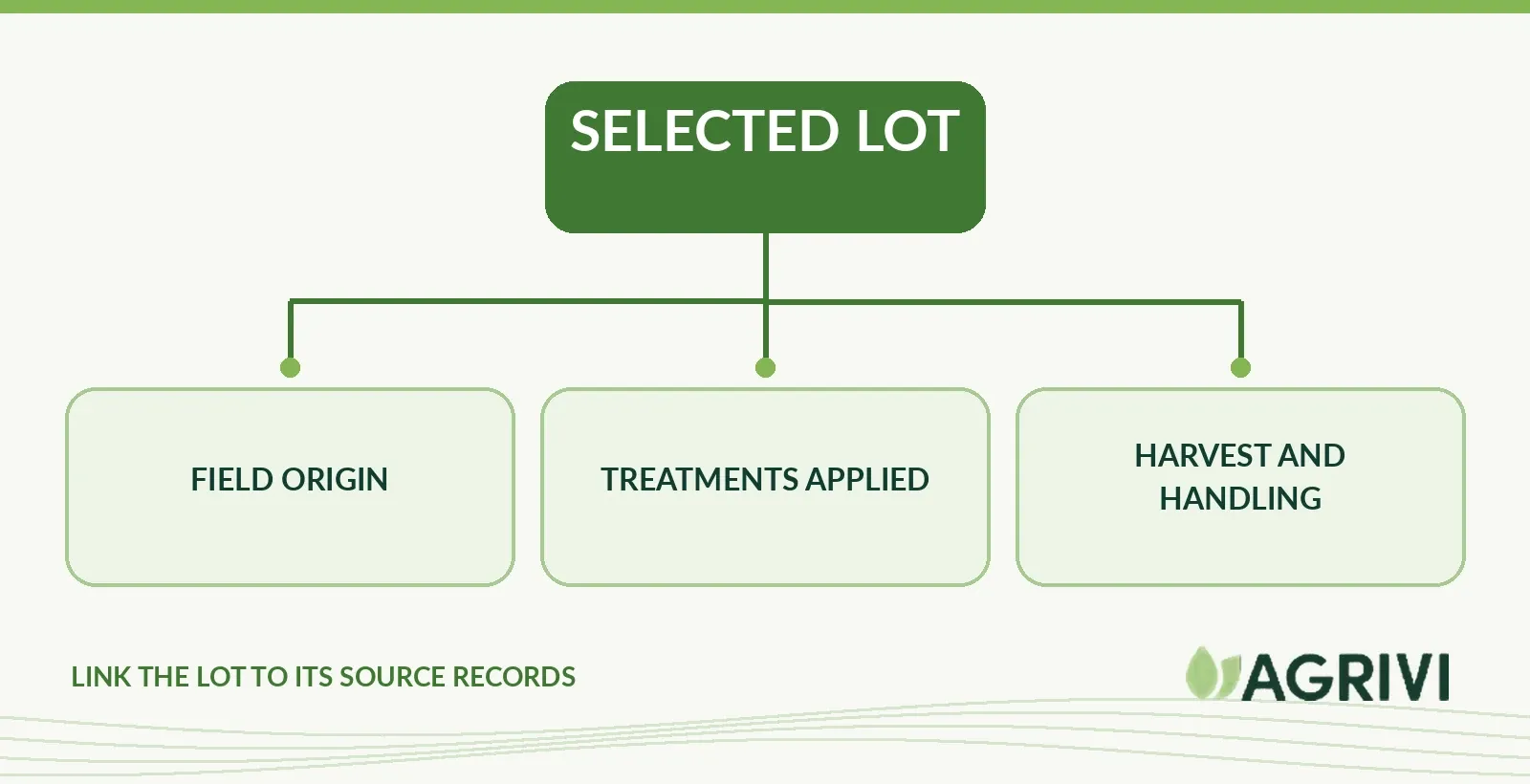
A failed link should produce an action, not an abstract warning that suppliers need better data. For each gap, define the exact record, the person responsible, when the information is expected and how the food company will check completeness. Do this before renewing grower agreements or launching a new production season.
- Record requirement: identify the minimum document or field-level evidence, including its identifier and expected format.
- Owner: identify whether the grower, field agronomist, receiving team or quality team creates and approves the record.
- Timing: decide whether evidence is due during field work, at harvest, upon delivery or during a scheduled quality review.
- Follow-up: define what happens when a record is missing and how an unresolved issue is visible to sourcing and quality teams.
A company managing multiple contracted farms can use AGRIVI 360 FMS for Agriculture Supply Chains to bring supplier production records into a common operating structure while preserving the source farm context. Where the same information is needed for environmental reporting, the CSRD Handbook for Food and Beverage Companies provides a separate reporting perspective; the objectives and obligations should not be conflated.
Where AGRIVI 360 FMS Fits
AGRIVI 360 FMS connects farm operations, crop activities, input use and harvest events to an agriculture-specific record. As food traceability software, its Traceability & Compliance capabilities support the link from farm and field evidence to the relevant product or batch. For food and beverage sourcing teams, this can make production evidence more accessible across contracted farms and business functions.
A credible link between a product and production records matters more than an attractive consumer-facing QR code. The AGRIVI article on food product traceability beyond the QR code explains the wider relationship between source records, product identifiers and selected information presented to consumers. This sample recall exercise tests whether the underlying relationship exists before relying on it.
What to Do Next
Run the exercise on one selected lot, write down the unresolved source links and use them to agree the minimum records for your 2027 grower programme. The 5 Steps to Avoid Product Recalls guide provides further preparation steps. To examine how the missing records could be connected in your own sourcing network, review your supplier data priorities with the AGRIVI team.
Published by AGRIVI. Editorial responsibility: AGRIVI Marketing & Communications.

Ready to digitalize your farm?
See how AGRIVI can help you apply these insights in your own operations.
Book a Meeting