
AI for Farmers: Planning 2027 Farmer Coverage from Your Current Field Team
Coverage targets based only on headcount and visits overlook the time between field visits. Use current reach, recurring questions and completed follow-up to plan 2027.
AGRIVI
AI for farmers can extend the reach of an agri-input field team by answering approved recurring questions between visits and routing requests that need a person. To plan 2027 coverage, start with the unique farmers your team already reaches in each sales area, identify the conversations left unanswered and set measurable targets for both Digital Agent responses and human follow-up.
A visit-based target is still useful, but it does not show who received help after the visit or which follow-up was never completed. The point of a coverage plan is to make that gap visible before choosing a Digital Agent role or adding headcount.
At a Glance
- Measure unique farmers contacted in each sales area using a consistent period and deduplication rule.
- Separate the number of visits from the questions, repeat contacts and missed follow-up between visits.
- Define an AI role around approved answers, clear human boundaries and practical commercial ownership.
- Set 2027 targets for farmer reach, useful responses and confirmed follow-up, and review them together.
Why Headcount-Based Coverage Plans Fall Short
A regional representative can visit only a limited number of farms during a crop season. Adding visits or staff may improve coverage, but these plans leave out the periods when questions arrive by phone or messaging. The related AGRIVI article on how agricultural AI agents extend sales and agronomy team capacity explains that gap between scheduled visits.
McKinsey’s Global Farmer Insights 2026 reported that 36% of surveyed farmers preferred digital channels for evaluating and comparing products, up 14 percentage points from 2024. Agronomists were a top purchasing influence for 56% of respondents. These are different measures, but together they underline the value of combining accessible digital information with qualified human expertise.
Measure Current Reach per Sales Area
Start with the records your field organisation already uses. For every sales area, count the unique farmers or farm accounts contacted during the last comparable season. Agree on one definition of a farmer or account, assign one identifier, and remove duplicates created by repeat visits, dealers or multiple channels.
Compare that total with the number of known, eligible farm accounts in the area. The difference is the uncovered portion of the known addressable network, not necessarily every farm that exists in the region. If the total population is not known, record the denominator as incomplete instead of inventing a precise coverage percentage.
Keep visit frequency, repeat contact, dealer contact and unique reach as separate measures. A farmer seen four times is still one reached farmer. For segmentation and role selection, AGRIVI’s agri-input industry solutions describe the wider use of farmer engagement and commercial context.
What Happens Between Visits?
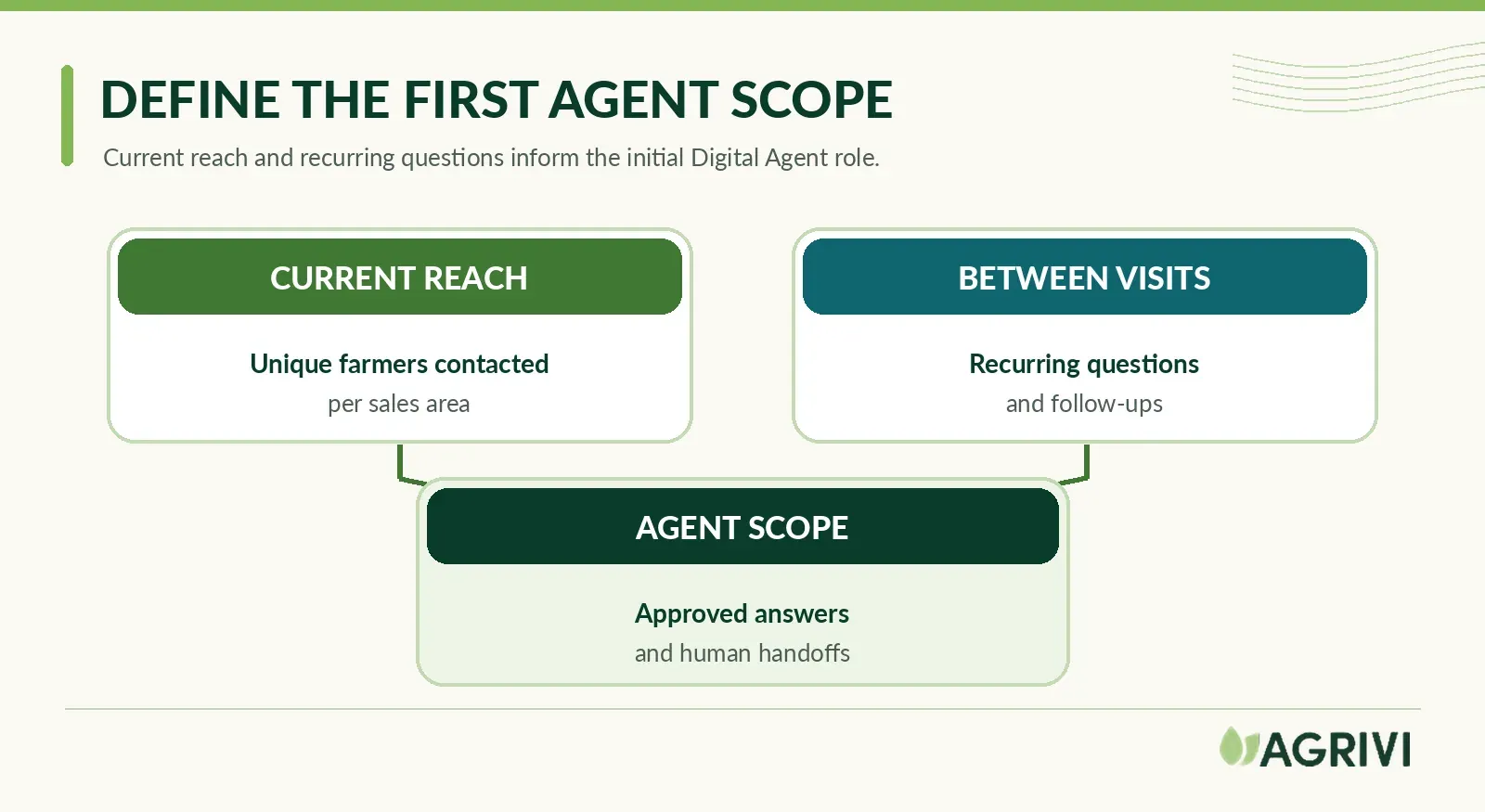
The next input is the list of recurring questions that reach sales representatives, dealers and agronomists after a field visit. Availability, application timing, product information and the next crop-stage reminder are typical examples. Record the topic, seasonal demand, whether the question was answered and whether the promised follow-up happened.
Do not count messages as useful engagement by default. Multiple messages can belong to one unresolved request. AGRIVI’s existing article on the questions farmers ask between sales visits explores the types of demand; the purpose here is to quantify the capacity gap for each area.
Where AI for Farmers Fits in the Coverage Plan
McKinsey’s 2026 survey also found that 17% of surveyed farmers already use generative AI for farm-related tasks. That measures use, not trust in a particular agricultural recommendation. An agri-input company still needs to own its approved advice, rules and customer relationship.
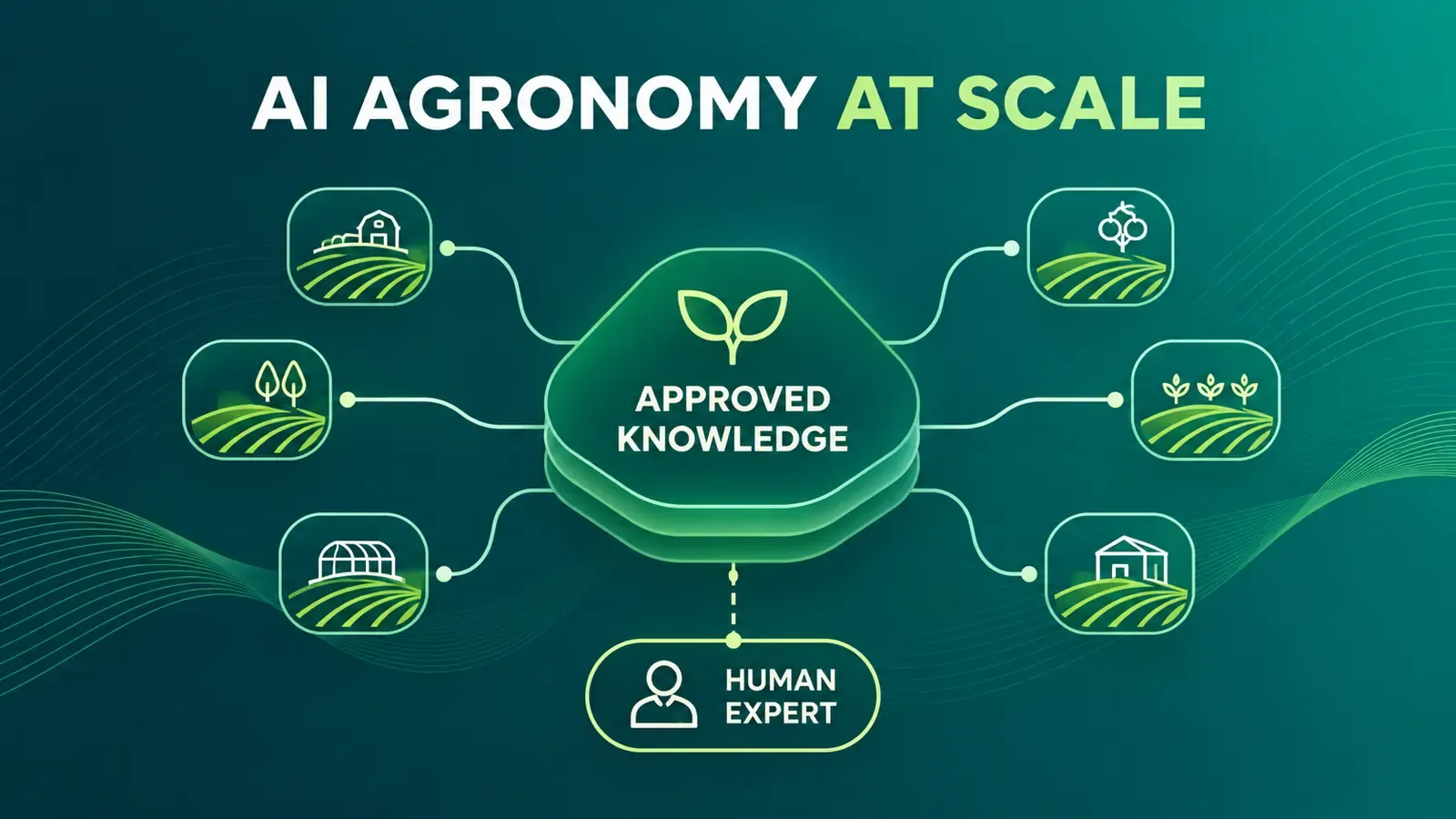
AI Workforce is the solution category, and AGRIVI AI Engage is AGRIVI’s platform for agriculture-specific Digital Agents. The AI Agri-Input Sales Representative can answer defined questions using approved knowledge, support timely outreach, recognise relevant commercial interest and route cases to the responsible team. It complements, rather than replaces, field sales and agronomy.
Selected AGRIVI AI Engage deployments have reported 3x farm reach within existing sales areas. Individual outcomes vary. Separately, selected deployments report that 70% of new sales originate from farmers first engaged by the AI agent. Individual outcomes vary. These results are from selected deployments, not a forecast for every 2027 coverage plan.
A practical first role should have clear knowledge and response boundaries. The article on what makes an AI Workforce role operational sets out the broader governance requirements behind a reliable deployment. For choosing the first questions themselves, see how to scope your first agriculture AI agent.
Set 2027 Coverage Targets You Can Verify
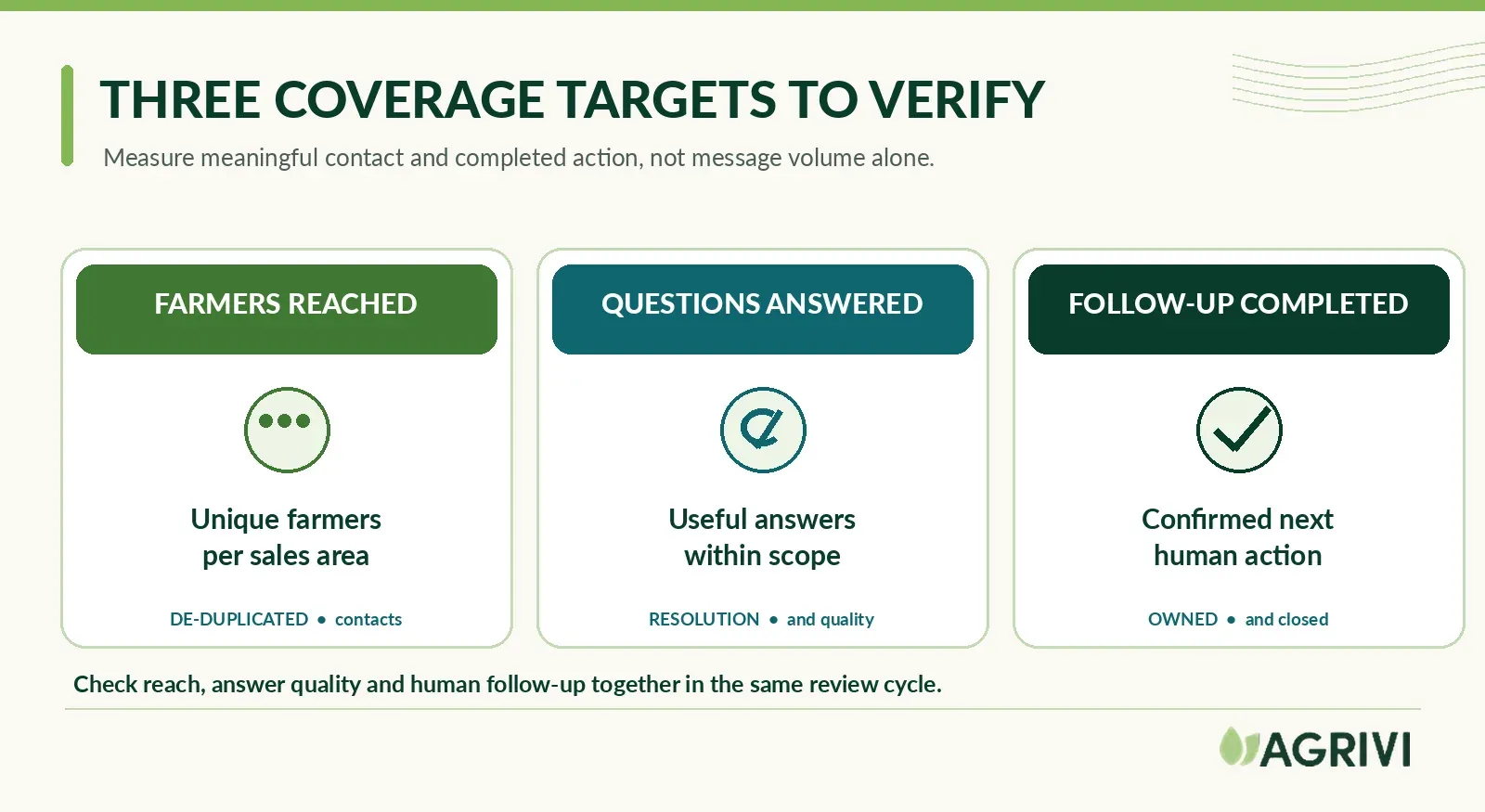
A stronger plan replaces the single target of visits per representative with three linked measures. Keep the same reporting period and the same area definitions when comparing seasons.
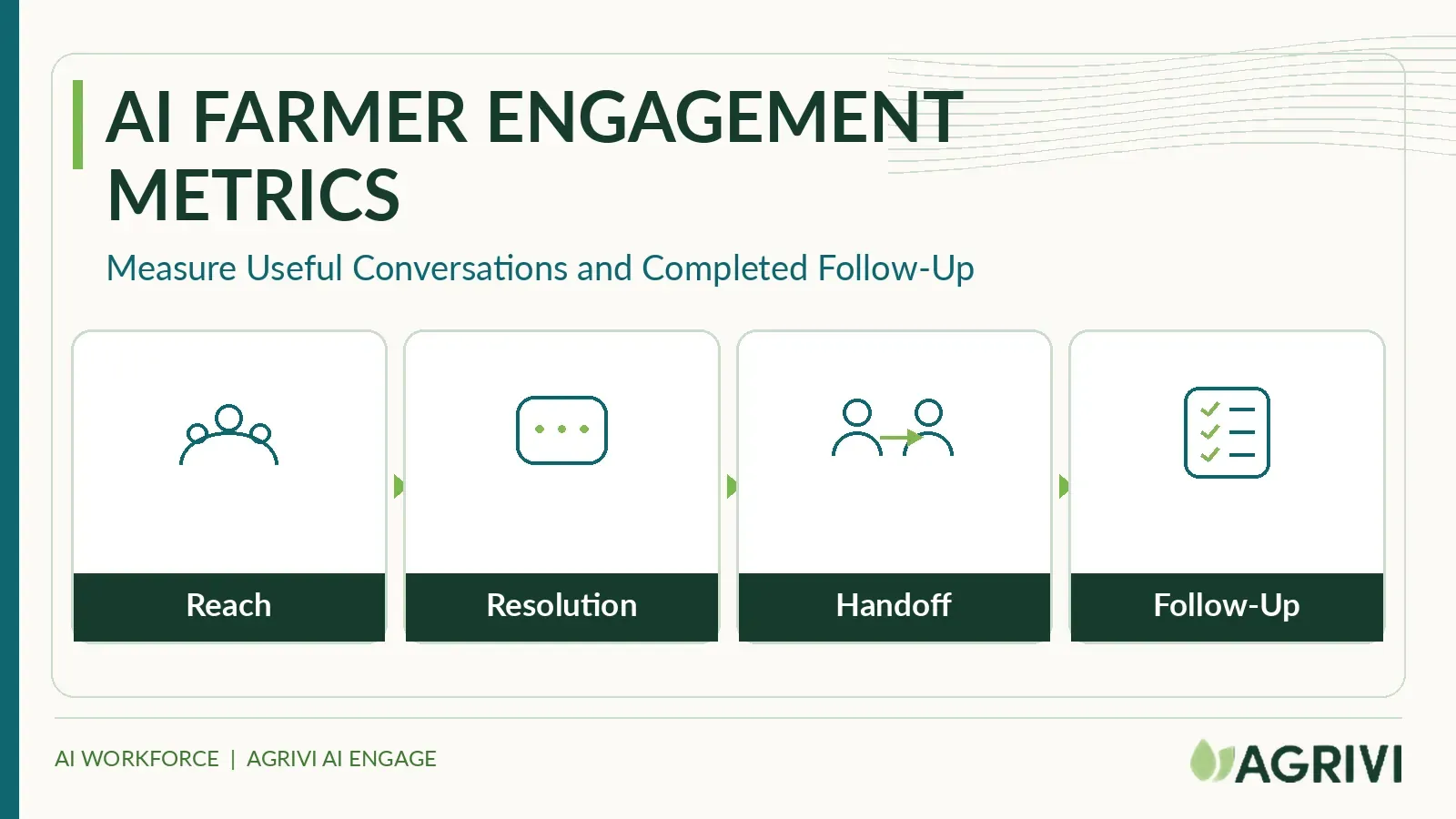
- Unique farmers reached: the number of distinct farmers or eligible farm accounts contacted within the sales area. Distinguish field-team reach from Digital Agent reach and count the combined total only after deduplication.
- Useful questions answered: requests answered within approved scope, with a quality check for unanswered, repeated or unclear responses. Do not use message volume alone as evidence of resolution.
- Human follow-up completed: escalated requests for which the named sales or agronomy owner took the agreed next action. A transfer without follow-up is not a completed outcome.
Review these measures alongside the original baseline, coverage gaps and relevant commercial outcomes. The result should tell management whether more farmers received useful service and whether human teams completed the work that required them. For a fuller scorecard, see AI farmer engagement metrics for agri-input teams.
Build the First 2027 Coverage Baseline
- Agree on sales-area boundaries and unique farmer identifiers, then export last season’s reached accounts.
- Classify recurring questions and missed follow-ups by area, crop and season, separating routine requests from specialist decisions.
- Define the first Digital Agent scope, approved knowledge and human handoff owner for those repeated needs.
- Set monthly or seasonal targets for deduplicated reach, useful answers and completed follow-up, with an owner for each measure.
The 6-Step Guide to Launch Your AI Agent provides a practical framework for the role itself. For background use cases, AI Advisors 101 is a useful companion. When your baseline is ready, you can review the coverage assumptions with the AGRIVI team.
Published by AGRIVI. Editorial responsibility: AGRIVI Marketing & Communications.
Ready to digitalize your farm?
See how AGRIVI can help you apply these insights in your own operations.
Book a Meeting