
What Makes Agricultural Data AI-Ready?
Digital records alone do not make agricultural data ready for AI. Five practical requirements help enterprises evaluate whether their data can support governed, useful AI workflows.
AGRIVI
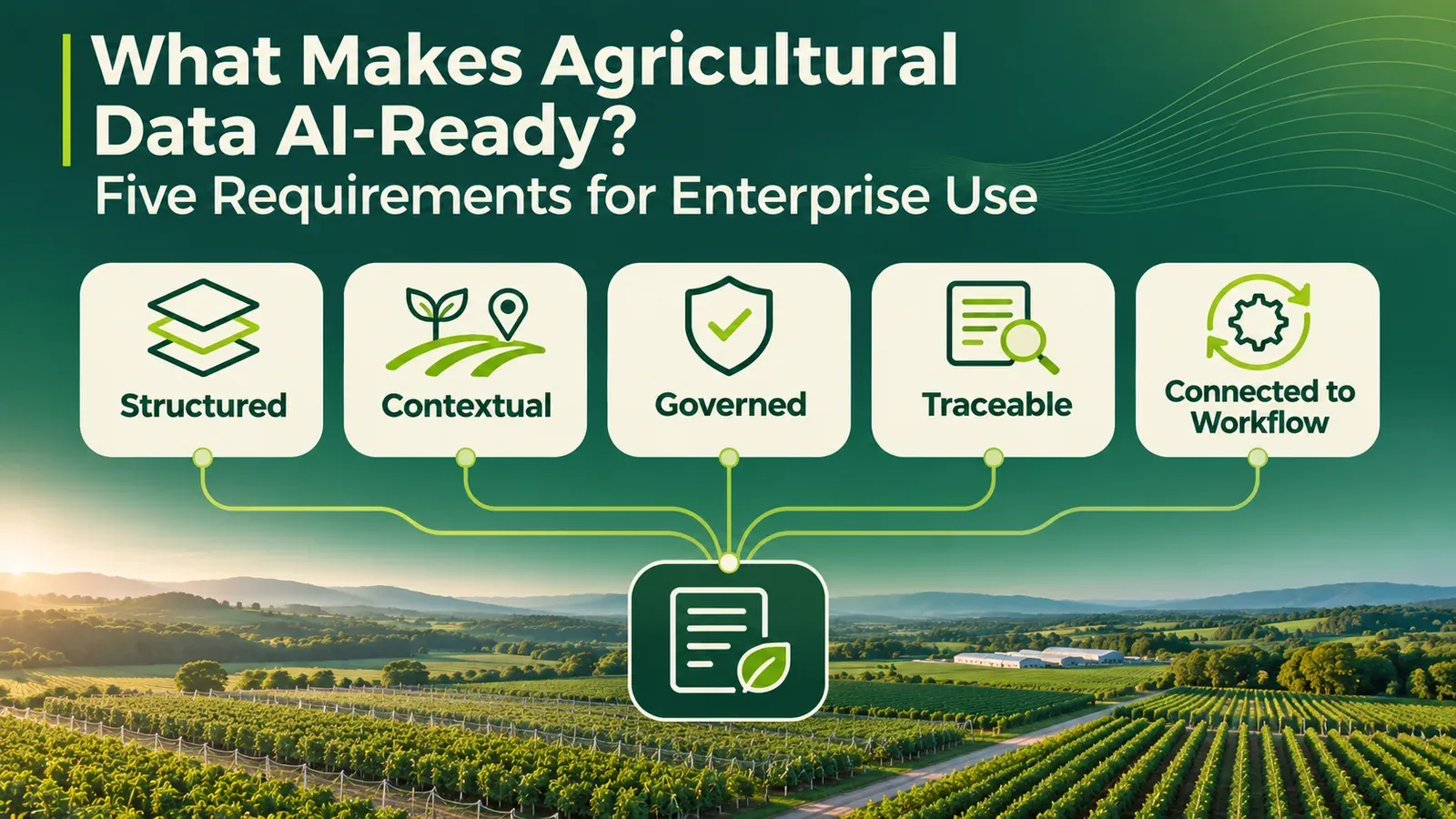
AI-ready agricultural data is structured information that preserves farm and crop context, has defined ownership and access rules, can be traced to a reliable source, and is available within the workflow where a decision is made. Digitizing a record is a starting point. Its quality and relationships determine whether AI can use it responsibly.
For enterprise agriculture, readiness should be tested against a specific job or decision. A field record used for production reporting, a crop-protection recommendation and a Digital Agent answering a grower need different data. The underlying agricultural facts must remain consistent, but their access, freshness and approval requirements are not identical.
At a Glance
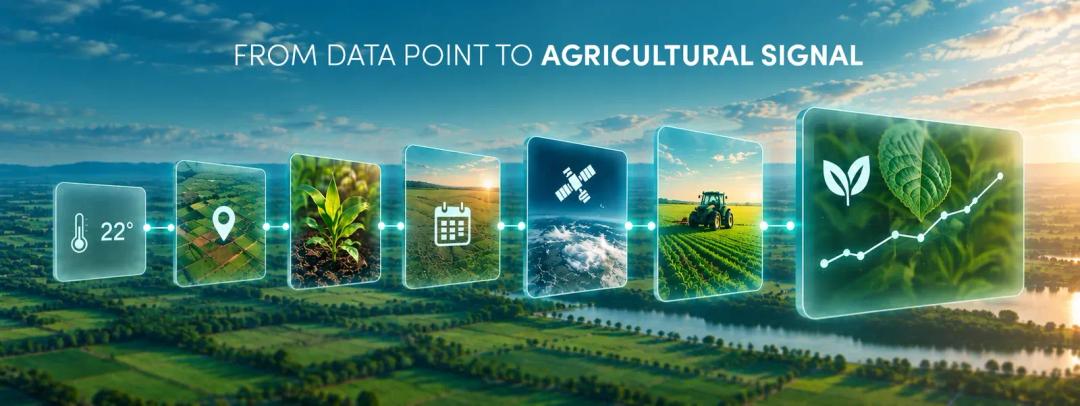
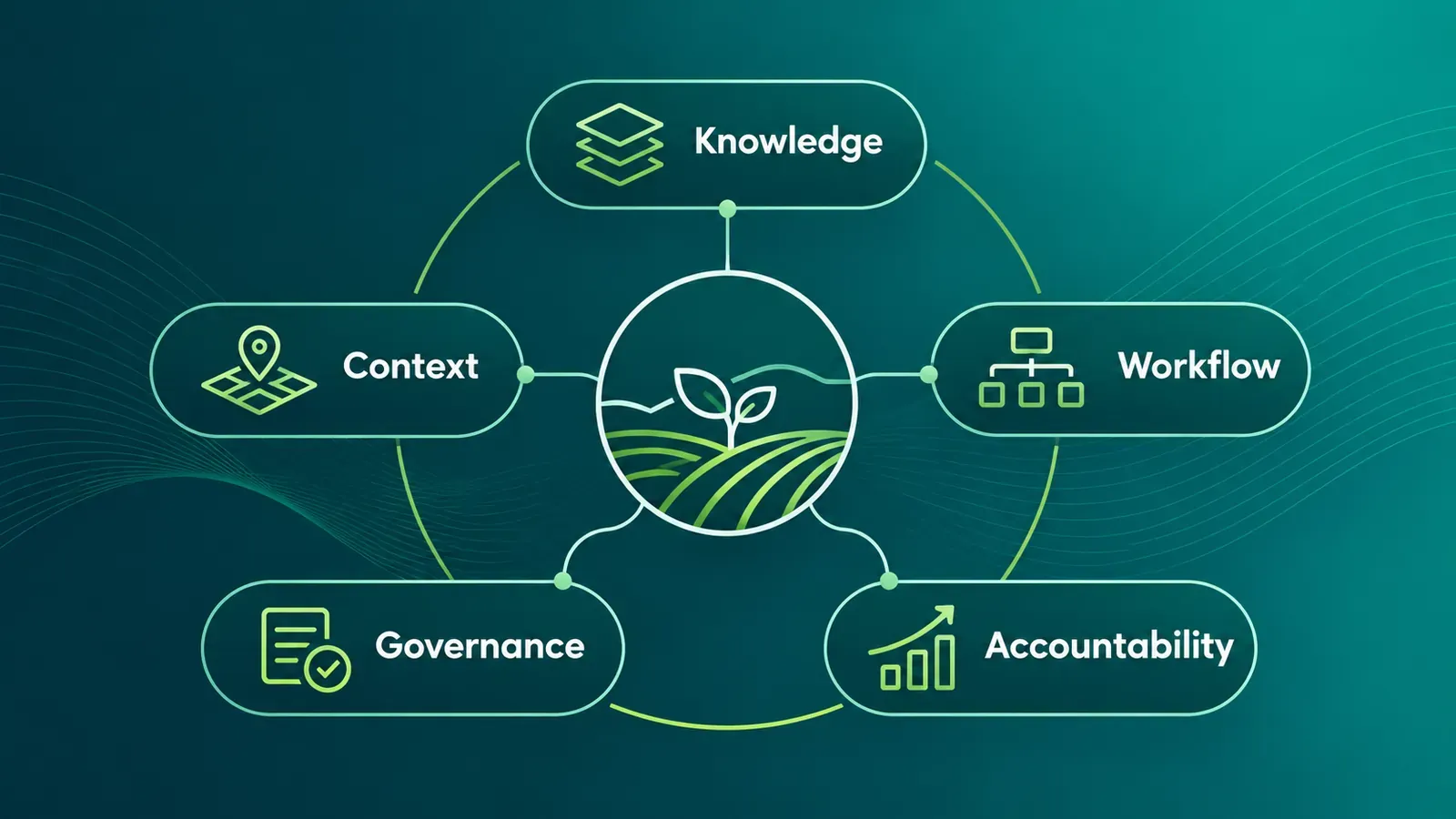
- Structured: farms, fields, crops, activities and inputs have consistent identifiers and relationships.
- Contextual: records include the crop, place, time and operating conditions needed for interpretation.
- Governed: owners, permissions, approved sources and update responsibilities are explicit.
- Traceable: people can identify where the data came from and whether it has changed.
- Connected to Workflow: approved information reaches the task, question or human review it is meant to support.
Why Digitized Agricultural Data Is Not Automatically AI-Ready
A digital spreadsheet, weather feed or PDF can be useful to a human while remaining incomplete for enterprise AI. If the system cannot connect a value to a field, crop, event, time and authoritative source, the same value may be interpreted incorrectly across different situations.
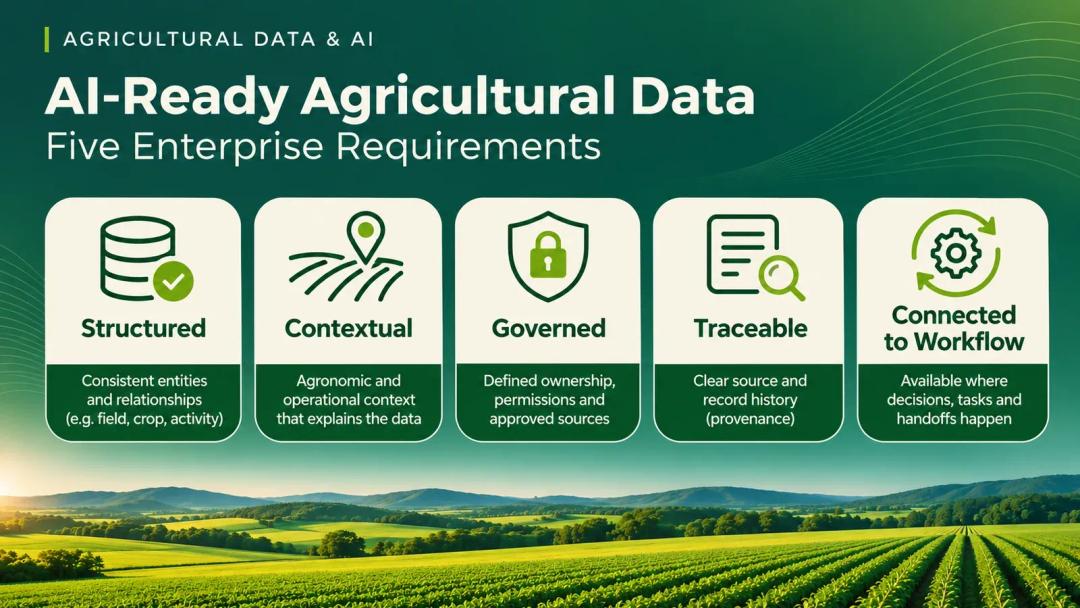
Consider a temperature value of 22°C. By itself, it tells an AI system very little about a crop decision. Is it an air reading from a weather station, a greenhouse sensor or a soil measurement? Which field and time does it describe? Is it validated and recent enough for the workflow? Those questions are about data design, not model sophistication.
The article on farm data management and actionable records covers how farm teams can use shared information in daily operations. Here, the additional question is what must be true before such information is made available to an AI-powered task or advisory process.
The Five Requirements for AI-Ready Agricultural Data
A useful readiness review checks five conditions together. One excellent data source cannot compensate for uncertain ownership, missing context or an undefined workflow.
- Structured. Use stable identifiers and relationships for farm, field, crop, season, product, activity and responsible unit. Different spellings of one field name or one crop recorded under multiple codes can compromise the same query across departments.
- Contextual. Preserve the location, growth stage, date, unit, operating event and other information needed to interpret a value. A product application rate without crop and area context should never be treated as a complete agronomic recommendation.
- Governed. Assign an owner to every critical dataset and knowledge source. Define who may view, change, approve or withdraw it, and how outdated information is corrected.
- Traceable. Keep provenance and version history so a team can tell which source, record or approval informed an answer. Here, traceable means data lineage and evidence, which differs from product traceability across the food supply chain.
- Connected to Workflow. Make the right version of the information available when a person or Digital Agent needs to answer a question, review an exception or move a task forward. The workflow also needs an escalation path if information is missing or contradictory.
The Common European Agricultural Data Space blueprint emphasizes trusted and responsible agricultural data sharing. Although its remit is broader than one farm business, it reinforces why governance and interoperability must be considered alongside data access.
From a Data Point to an Agricultural Signal
An agricultural signal is a data point placed in enough trustworthy context to inform a defined decision. That transformation often involves connecting several records rather than collecting a new dataset.
Imagine a hypothetical pest observation. The raw count gains meaning when the team can link it to an identified trap, field, crop, sampling time, recent trend and existing scouting or treatment records. The data can then prompt the agronomist to review field conditions. A count alone does not authorize a treatment recommendation.
The same principle applies to production, labour, machinery and input data. AGRIVI’s article on pest and disease early-warning signals illustrates how monitoring information becomes more useful when connected to agricultural operating context.
AI Readiness Does Not Require One Central Database
Enterprises can build useful AI workflows without first copying all their data into one repository. What matters is whether each workflow can access approved sources, identify shared entities and preserve source ownership.
For example, a farm may use AGRIVI 360 FMS for field activities, crops and agricultural economics while enterprise finance remains in ERP and external weather data remains with a specialist provider. A readiness design should specify which system owns each record, how identifiers are matched, which integrations are supported and how source changes are reflected.
For a multi-site growing operation, the enterprise farm management environment supplies the agricultural detail behind management decisions. For food companies managing contracted producers, agriculture supply-chain workflows have their own grower and production-data needs. Neither situation means every dataset must be copied into a new system.
Who Owns the Data Used by a Digital Agent?
Data ownership must be operational. A named business owner should approve the content, understand its scope, review changes and decide what happens when reliable sources disagree. Technology teams can maintain access and integrations, but they should not silently decide which agronomic or commercial recommendation is authorized.
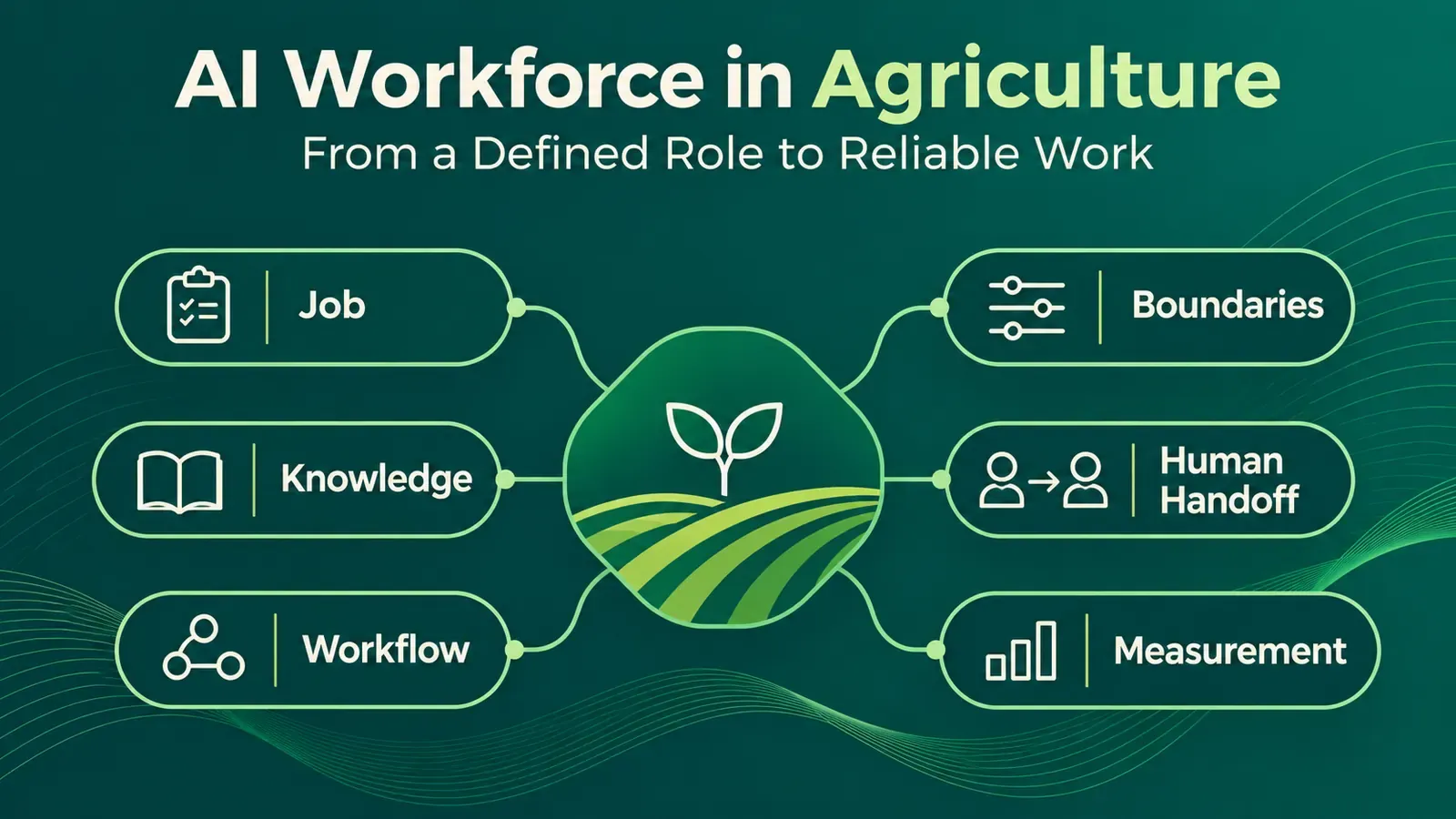
For AI Workforce, the distinction between approved knowledge and live farm data matters. A Digital Agent answering an agri-input product question may need an approved catalogue and regional guidance, while a grower-coordination role may require selected production or harvest context. The article on knowledge architecture for agricultural AI explains the knowledge layers behind a Digital Agent, and AI governance ownership after launch examines responsibility for updates and escalation.
FAO’s Digital Agriculture and AI Innovation Roadmap highlights governance, data stewardship and local adaptation as part of practical AI deployment. An organization should therefore determine what an agent may access, which responses require a person and how quality will be monitored after launch.
Six Steps to Check Data Readiness Before Deployment
A readiness exercise works best when it starts with one business use case, rather than a technology-wide data cleanup programme.
- Define the decision. Specify what the AI-enabled process should answer, recommend, collect or route and who remains accountable.
- Map the sources. Identify the farm records, approved documents and external information necessary for that specific workflow.
- Assign ownership. Name the people responsible for access, approval, updates, correction and conflict resolution.
- Standardize the context. Check identifiers, units, dates, crop and field relationships, source labels and required freshness.
- Test exceptions. Run examples with missing, outdated or contradictory information and confirm when a human must review the case.
- Measure and reuse. Record failure causes, improve the shared data foundation and apply the corrected structures to the next use case.
The article on making an AI Workforce role operational covers how this information becomes part of a job definition, workflow and escalation model. Data readiness and role design should be reviewed together, but they are separate tests.
How AGRIVI Connects the Data Foundation, FMS and AI Workforce
The official AGRIVI architecture has three layers: AI Workforce, Farm Management Software and Agriculture Data Foundation. Agriculture Data Foundation describes the trusted data layer. AGRIVI 360 FMS is the Farm Management Software product that structures farm operations, records and economics. AI Workforce is the category; AGRIVI AI Engage is the platform used for defined agriculture-specific Digital Agent roles.
These components can support connected use cases without requiring every customer to deploy every layer. A Digital Agent may work from approved knowledge and available supported data sources; some deployments may additionally use AGRIVI 360 FMS context. The AGRIVI product overview explains the product family, while the enterprise agricultural AI buyer guide provides practical questions for evaluating the wider system behind the interface.
Production traceability creates another reason to structure records at source. The Traceability & Compliance use case within AGRIVI 360 FMS shows how field activities and production evidence can support later reporting and verification. That is separate from AI data provenance, even when both rely on dependable records.
What Should Enterprise Buyers Verify Before Calling Data AI-Ready?
Ask the team to reproduce a realistic AI answer or workflow outcome, then show the records and decisions that produced it. The review should establish whether the source is approved, the agricultural context is complete, the user has appropriate access and the workflow can continue when an exception occurs.
A system that gives a fluent answer but cannot explain which trusted record it used is not ready for high-consequence operations. Equally, a perfectly governed dataset that never reaches the relevant task will not create operational value. The value of readiness is that teams can use agricultural information repeatedly, with more confidence and less manual reconstruction.
Frequently Asked Questions
What Is AI-Ready Agricultural Data?
It is agricultural information with consistent structure, relevant crop and operational context, defined governance, verifiable sources and access within a specific AI or human workflow.
Does AI Readiness Mean Collecting More Farm Data?
Usually the first priority is improving the reliability and relationships of existing data. Additional collection is useful when a defined use case reveals a genuine gap.
How Is Farm Data Different from AI Knowledge?
Farm data records activities, observations, assets and operating context. AI knowledge includes approved guidance, policies, product information and other content a Digital Agent may use. The two may connect, but they need different ownership and update rules.
What Does Data Provenance Mean in Agriculture?
Data provenance identifies a record’s source, relevant history and changes. It helps an organization assess whether an answer or decision is supported by approved information.
Does an Agricultural Business Need One Database for AI?
No. Relevant information can remain in FMS, ERP and specialist systems if access, identifiers, ownership and update rules are reliable for the selected workflow.
Who Approves the Information Used by a Digital Agent?
The organization responsible for the agronomy, commercial or public-service content should approve its scope and sources. Technical teams support configuration and maintenance within those approved boundaries.
Can AGRIVI AI Engage Use Data Outside AGRIVI 360 FMS?
Depending on the deployment, AGRIVI AI Engage can work with approved knowledge and supported data sources, including integrations with existing systems. AGRIVI 360 FMS context can be used where appropriate but is not automatically required.
What Is the First Step in Agricultural AI Data Readiness?
Choose one decision or workflow, map the information it needs and identify the business owner for every critical source. Test real and exceptional cases before expanding the deployment.
Published by AGRIVI. Editorial responsibility: AGRIVI Marketing & Communications.
Ready to digitalize your farm?
See how AGRIVI can help you apply these insights in your own operations.
Book a Meeting