
Enterprise Agricultural AI: What Buyers Should Expect
A polished AI interface tells an enterprise buyer very little about the operating system behind it. Use these five checks to assess whether agricultural AI can support real work.
AGRIVI
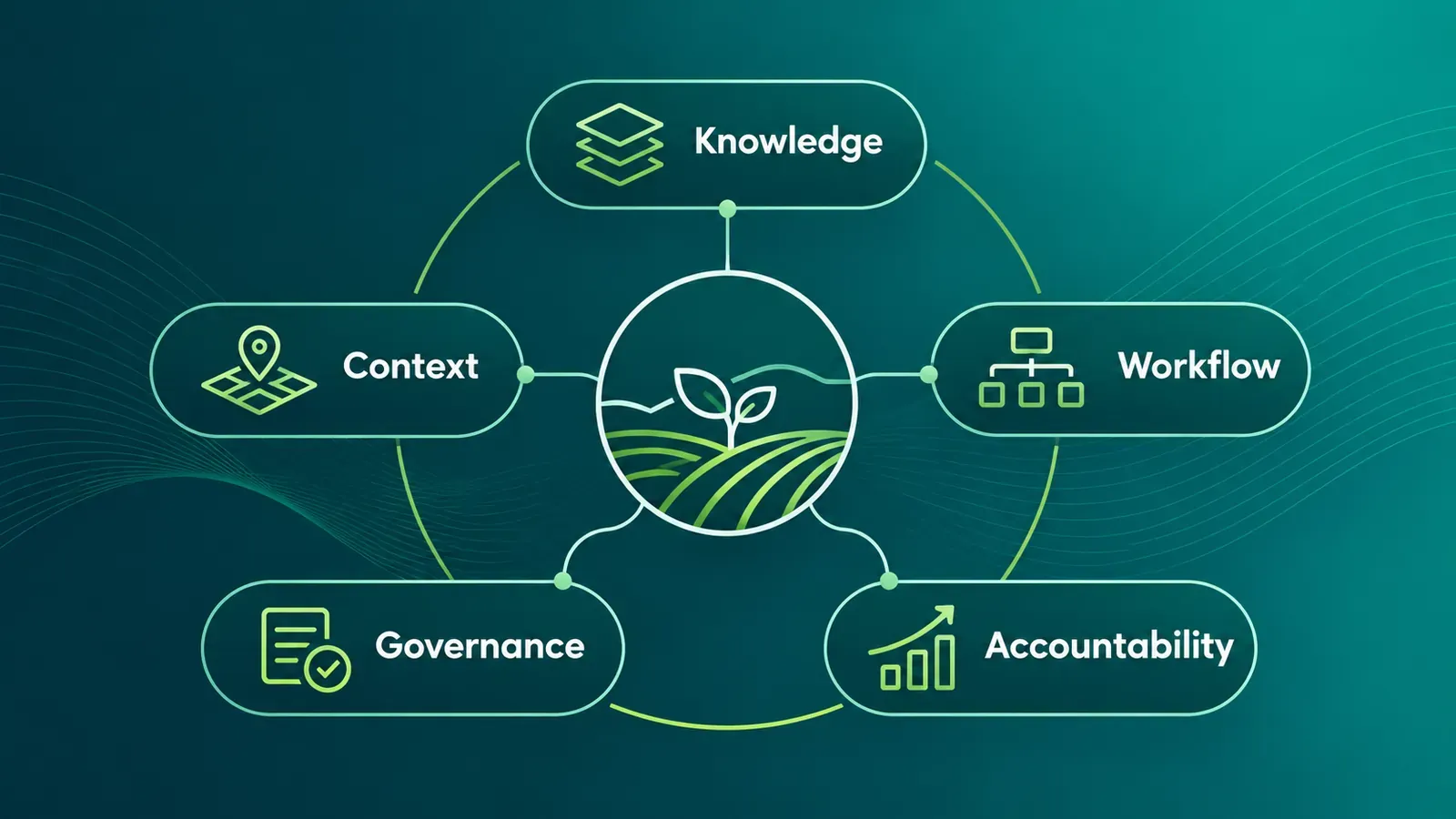
Enterprise agricultural AI should be evaluated by the work it can safely support, not by how confidently an interface replies. Buyers need evidence of approved agricultural knowledge, relevant operating context, defined workflows, named human owners, monitoring and escalation. A useful procurement test follows one real case from a farmer question through to an accountable business outcome.
A convincing demonstration can show natural language, speed and a polished channel. It cannot, on its own, show what happens when a product label changes, a grower provides incomplete information or a question requires a qualified agronomist. This guide sets out five practical checks for enterprise buyers evaluating agricultural Digital Agents.
At a Glance
- Approved knowledge: find out who supplies, checks and updates the guidance the agent can use.
- Context: establish which farmer, crop, product and business data is available for each interaction.
- Workflow: confirm what record, handoff or follow-up is created after a useful answer.
- Governance: assign owners for quality, monitoring, knowledge changes and access controls.
- Escalation and accountability: test how exceptions reach people and how results are measured.
Why Enterprise Agricultural AI Evaluation Must Go Beyond the Interface
The interface is a delivery channel. Enterprise readiness depends on whether the information behind the answer is trustworthy and whether the answer can be used within an existing operating process. A chatbot demonstration may look compelling even when the supplier cannot explain who approved the content, which systems provide context or how a human receives an unresolved case.
Agricultural decisions are sensitive to location, crop, growth stage, timing, product instructions and local practice. Two farmers asking a similar question may need different approved information. An enterprise buyer should be able to see where that context comes from and which limits apply, rather than assuming that natural-sounding replies are automatically suitable.
The European Commission’s discussion of AI in agrifood identifies access to high-quality agricultural data and fragmentation as material barriers to reliable deployment. That makes data availability and responsibility part of procurement, rather than a technical issue left until after a vendor is selected.
What Are the Five Questions Buyers Should Ask?
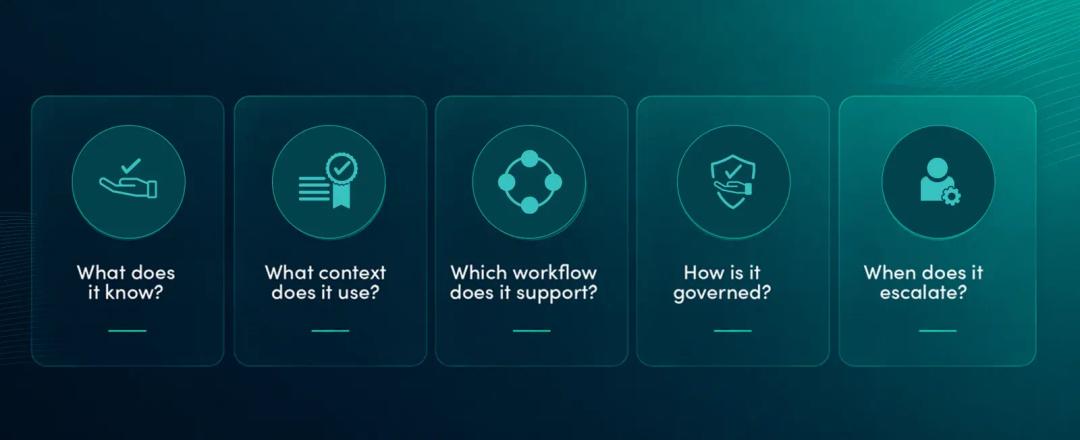
Five questions provide an efficient first test: What does the agent know? Which context can it use? Which workflow follows the interaction? Who governs the service? When and to whom does it escalate? The answers should describe a real deployment, not only a list of model capabilities.
1. What Knowledge Does the Agricultural AI Use?
Knowledge should come from named, approved sources with an identifiable owner. Buyers should ask which documents the agent is allowed to use, who confirms their accuracy, how conflicting sources are resolved and what happens when recommendations change during the season.
For an agri-input manufacturer, this may cover product catalogues, approved labels, application guidance, technical documents and regional protocols. For a food company, it may include grower instructions, quality requirements or sourcing schedules. For a public advisory programme, sources may include approved national guidance and service information. The relevant knowledge differs by role and market.
Ask the vendor to show a concrete update. If an approved protocol changes on Monday, who submits the revision, who authorises it and how does the team know that the live agent is using the correct version? AGRIVI’s knowledge architecture guide for agricultural AI explores why source ownership, regional context and brand alignment need to be designed together.
The FAO Digital Agriculture and AI Innovation Roadmap also emphasises the importance of responsible governance and trusted digital agriculture initiatives. A procurement process should translate those principles into named responsibilities and evidence that can be reviewed.
2. Which Agricultural and Commercial Context Can It Use?
The useful context is the information required for the agent’s job, with clear rules for how it is accessed and updated. A product question may require crop, geography and approved product guidance. A grower coordination workflow may also require supplier identity, crop programme, expected harvest window or the status of a previous request.
Buyers should ask whether the Digital Agent asks for missing context, accesses approved existing records or uses a combination of both. They should also test what happens when the information is outdated, contradictory or unavailable. A sensible response may be to seek clarification or route the case to a person.
Data access must match the role. A sales-focused agent does not need unrestricted access to every farm record, and a public advisory service should not assume that one participant’s data is available to another. These boundaries should be documented before deployment.
3. Which Business Workflow Starts After the Conversation?
A valuable interaction should support a defined next step when one is needed. That step may be a qualified lead, a grower confirmation, a follow-up assignment, an advisory record or a case for human review. The buyer should be able to trace the conversation to that next action and identify its owner.
For example, a farmer may ask whether a product is suitable for an identified crop and then request a price. The agent can answer within approved guidance, capture relevant crop and location details and hand the commercial request to the appropriate sales owner. Pricing exceptions and negotiations remain with authorised people.
In a supply chain programme, a grower might confirm a harvest forecast or flag a delay. The interaction is useful only if the right operational team receives the updated information. A service that records the conversation but leaves the next owner unclear has not completed the workflow.
This division between recurring conversations and expert work is central to the AGRIVI article on extending sales and agronomy team capacity with agricultural AI agents.
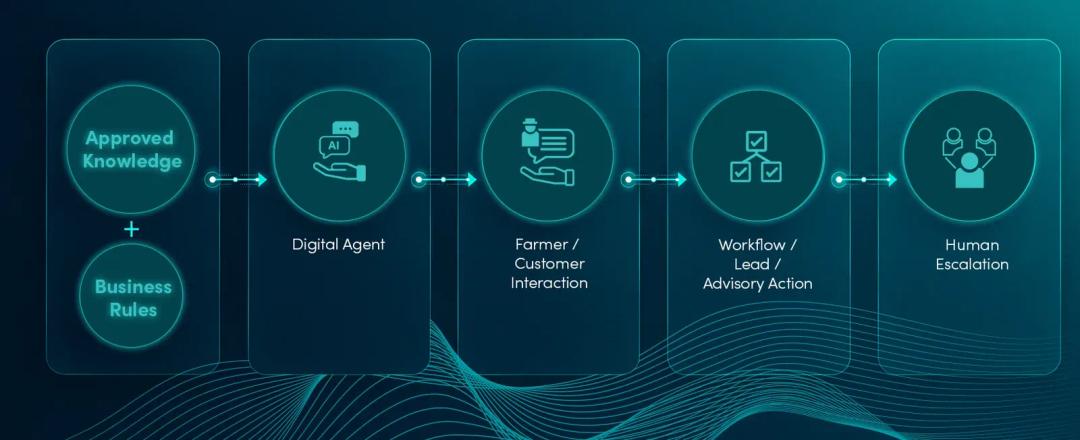
From Approved Knowledge to a Managed Action
The operating path begins with approved knowledge and business rules. A Digital Agent uses those inputs to respond to a farmer or customer interaction, records any necessary information and initiates a permitted follow-up. When a case falls outside the agreed scope, a human owner takes over. Escalation is conditional, not a compulsory last step for every conversation.
4. Who Governs Quality, Knowledge Changes and Access?
Governance needs named owners and a repeatable review process. Buyers should establish who approves agronomic or product information, who monitors response quality, who maintains rules and permissions, and who decides whether a change can go live. The arrangements should reflect the risks and scale of the deployment.
The NIST AI Risk Management Framework uses the functions Govern, Map, Measure and Manage to frame risk management throughout the AI lifecycle. These functions are useful for asking practical procurement questions, but they do not replace the deployment’s own operating responsibilities.
An agricultural organisation should be able to request evidence such as a source approval record, representative conversation reviews, a list of unresolved cases, the log of knowledge changes and the decisions taken after incidents. AGRIVI’s AI governance guide for post-launch ownership addresses the operational responsibilities of knowledge, escalation, monitoring and business results in greater depth.
5. How Does the Agent Escalate a Case and Who Is Accountable?
Escalation should have an explicit trigger, destination and response expectation. A question about a crop symptom beyond approved guidance should reach an agronomic specialist. A commercial exception should reach an authorised commercial owner. A sensitive public service question may need referral through an established institutional process.
Test the handoff using the actual case details. Does the receiving person see the farmer’s question, the relevant context and the reason for escalation? Can the team record its decision and determine whether the approved knowledge should change? If the agent simply says that a human will respond, but nobody owns the case, the control is incomplete.
Buyers should also check how the supplier prevents recommendations from drifting away from the approved protocol as content or operating conditions change. See AGRIVI’s guidance on preventing protocol drift in agricultural AI agents and brand architecture in agricultural AI advisory for the specific knowledge and escalation controls involved.
How AGRIVI AI Engage Fits These Buyer Requirements
AGRIVI AI Engage within AI Workforce provides an agriculture-specific platform for Digital Agents assigned to defined business roles. AI Workforce is the category; AGRIVI AI Engage is the platform used to configure and operate those agents. Deployment scope, supported channels, data connections and responsibilities are agreed for the particular use case.
The current AI Workforce roles show why a role-specific evaluation is useful. The AI Agri-Input Sales Representative supports farmer engagement, approved product and agronomic guidance, buying-intent identification and sales handoff. The AI Supply Chain Manager supports grower communication, forecast and supply coordination, and case follow-up. The AI Public Advisory Officer supports public advisory, outreach and structured farmer information collection. Each role requires different knowledge, information permissions, workflows and escalation owners.
A Digital Agent may operate with its own approved knowledge and data, connect to existing enterprise systems through supported integrations or use AGRIVI 360 FMS context where appropriate. That does not mean every implementation requires AGRIVI 360 FMS, or that every integration is automatic. Buyers should ask for the exact data flows and the division of responsibilities in their proposed scope.
For teams preparing a deployment, the 6-Step Guide to Launch Your AI Agent provides an introduction to role, use-case and knowledge planning. Organisations that want to review a specific operating model can also discuss the requirements with AGRIVI as part of vendor evaluation.
An Enterprise Agricultural AI Buyer Checklist
Use the following checks in a supplier workshop. Ask the vendor to demonstrate one real scenario for each item, including an incomplete-data or exception case. A polished demo is useful, but evidence from the operating workflow matters more.
- Knowledge: Can you identify approved sources, approvers, effective dates and an update process?
- Context: Can you show what data the agent can use, how consent and access are managed, and what happens when context is missing?
- Workflow: Can one conversation create or update a relevant record, handoff or action with an accountable owner?
- Governance: Can you show who monitors output quality, reviews changes and investigates unexpected behaviour?
- Escalation: Can you demonstrate an out-of-scope question arriving with its context at the correct human owner?
- Measurement: Can you distinguish usage metrics from service quality, qualified follow-up and business outcomes?
Results should be assessed against a defined baseline and the deployment’s actual scope. For example, response coverage, qualified follow-up, resolved advisory cases and grower engagement are useful indicators only when they relate to the organisation’s intended outcome. No vendor should treat a selected customer result as a guaranteed forecast for every market.
Enterprise Agricultural AI FAQs
What Is Enterprise Agricultural AI?
Enterprise agricultural AI is AI deployed for defined agricultural business roles and processes using approved knowledge, relevant context and accountable workflows. Evaluation includes data access, governance, monitoring and human escalation, not only the model’s responses.
How Is AI Workforce Different from a Generic Chatbot?
AI Workforce assigns Digital Agents to operational roles such as agri-input sales, grower coordination or public advisory. A generic chatbot may answer questions, but enterprise suitability depends on whether the service also works from approved sources, business handoffs and named responsibilities.
Does an Agricultural AI Agent Need Farm Management Software?
Not necessarily. A Digital Agent can operate with its own configured knowledge and data or exchange information with supported existing systems. AGRIVI AI Engage can also use AGRIVI 360 FMS context when the deployment requires it.
What Information Should an Agricultural AI Agent Collect?
Only information necessary for its agreed role and workflow. Depending on the case, this might include crop, location, product question, harvest timing or contact details. Buyers should define ownership, access rights and retention with the service provider.
Who Is Responsible for Agronomic Recommendations?
The deploying organisation’s qualified experts should approve the agronomic or product guidance that the agent uses. The Digital Agent operates within agreed boundaries, and complex or out-of-scope decisions should be referred to authorised people.
How Should Human Escalation Work?
The trigger, receiving team, response expectation and case record should be defined before launch. The handoff should include enough context that the receiving person can continue without requiring the farmer to repeat the original question.
How Should Buyers Measure Agricultural AI Performance?
Measure relevant business outcomes such as useful farmer reach, qualified commercial handoffs, resolution quality and completed grower workflows. Review them alongside knowledge quality, escalation patterns and the cost of ongoing operation.
Published by AGRIVI. Editorial responsibility: AGRIVI Marketing & Communications.
Ready to digitalize your farm?
See how AGRIVI can help you apply these insights in your own operations.
Book a Meeting