
How Food Companies Can Compare Production Across Contracted Growers
A practical way for food companies to compare grower production without forcing every farm into the same practices: shared records, visible gaps and clear follow-up owners.
AGRIVI
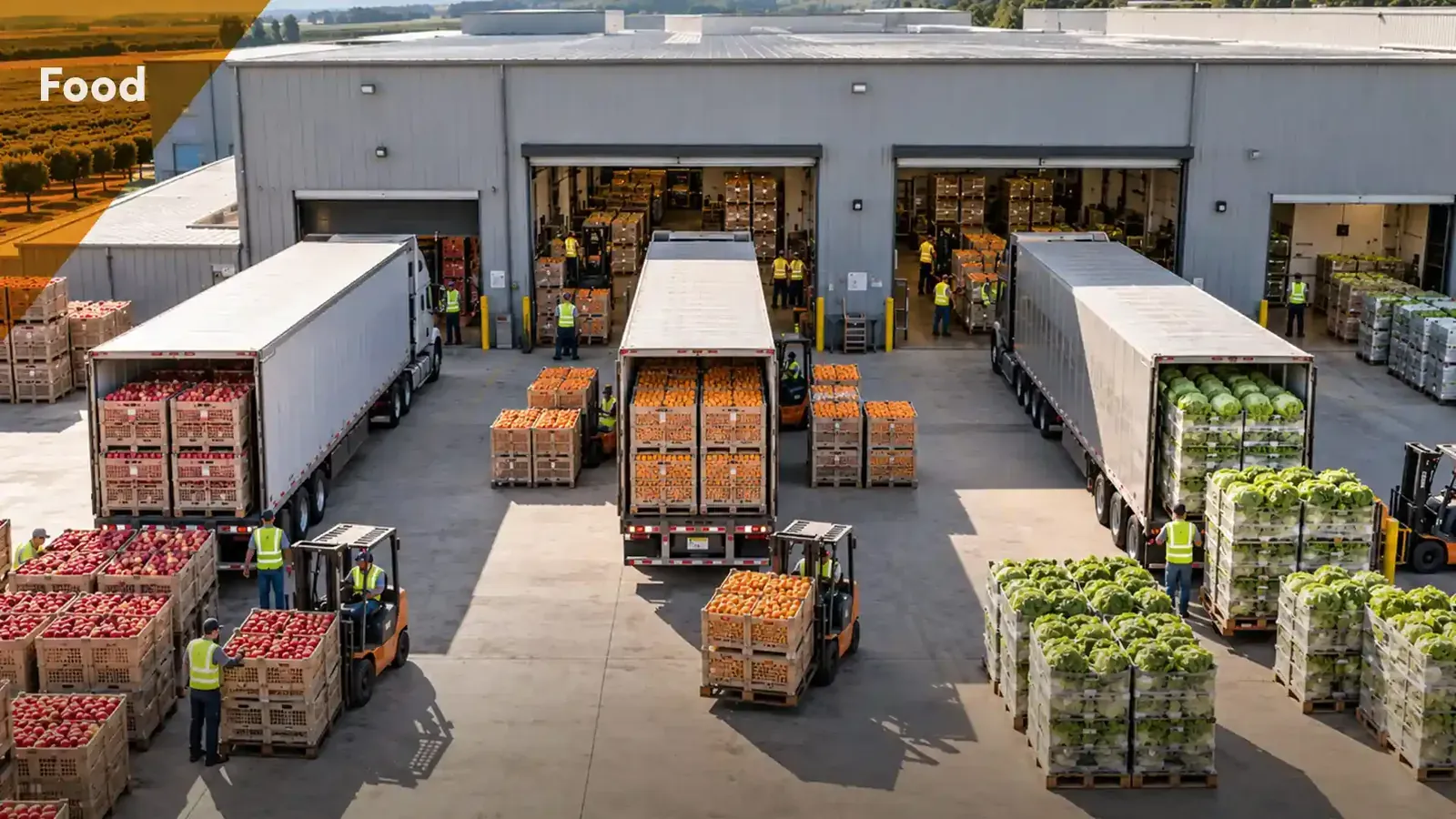
Food companies can compare production across contracted growers by using the same core production-record structure while preserving each farm’s crop, field and operating context. The useful comparison covers crop status, activities and inputs, compliance evidence, harvest expectations, exceptions and missing information, with an owner for the next action.
A network may include growers with different crops, irrigation systems and reporting habits. Those differences are real. A food company still needs to know which production programmes are on track, where expected supply has changed and which questions require a timely conversation before delivery.
At a Glance
- Standardize the record. Agree on grower, field, crop, season, activity and reporting definitions, not identical agronomic practices.
- Compare what affects a decision. Use production status, resource application, compliance requirements, harvest windows and material exceptions.
- Expose gaps. Label missing, late or unverified records instead of interpreting them as confirmed production results.
- Keep the local context. Compare like with like by crop, stage, region and reporting period.
- Assign follow-up. Every significant difference needs an owner and a useful next step.
Why Grower Updates Are Hard to Compare
A sourcing team can receive dozens of apparently complete updates and still struggle to build one reliable network view. One grower reports per field, another reports by crop, and another sends only a message when production changes. The same word, such as “on track”, may carry a different meaning in each file.
This is an operating problem for food and beverage companies, not simply a reporting inconvenience. Quality, agronomy and procurement teams need comparable information early enough to decide whether to update a sourcing assumption, contact a grower or prepare another inspection.
Standardize the Record, Not Every Farm
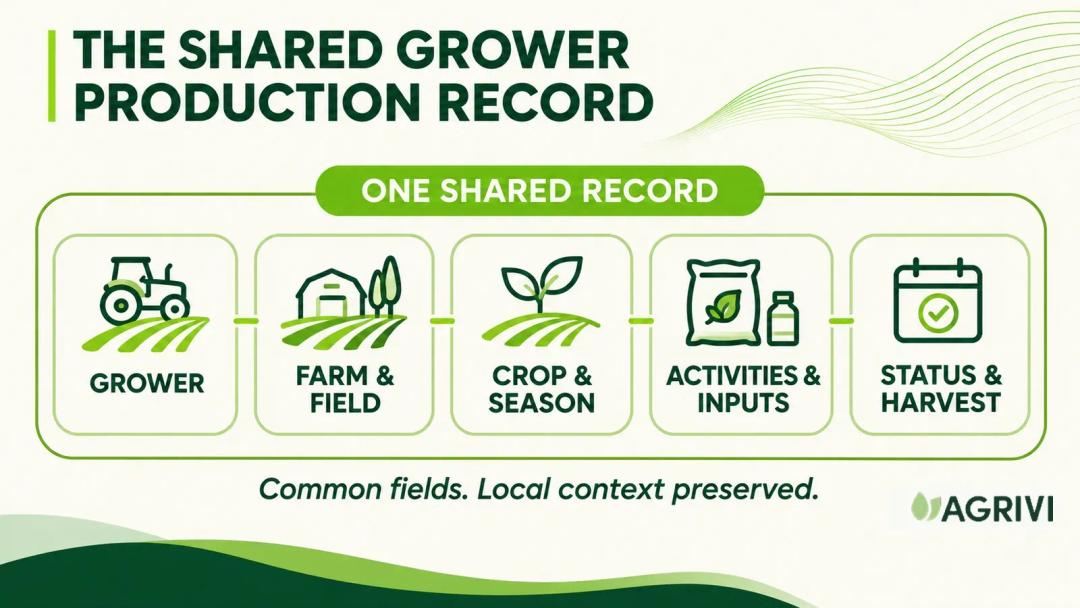
Comparability begins with shared identifiers and definitions: grower, farm, field or block, crop and variety, production season, activity date, input, status, expected harvest and reason for a material change. Each record should retain its original farm context and the person or system responsible for the update.
For example, two contracted berry farms may report the same activity as completed, but different crop stages or weather windows change how that result should be interpreted. A shared record makes their reports comparable without implying that the farms should use identical practices. The wider foundation of current, contextual records is explained in Farm Data Management: Records the Business Can Act On.
This is also the distinction behind AGRIVI 360 FMS for Agriculture Supply Chains: common production visibility across growers while preserving detail at farm and field level.
Which Production Signals Support a Supply Decision?
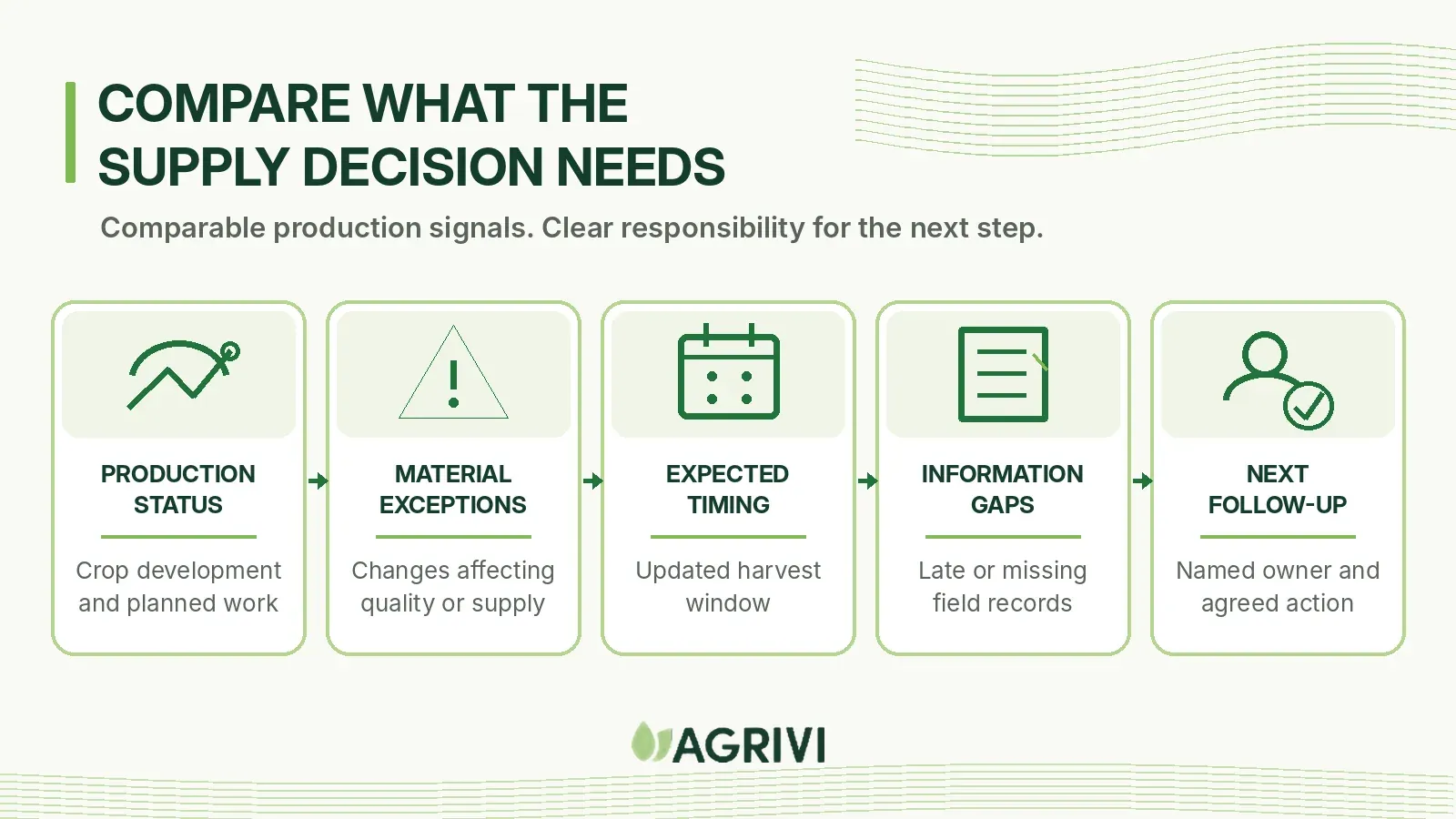
Start with the question the sourcing or quality team must answer. A programme that is assessing upcoming deliveries needs a different set of signals from one preparing a production-practice audit. In both cases, the information should be current, attributable to a source and usable without asking the grower to reconstruct the season. For how these signals feed a supply forecast before delivery, see agricultural supply chain visibility from farm plan to forecast.
- Crop and field status. Crop, variety, growing area, development stage and whether production milestones are progressing as expected.
- Activities and inputs. What was carried out, on which field, when, with which resources and under which recorded programme requirements.
- Compliance evidence. The records required for a particular buyer specification, certification or production protocol, with any outstanding evidence clearly identified.
- Expected harvest timing. A dated outlook by crop or grower that can change as field conditions change, distinct from a confirmed delivery.
- Material exceptions. Production delays, crop-condition changes or other events with potential consequences for quality, quantity or sourcing coordination.
Where downstream traceability matters, the production record also needs to maintain source and harvest identity. See the AGRIVI explanation of farm traceability before products enter the supply chain and the AGRIVI 360 FMS Traceability & Compliance capabilities. GS1’s traceability process overview describes the broader importance of capturing and sharing identified product data across trading partners.
Make Missing Information Visible
An empty field is not the same as a negative result. A grower who has not submitted a crop update should not automatically be treated as a grower reporting poor crop condition. Those cases lead to different conversations and different actions.
A useful network view identifies the last update date, incomplete fields, unverified changes and the person responsible for clarification. The sourcing team can then distinguish a production exception from a reporting gap, offer targeted support or adjust the follow-up method. Sending every grower another generic request is rarely the best response.
Food companies can compare production across growers more responsibly when the information gap is visible beside the available production evidence.
Compare Like with Like, Not Grower against Grower
A network comparison should group records by relevant operating context: crop and variety, production stage, geography, reporting window and, where appropriate, agreed product standards. Raw yield or input quantities across unlike farms can hide more than they explain.
The purpose is to identify where sourcing, agronomy or quality teams should act. It is not to rank every grower with one composite score. If a difference is significant, the team should be able to open the underlying record, understand the cause and agree on a proportionate response.
Turn Comparable Records into Coordinated Follow-Up
A practical implementation can begin with a small grower group and one sourcing decision. The following sequence keeps data collection connected to a business purpose.
- Choose one decision. For example, identify which expected harvest windows need confirmation before transport planning.
- Agree on minimum fields. Define the grower, crop, field, date, status and exception information needed to make that decision.
- Validate the source. Check when each record was updated and what remains missing or unverified.
- Assign a response. Give the sourcing, quality or agronomy owner a specific follow-up with a clear due date.
- Update the shared record. Keep the revised forecast, reason and next action connected to the original production information.
For contracted production, the buyer and grower should also agree on the production and reporting expectations that make the workflow workable. FAO explains the broader role of agreed buyer-producer responsibilities in contract farming.
A Practical Example from Procesadora Tropical
In Peru, Procesadora Tropical needed to coordinate its own farm production and a network of collaborating growers. Its AGRIVI case study describes the difficulty of consolidating separate spreadsheet records and obtaining current production information. The company moved toward a shared platform for multiple farms and grower operations.
The lesson is not that every producer suddenly operates identically. It is that a food processor can make earlier decisions when production updates use a common structure and sourcing teams can see the underlying farm context. The case study does not establish a universal performance result for every grower network.
Where AGRIVI 360 FMS Fits
AGRIVI 360 FMS provides agriculture-specific records for fields, crops, production activities, inputs, harvest and operating context. Its Agriculture Supply Chains capabilities support shared production visibility and coordination across contracted growers, depending on the customer’s configured process.
Where recurring grower communication is part of the operating model, AGRIVI AI Engage’s AI Supply Chain Manager can support defined information requests and follow-up workflows. It is a separate product role, not a requirement for using AGRIVI 360 FMS.
For downstream evidence, food companies can also consult Food Product Traceability System: Beyond the QR Code. The comparison described here remains a production and sourcing workflow; it does not promise automated forecasting or complete product traceability without the necessary configuration and records.
Frequently Asked Questions
What Information Should Food Companies Compare Across Growers?
Use comparable records for crop and field plans, activities and inputs, crop condition, compliance evidence, expected harvest windows, material exceptions and missing data.
Does Standardization Require Identical Farming Practices?
No. The company agrees on common data definitions while retaining the crop, field, weather and production context that explains differences.
How Should Missing Grower Information Be Interpreted?
Missing or late information should be marked as a reporting gap until verified. It should not automatically be treated as a production failure.
Is an Expected Harvest Date the Same as a Confirmed Delivery?
No. A harvest outlook is an updated production expectation. Delivery confirmation records what is actually supplied.
Which Teams Should Own Grower Follow-Up?
Ownership depends on the issue. Sourcing may confirm expected supply, agronomy may review crop practices, and quality may verify compliance evidence.
Should Food Companies Rank Every Grower with One Score?
Usually not as the primary view. A composite score can conceal important context. Compare evidence against the actual sourcing or quality decision.
How Does AGRIVI 360 FMS Support Grower Comparisons?
It connects grower, farm, field, crop, activity, input and harvest records within agriculture-specific workflows, enabling a more comparable operating view.
Where Should a Food Company Start?
Choose one recurring supply decision and a manageable grower group. Agree on a minimum record and a follow-up owner, then expand as the workflow becomes reliable.
Published by AGRIVI. Editorial responsibility: AGRIVI Marketing & Communications.

Ready to digitalize your farm?
See how AGRIVI can help you apply these insights in your own operations.
Book a Meeting