From Farm Plan to Supply Forecast
Food companies need more than delivery updates to plan supply. See how four farm-level signals connect contracted growers with sourcing, harvest and logistics decisions.
AGRIVI
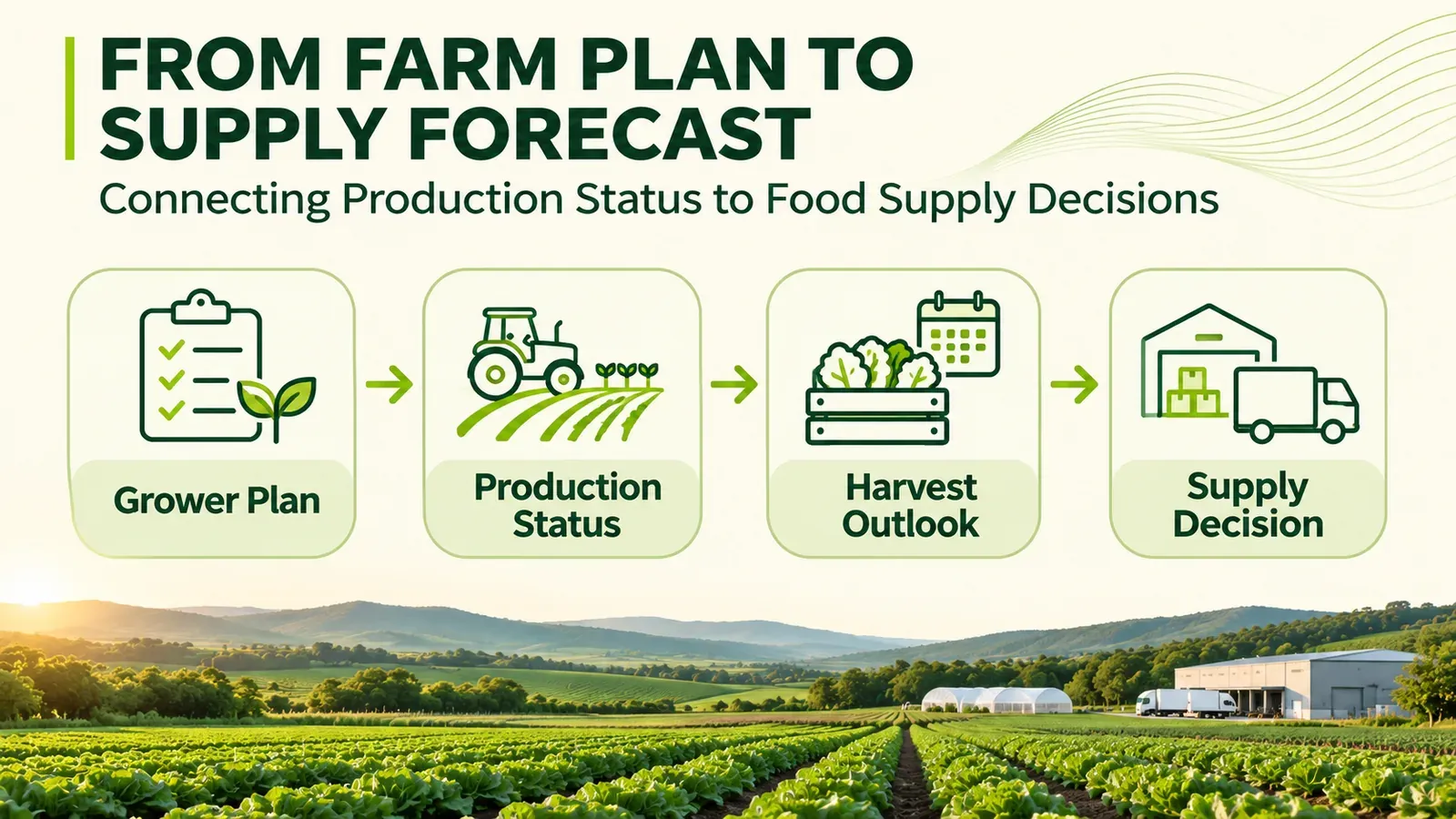
Agricultural supply chain visibility connects grower production plans, current field status, expected harvest timing and material changes to the decisions made by food companies before delivery. It helps sourcing teams identify which commitments need attention, which harvest assumptions have changed and where to coordinate with growers. It improves the evidence behind a forecast without making the forecast certain.
A delivery report confirms what arrived. A sourcing manager needs earlier information to plan plant intake, transport, production capacity and alternative supply. For companies coordinating contracted growers, this means connecting the current agricultural situation to the supply decisions that depend on it.
At a Glance
- Four practical signals: crop and field plan, production status, expected harvest timing, and material exceptions.
- Different levels of certainty: contracted quantity, current forecast and confirmed delivery must be distinguished.
- Comparable records: grower updates need shared definitions, timestamps and accountable owners.
- Decision-first design: choose the sourcing decision before collecting additional farm data.
- Human review: a changing forecast is a reason to investigate, not proof of a final shortfall.
What Does Agricultural Supply Chain Visibility Mean Before Delivery?
Upstream agricultural supply chain visibility is the ability to see relevant production conditions and harvest expectations before products enter the logistics chain. For a food company, it brings farm-origin information into sourcing, intake and supply-risk decisions while leaving agronomic and field execution responsibility with growers and their teams.
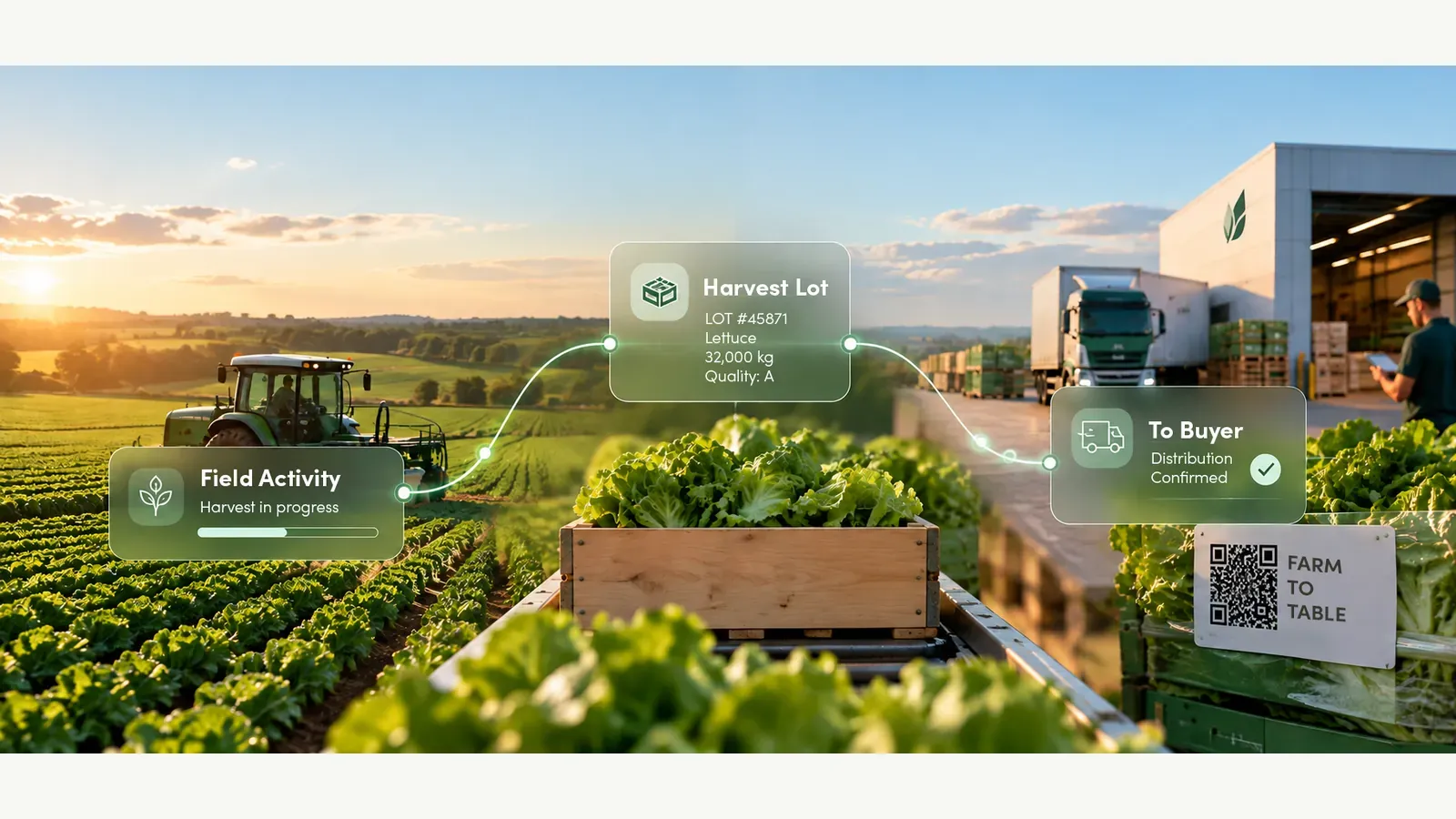
A supplier may have a planting plan and a contractual delivery quantity, but the current crop stage and field events may change the expected delivery window. AGRIVI 360 FMS for Agriculture Supply Chains connects grower production records and supply coordination around that distinction. It should be used to inform business decisions, rather than present every in-season estimate as a confirmed commitment.
The related but different issue of tracing a harvested product through the chain is addressed in AGRIVI’s farm traceability guide. This article focuses on the earlier planning and coordination window.
Which Four Farm Signals Help Food Companies Plan Supply?
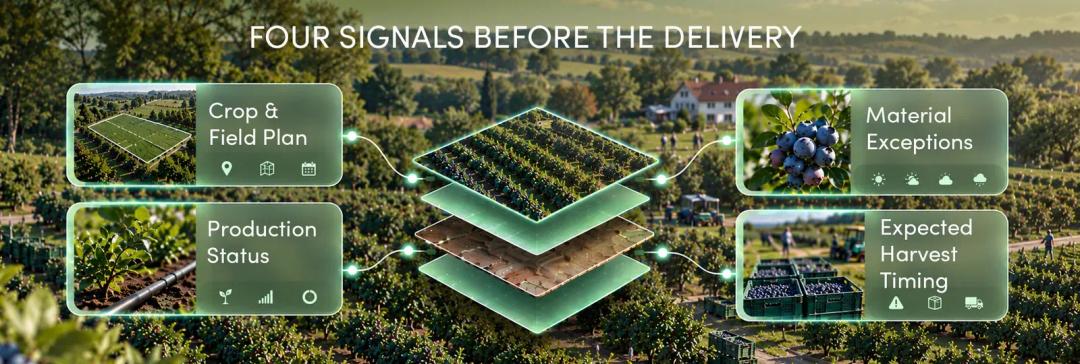
Four farm-origin signals make a sourcing forecast easier to review: the expected crop and growing area, progress against the production plan, the current harvest outlook, and exceptions that could affect timing, quantity or quality. Their usefulness depends on when they were updated and who can confirm them.
Crop and Field Plan
Record the contracted grower, crop or variety, location, production area and expected season. Clarify which quantity comes from a contract and which comes from a production estimate. A field plan is the starting assumption, not a guarantee of harvest.
Production Status
Use completed operations, crop-stage observations and relevant field assessments to distinguish a crop progressing broadly to plan from one needing review. The farm data management framework explains why records must retain their farm, field, crop and date context to support decisions.
Expected Harvest Timing
Record the currently expected harvest week or delivery window, along with the date of the update. Where a forecast volume is available, keep it separately identified from contracted quantity and final delivered volume.
Material Exceptions
Flag changes that could affect the supply plan, such as a weather interruption, crop-health concern, delayed operation or revised harvest readiness. Include the responsible grower or team, review status and next follow-up.
Why Do Grower Networks Need Comparable Production Records?
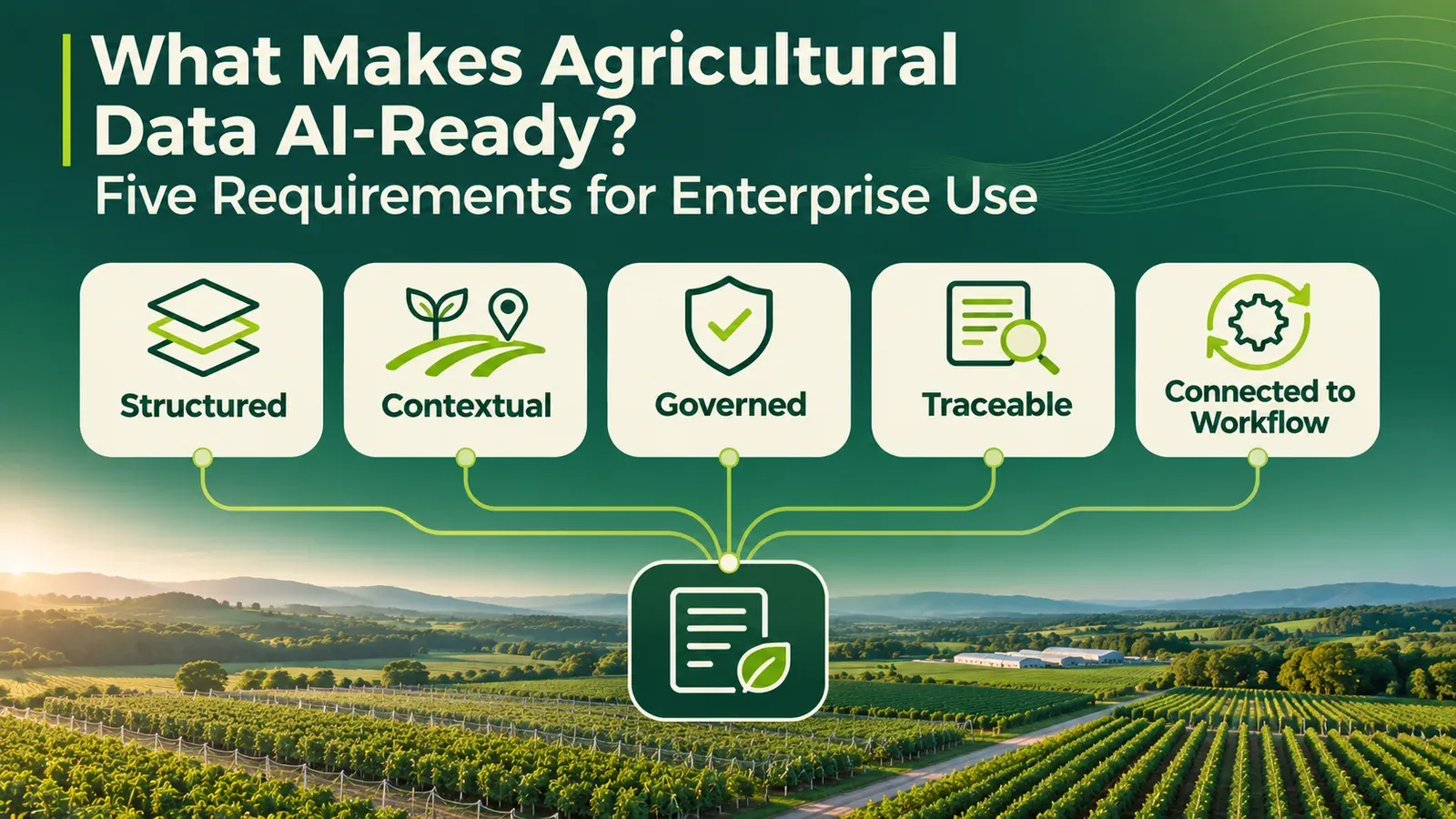
A network view is only useful when a sourcing manager can compare the same essential fields across growers. The objective is not to impose identical farming practices. It is to define a small, consistent set of production and supply signals that each grower can provide in a reliable form.
Useful common fields include grower and crop identity, expected supply period, forecast status, update date, exception type and follow-up owner. Records can remain detailed at farm level while sourcing teams receive a standard, proportionate view. The Food & Beverage industry overview describes how AGRIVI supports coordination across contracted networks.
If a forecast was updated three weeks ago but another was confirmed yesterday, presenting both as equivalent creates false confidence. The record should expose missing or stale information rather than quietly filling the gap. The AGRIVI 360 FMS overview provides the wider farm-operating context behind these production records.
The OECD review of agricultural digitalisation identifies usability, trust and appropriate data sharing among important adoption considerations. For a grower programme, that translates into clear definitions, manageable reporting routines and transparent responsibility for the information.
How Should a Supply Forecast Change When the Farm Plan Changes?
A useful forecast records a revised expectation and the reason for the revision. It does not silently replace the original plan. Food companies should be able to distinguish contracted or planned supply, the latest grower-supported estimate and the quantity actually confirmed at harvest or delivery.
Consider an illustrative berry sourcing programme. A grower’s original plan points to harvest in a particular week. A later crop-stage update suggests a delay. The sourcing team can mark that week as at risk, speak with the grower and assess whether intake slots or transport preparation need adjustment. The revised estimate is an input to planning, not a new contractual promise.
This is where the wider enterprise farm management visibility approach is relevant: leadership needs to move from a signal to its operational cause and the person responsible for the next decision. The same discipline applies when supply signals come from many contracted farms.
How Does One Production Record Support Different Supply Decisions?
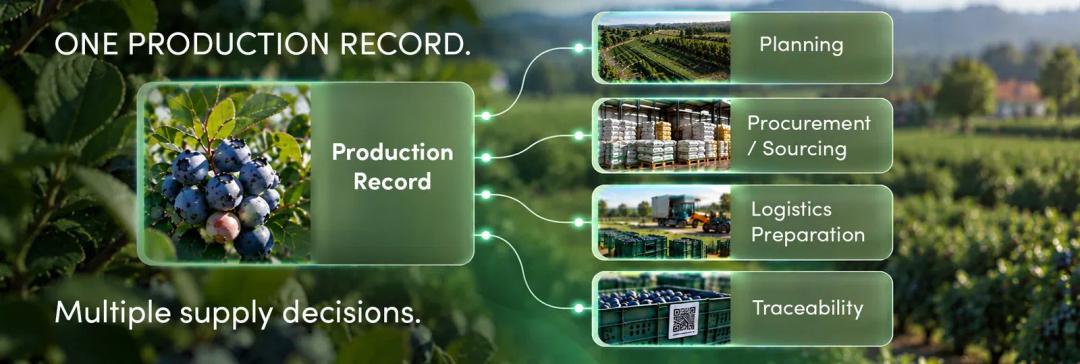
The same production record can support several downstream teams, provided they use a consistent source and preserve the limits of what is known. A harvest outlook may be relevant to planning, procurement, logistics preparation and traceability, but each team asks a different question and remains responsible for its own decision.
- Supply planning: Is expected volume and timing still aligned with contracted demand?
- Procurement and sourcing: Which growers require follow-up, alternative sourcing discussions or a revised commitment?
- Logistics preparation: What pickup or processing capacity should the team prepare, subject to confirmed harvest readiness?
- Quality and traceability: Which farm and production references need to remain connected to the eventual harvest lot?
When product identity enters the process, AGRIVI’s Traceability & Compliance capabilities and the related food product traceability article explain the downstream record chain. That is a distinct use case from forecasting supply before delivery.
When Should a Supply Signal Trigger a Human Decision?
A supply signal should trigger a named review when it changes a material assumption about timing, quantity, quality or fulfilment. The right action may be to confirm information with the grower, reassess transport arrangements, review sourcing exposure or leave the forecast unchanged until the evidence improves.
A practical exception process should identify who owns the forecast update, which fact changed, how the information was obtained and who can approve the response. Missing information is itself a status to be shown, not automatically treated as a production problem. Food companies should set thresholds according to crop, contract and operating risk rather than adopt a universal rule.
Where the process spans ERP, procurement and agriculture systems, clear ownership also matters. AGRIVI’s ERP and farm management article explains why the farm operating layer and enterprise systems should exchange relevant information without duplicating process responsibility.
What Does Procesadora Tropical Show About Harvest Coordination?
The AGRIVI Procesadora Tropical case study describes a Peruvian food processor coordinating its own production and a network of cooperating farmers. The project centralized farm and crop data, with weekly harvest planning by farmer to support transport organization according to processing capacity.
This is a concrete example of the value in moving from disconnected grower updates toward a shared view of production and expected harvest. It does not mean that software eliminates yield uncertainty or automatically commits deliveries. The benefit described is better coordination based on accessible records.
How Do AGRIVI 360 FMS and AGRIVI AI Engage Fit This Process?
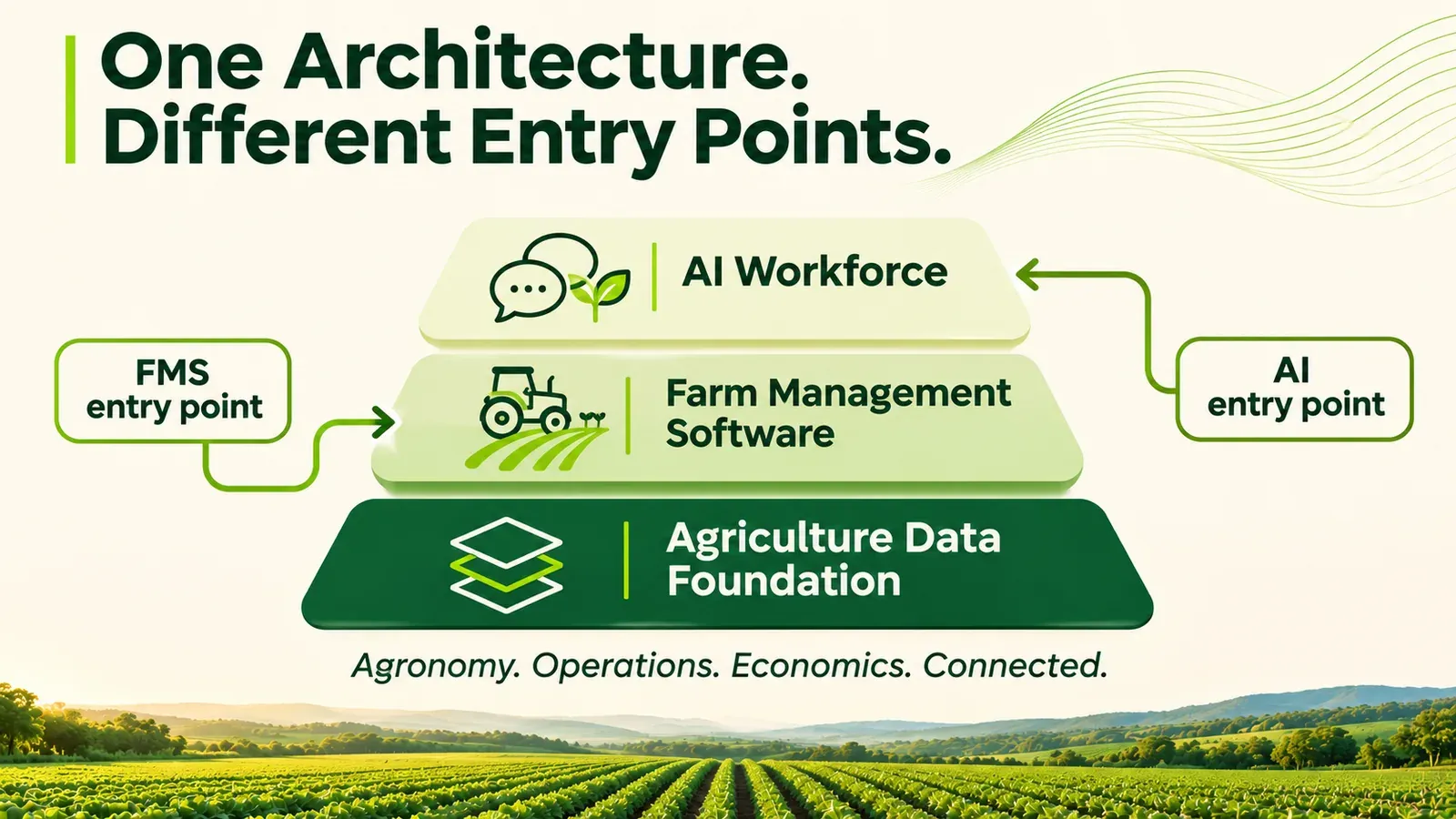
AGRIVI 360 FMS provides agriculture-specific records for growers, fields, crop plans, activity progress and harvest information. Its Agriculture Supply Chains capabilities connect that farm context with sourcing and supply-coordination use cases.
Separately, the AI Supply Chain Manager is a Digital Agent role delivered through AGRIVI AI Engage, the platform within the AI Workforce category. It can support recurring grower communication, collect structured updates and direct cases requiring judgment to the responsible team. The AI Supply Chain Manager product page explains the role across grower coordination and harvest follow-up.
These capabilities should not be described as requiring one universal technical setup. The Digital Agent can operate alongside existing agriculture or enterprise systems, and integrations, update routines and human approvals depend on the agreed deployment scope.
What Should Food Companies Measure in the First Supply-Visibility Pilot?
Start with one crop, a defined grower group and a decision that currently depends on late or inconsistent updates. Measure data timeliness and decision usefulness before expanding the reporting request.
- Coverage: share of participating growers with current crop, area and harvest information.
- Freshness: time between a relevant farm change and the sourcing team seeing the update.
- Completeness: proportion of required fields verified, missing or awaiting confirmation.
- Exceptions and response: material forecast changes with a named owner and recorded outcome.
- Decision relevance: whether the information changed a sourcing, harvest, intake or logistics conversation in time.
The FAO Digital Agriculture and AI overview places digital innovation within stronger agrifood value chains and evidence-based decisions. That is also the practical test here: the project should improve a real supply decision rather than merely increase the number of supplier records.
Frequently Asked Questions
What Is Agricultural Supply Chain Visibility?
It is the ability to see relevant production, supply and movement information across an agricultural sourcing network. Before delivery, it includes current grower plans, crop progress, harvest outlooks and exceptions that influence planning decisions.
Why Is Delivery Information Too Late for Some Supply Decisions?
Delivery information confirms what reached the buyer, but sourcing and logistics decisions often need to be made earlier. Farm-origin updates can reveal shifts in timing or expected volume while teams can still coordinate a response.
Which Farm Signals Are Most Useful for Supply Forecasting?
Start with the crop and field plan, current production status, expected harvest timing and material exceptions. Every signal should have an update date, relevant grower or crop identity and a responsible owner.
What Is the Difference Between Contracted and Forecast Supply?
Contracted supply is the agreed commercial commitment. Forecast supply is the current estimate of what production is expected to deliver, while confirmed delivery is the quantity actually received or validated. They should remain separately identifiable.
Does Upstream Supply Visibility Guarantee Yield or Delivery?
No. Weather, crop health and operating conditions remain uncertain. Better visibility makes changes and assumptions easier to review; it does not remove production risk or turn an estimate into a guarantee.
How Can Food Companies Compare Different Contracted Growers?
Agree on common core fields such as crop, growing area, expected harvest period, forecast status and exceptions. Preserve the farm-level detail behind them, but use consistent definitions to compare grower updates.
How Can AGRIVI 360 FMS Support Agricultural Supply Chains?
AGRIVI 360 FMS connects agriculture-specific grower, crop, field, operation and harvest records. Its supply-chain capabilities can help food companies use this production information for planning, coordination and sourcing visibility.
Can AI Supply Chain Manager Work Without AGRIVI 360 FMS?
Yes. AGRIVI AI Engage can support this Digital Agent role with its own agreed data setup or connect with supported existing systems. A particular integration and automation scope should be confirmed during implementation.
Published by AGRIVI. Editorial responsibility: AGRIVI Marketing & Communications.
Ready to digitalize your farm?
See how AGRIVI can help you apply these insights in your own operations.
Book a Meeting